Molded fibre packaging specifications define the technical parameters procurement teams use to evaluate whether this material system can replace plastic in non-food applications — from wall thickness and density through to drop-test performance and colour consistency. European buyers moving fragrance, cosmetics, electronics and audio packaging from injection-moulded polystyrene or ABS to fibre-based alternatives need dimensional tolerances, mechanical-strength data and production-volume capabilities expressed in the same engineering units used for plastic component evaluation. This guide translates molded fibre production parameters into procurement-relevant specifications across material properties, testing protocols, tooling economics and design constraints.
Molded fibre packaging specifications quantify the material and production parameters that determine whether a fibre-based component meets the functional requirements plastic packaging currently fulfils in non-food applications. These specifications translate pulp-suspension processing into dimensional accuracy, mechanical strength, surface quality and production economics that procurement teams can compare directly against injection-moulded plastic benchmarks. The specification framework covers five interdependent domains: material properties (wall thickness, density, basis weight), mechanical performance (compression resistance, drop-test outcomes, burst strength), surface characteristics (texture, printability, colour consistency), production parameters (cycle time, minimum order quantities, tooling costs) and testing protocols (validation methods, quality-control metrics, regulatory compliance documentation).
Wall thickness, density and weight represent the foundational material-property specifications that cascade into all other performance parameters. Wall thickness in molded fibre ranges typically 0.8–5 mm, significantly thicker than injection-moulded polystyrene (commonly 1–2 mm) but achieving comparable structural performance through cellular fibre architecture rather than solid polymer mass. Density varies 0.3–0.8 g/cm³ depending on production technology and application requirements: lower-density structures (0.3–0.5 g/cm³) provide superior impact absorption for protective packaging applications, while higher-density products (0.6–0.8 g/cm³) deliver smoother surfaces and finer detail resolution for premium cosmetics and fragrance packaging. Basis weight — expressed in g/m² and ranging typically 400–1200 g/m² for non-food packaging — correlates directly with both material cost and mechanical strength, making it a critical specification for procurement cost modelling. These three parameters interact: increasing density while maintaining wall thickness increases weight and compression resistance but reduces cushioning performance, requiring technology selection (wet press versus dry press) and design iteration to optimise the trade-off matrix per application.
Drop-test performance, compression resistance and burst strength define the mechanical specifications buyers use to validate protective function and compare molded fibre directly against plastic incumbent materials. Drop testing in the EU molded fibre sector follows ISTA 2A, ISTA 3A and ISTA 6 protocols — the same standards used for plastic protective packaging — adapted to account for fibre-based materials' anisotropic strength properties and moisture sensitivity. Compression testing per ISO 12048 quantifies the load a molded fibre component withstands before structural failure, critical for stacking stability in warehouse environments and transport-vehicle loading. Burst strength — resistance to puncture under localised force — determines whether the package protects fragile contents (glass fragrance bottles, ceramic cosmetics containers, printed circuit boards) during handling incidents. All three mechanical specifications depend on the wall-thickness-density-weight matrix: thicker walls at lower density (dry press territory) optimise impact absorption, while thinner walls at higher density (wet press domain) maximise compression resistance and surface durability.
Custom tooling specifications — including lead time, cost per cavity set and minimum order quantities — represent the economic parameters that determine whether molded fibre is commercially viable for a specific product launch or packaging-conversion project. Tooling for molded fibre consists of matched forming dies (one male, one female) manufactured from aluminium or steel, with surface textures and drainage patterns engineered to control fibre deposition, water extraction and final part geometry. Tooling cost at TRIDAS typically ranges €5,000–20,000 per cavity set, significantly lower than injection-moulding tools but requiring cavity-count planning at the outset since adding cavities post-launch involves new tooling investment. Lead time from tooling order to first production samples varies widely across the European molded fibre supply base: TRIDAS manufactures tooling in-house with lead times of approximately 4 weeks from order, substantially shorter than suppliers outsourcing tool fabrication. Minimum order quantities connect directly to tooling economics and production-line setup costs: TRIDAS MOQ starts from 10,000 units, varying with component complexity and tooling cavity count per production cycle.
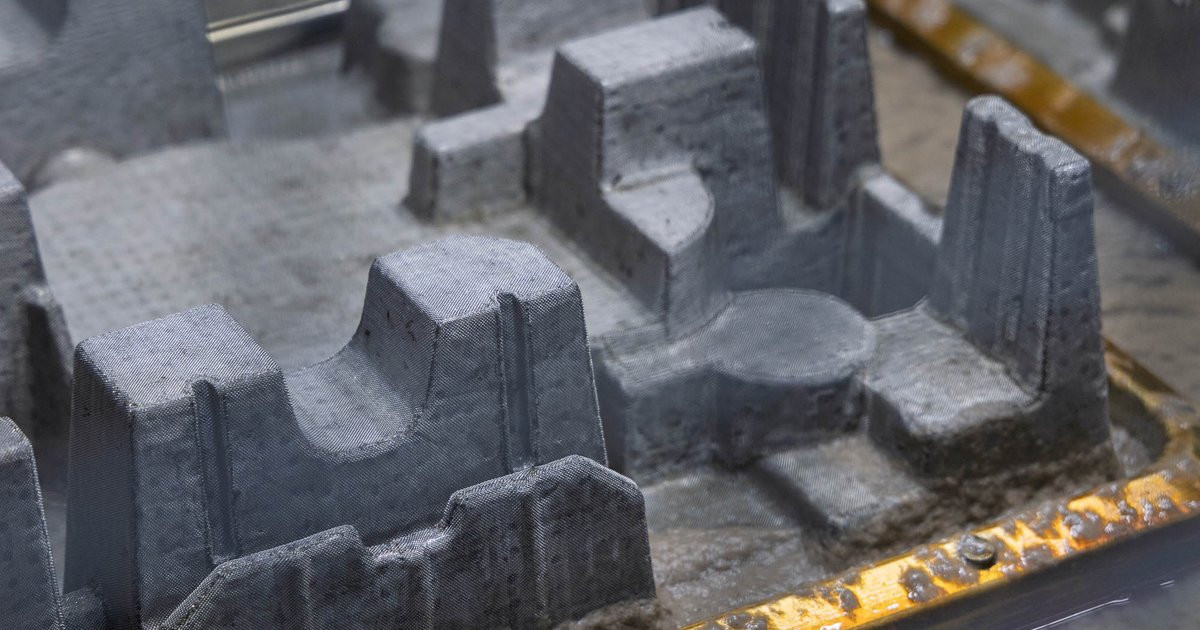
Design constraints define what shapes, features and dimensional tolerances are achievable in wet press versus dry press molded fibre production, setting the boundaries for CAD engineering and prototyping investment. Wet press molded fibre — produced on compact lines where forming and drying occur simultaneously inside heated press dies — achieves wall thickness typically 0.8–2 mm, smoother surfaces, higher density (0.6–0.8 g/cm³) and finer detail resolution, making it the technology of choice for premium packaging in cosmetics, fragrance, consumer electronics and audio equipment categories. Dry press molded fibre — produced on long continuous lines with separate forming and drying stages — delivers thicker walls (2–5 mm), lower density (0.3–0.5 g/cm³) and superior impact absorption, optimised for protective packaging including e-commerce inserts, industrial component packaging and appliance transport packaging. Design constraints differ fundamentally: wet press supports intricate embossing, fine text (down to approximately 1 mm character height [SOURCE NEEDED]) and tight radii, but mandates draft angles typically 3–7° [SOURCE NEEDED] for tool release; dry press accommodates deeper draws and more complex three-dimensional geometries but produces rougher surfaces unsuitable for direct printing without secondary coating. Dimensional tolerances in both technologies range ±0.3–1.0 mm [SOURCE NEEDED] depending on feature size and tool quality, looser than injection moulding (±0.1–0.3 mm [SOURCE NEEDED]) but sufficient for most non-food packaging applications where cosmetic appearance rather than precision fit drives specification.
| Specification parameter | Molded fibre (wet press) | Molded fibre (dry press) | Injection-moulded PS/ABS |
|---|---|---|---|
| Wall thickness range | 0.8–2 mm | 2–5 mm | 1–2 mm |
| Density | 0.6–0.8 g/cm³ | 0.3–0.5 g/cm³ | 1.05 g/cm³ (PS) |
| Surface finish | Smooth, printable | Textured, rough | Gloss or matte |
| Dimensional tolerance | ±0.3–1.0 mm [SOURCE NEEDED] | ±0.5–1.0 mm [SOURCE NEEDED] | ±0.1–0.3 mm [SOURCE NEEDED] |
| Tooling cost per cavity | €15,000–45,000 [SOURCE NEEDED] | €15,000–45,000 [SOURCE NEEDED] | €50,000–150,000 [SOURCE NEEDED] |
| Tooling lead time (TRIDAS) | ~4 weeks | ~4 weeks | 12–16 weeks typical [SOURCE NEEDED] |
| Moisture sensitivity | Moderate (coating available) | Moderate (coating available) | Negligible |
| Recyclability (EU) | Paper stream (EN 643) | Paper stream (EN 643) | Plastic stream (limited) |
Procurement teams evaluating molded fibre as a plastic replacement must translate existing component specifications — originally written for injection moulding — into the material and production parameters that govern fibre-based packaging performance. This translation process requires reconciling three specification domains: mechanical performance (does the fibre component protect the product as effectively as the plastic incumbent), aesthetic requirements (does surface finish and printability meet brand-presentation standards) and production economics (do tooling costs, minimum order quantities and lead times align with launch timelines and volume forecasts). The specification challenge is not whether molded fibre can technically replace plastic — it demonstrably can across cosmetics, fragrance, electronics and audio categories — but whether procurement can articulate functional requirements in a technology-neutral way that allows accurate supplier quoting and performance validation before committing to tooling investment.
Wall thickness and density specifications interact with both protective function and material cost, requiring procurement to model the trade-off matrix explicitly rather than simply specifying "equivalent to current plastic component". A 2 mm polystyrene clamshell protecting a glass fragrance bottle may require a 3 mm molded fibre equivalent at 0.5 g/cm³ density to achieve comparable drop-test performance, increasing material volume but reducing basis weight per unit area and potentially reducing total component cost despite thicker walls. Buyers must specify performance outcomes (survive ISTA 3A protocol with defined payload) rather than dimensional parameters (match 2 mm wall thickness) to enable suppliers to optimise the thickness-density-weight matrix within their production constraints. This outcome-based specification approach applies equally to surface finish: instead of specifying "gloss finish matching plastic reference sample", procurement should define printability requirements (ISO 12040 lightfastness rating, ΔE colour consistency tolerance) and let suppliers propose wet press production with appropriate coatings to meet those functional targets.
Tooling lead time and minimum order quantity specifications directly impact product-launch timelines and inventory-carrying costs, making them procurement-critical parameters even though they do not appear in component datasheets. TRIDAS designs and manufactures tooling in-house, achieving lead times of approximately 4 weeks from order to first samples, but suppliers outsourcing tool fabrication may require 12–16 weeks [SOURCE NEEDED], effectively doubling the pre-launch timeline. Buyers must verify supplier tooling capabilities during RFQ evaluation and build confirmed lead times into project plans rather than assuming molded fibre tooling follows injection-moulding timelines. Minimum order quantities similarly require explicit discussion: TRIDAS MOQ starts from 10,000 units, varying with part complexity and tooling cavity count. At higher annual volumes, multi-cavity tooling reduces per-unit costs but increases upfront capital commitment. Procurement should model total cost of ownership across the full product lifecycle — including tooling depreciation, inventory holding costs and end-of-life disposal costs under Regulation (EU) 2025/40 — rather than optimising unit price in isolation.
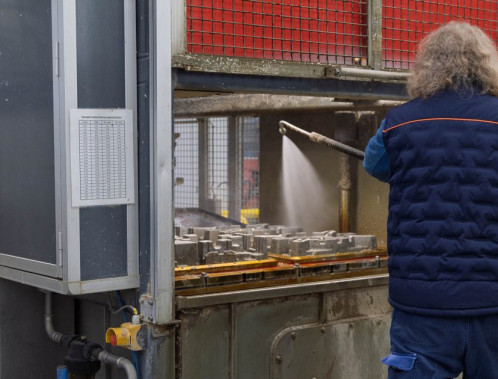
TRIDAS operates both wet press and dry press molded fibre production technologies under one roof at its Czech facility, enabling specification validation and technology selection based on actual production data rather than theoretical material properties. Buyers working with TRIDAS receive wall-thickness and density recommendations derived from over 20 years of production experience across cosmetics, electronics and audio packaging applications, with tooling lead times of approximately 4 weeks supported by in-house tool design and fabrication. TRIDAS conducts facility tours for qualified procurement teams, allowing buyers to observe wet press and dry press production lines in operation and understand how specification parameters translate into physical manufacturing constraints. For applications requiring black molded fibre — particularly premium electronics and audio packaging where aesthetic consistency is critical — TRIDAS operates dedicated production lines launched in 2026, eliminating cross-contamination risks that affect colour consistency in shared-line production.
Protective packaging applications — including e-commerce inserts, industrial component packaging and appliance transport packaging — typically require 2–5 mm wall thickness at lower density (0.3–0.5 g/cm³) to maximise impact absorption, achieved through dry press production. Premium presentation packaging for cosmetics, fragrance and consumer electronics uses 0.8–2 mm walls at higher density (0.6–0.8 g/cm³) for smooth surfaces and fine detail, produced via wet press technology. Specification should be driven by drop-test performance requirements rather than dimensional targets.
Molded fibre dimensional tolerances range ±0.3–1.0 mm [SOURCE NEEDED] depending on feature size and production technology, looser than injection-moulded polystyrene or ABS (±0.1–0.3 mm [SOURCE NEEDED]) but sufficient for non-food packaging where cosmetic fit rather than precision assembly drives requirements. Tighter tolerances are achievable through secondary machining or trim operations but increase per-unit cost. Procurement should specify functional fit requirements — for example, "lid must close with tactile snap and remain secure under 5 N lateral force" — rather than absolute dimensional limits, enabling suppliers to optimise tool design within material constraints.
EU molded fibre packaging validation uses ISTA 2A (partial simulation testing for individual packaged products), ISTA 3A (general simulation testing for parcel delivery shipments) and ISTA 6 (member-performance testing for specific distribution environments), the same protocols applied to plastic protective packaging. Testing must account for fibre materials' moisture sensitivity: conditioning samples at 23°C and 50% relative humidity per ISO 187 before mechanical testing ensures results reflect real-world performance rather than laboratory artefacts. Buyers should specify which ISTA protocol and payload configuration the package must survive rather than requesting generic "drop test to 1.2 metres" without defined success criteria.
Tooling costs for molded fibre range €15,000–45,000 per cavity set [SOURCE NEEDED], significantly lower than injection-moulding tools but still requiring justification against expected production volumes. TRIDAS manufactures tooling in-house with lead times of approximately 4 weeks from order, substantially shorter than suppliers outsourcing tool fabrication (industry typical 12+ weeks). Lead time includes CAD engineering review, tool fabrication, sampling and approval iterations. Procurement should verify supplier tooling capabilities during RFQ evaluation since outsourced tool fabrication can double pre-launch timelines even when quoted unit prices are competitive.
Basis weight — expressed in g/m² and typically ranging 400–1200 g/m² for non-food packaging — correlates directly with both raw material cost and mechanical strength. Higher basis weight increases compression resistance and burst strength but also increases material cost per unit and package weight, potentially affecting transport costs and carbon footprint calculations under scope 3 emissions accounting. Buyers should specify minimum mechanical performance requirements (compression load, drop-test survival) and let suppliers optimise basis weight within those constraints rather than setting arbitrary g/m² targets that may over-engineer the component or compromise cost competitiveness.
Wet press molded fibre supports intricate embossing, fine text reproduction and tight radii but requires draft angles typically 3–7° [SOURCE NEEDED] for tool release and limits wall thickness to 0.8–2 mm. Dry press accommodates deeper draws, thicker walls (2–5 mm) and more complex three-dimensional geometries but produces rougher surfaces unsuitable for direct printing without secondary coating. Undercuts and zero-draft vertical walls are not achievable in either technology. Procurement should share CAD models with suppliers early in the specification process to identify design modifications that improve manufacturability and reduce tooling costs.
Colour consistency in molded fibre is specified using ΔE (Delta E) colour difference units, with ΔE < 2 representing "not perceptible to human eye" and ΔE 2–5 representing "perceptible but acceptable for most packaging applications" [SOURCE NEEDED]. Natural molded fibre ranges light grey to brown depending on pulp source; achieving specific brand colours requires pigmentation during pulp preparation or post-production coating. TRIDAS operates dedicated black molded fibre production lines to eliminate cross-contamination risks affecting colour batch consistency. Buyers should specify target ΔE tolerance relative to approved colour standard rather than requesting Pantone matches, since molded fibre colour measurement follows ISO 12040 lightfastness protocols adapted from paper and board rather than solid ink standards.
Minimum order quantities for custom molded fibre packaging typically require annual volumes of 50,000–500,000 units [SOURCE NEEDED] to justify tooling investment, though exact thresholds depend on component complexity, cavity count per production cycle and supplier production-line setup costs. Higher volumes enable multi-cavity tooling that reduces per-unit manufacturing cost but increases upfront tooling capital commitment. Procurement should discuss volume forecasts transparently during RFQ evaluation to ensure quoted unit prices reflect realistic production scenarios rather than optimistic volume assumptions that collapse when actual orders are placed.