10. 09. 2026
Wet press molded fibre can form complex geometries with undercuts, radii under 3 mm, and draft angles from 3°, while dry press molded fibre requires simpler geometries with minimum 5 mm radii, draft angles above 5°, and no undercuts. The distinction stems from fundamental differences in how each process forms and releases parts: wet press uses matched heated dies that compress wet pulp simultaneously with drying, enabling fine detail; dry press pre-forms pulp on a forming tool, then transfers the dry pre-form to a heated press, limiting geometric freedom but maximising impact absorption through thicker walls.
Molded fibre design constraints define which three-dimensional shapes can be manufactured reliably at production scale. Unlike injection moulding where molten polymer flows into complex cavities, molded fibre forms by depositing wet cellulose pulp onto a shaped tool surface. The pulp must release cleanly from the tool after forming and drying, which imposes geometric limits based on the production technology used.
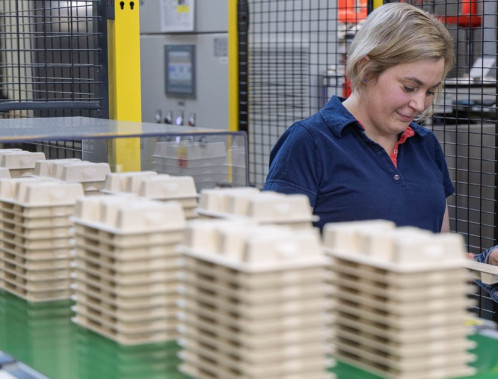
Wet press molded fibre is produced on a compact line where forming and drying happen together inside a heated press die. The wet pulp pre-form is pressed under heat and pressure simultaneously, so shaping and dewatering occur in the same step. Result: thinner walls (typically 0.8–2 mm), smoother surface, higher density, finer surface detail, better printability. This process permits complex geometries because the matched male and female die surfaces control the part throughout the compression cycle. Undercuts, tight radii, and fine embossed detail become possible because the part never transfers between tools while wet.
Dry press molded fibre is produced on a long continuous line with a drying oven. The wet pulp pre-form is formed, then passes through the dryer; only after drying is the dry pre-form transferred to a heated press die for final shaping. Result: thicker walls (typically 2–5 mm), rougher surface texture, lower density, higher impact absorption. The transfer step between forming and pressing imposes stricter geometric limits. The dried pre-form must release from the forming tool without tearing, then seat correctly in the final press die. Complex curves, undercuts, and tight radii risk part distortion or incomplete seating during transfer.
Draft angles control mould release in both technologies. Wet press tooling typically requires 3–7° draft on vertical walls; dry press tooling requires 5–10° due to the pre-form transfer step. Parts with insufficient draft exhibit surface tearing during release or incomplete filling of die cavities.
Minimum radii prevent stress concentration and tool damage. Wet press can form inside radii down to 2 mm; dry press requires minimum 5 mm radii to avoid pre-form cracking during transfer. Sharp corners concentrate stress during pulp deposition and reduce tool life in both processes.
Wall thickness uniformity affects material distribution. Gradual transitions between thick and thin sections (maximum 2:1 ratio over 20 mm distance) prevent incomplete filling and surface defects. Abrupt thickness changes create voids where pulp cannot deposit evenly.
| Design parameter | Wet press molded fibre | Dry press molded fibre |
|---|---|---|
| Wall thickness range | 0.8–2 mm | 2–5 mm |
| Minimum inside radius | 2 mm | 5 mm |
| Draft angle requirement | 3–7° | 5–10° |
| Undercuts permitted | Yes (with collapsible cores) | No (transfer step prevents release) |
| Maximum depth-to-width ratio | 1.5:1 | 1:1 |
| Embossed text minimum height | 1 mm (0.8 mm with fine tooling) | 2 mm (surface texture limits detail) |
| Surface finish achievable | Smooth (burnishing possible) | Textured (oven drying creates surface variation) |
| Geometric complexity | High (multiple curves, tight tolerances) | Low (simple profiles, generous tolerances) |
Design constraints determine technology selection during procurement specification. Buyers moving from plastic packaging must audit existing part geometry against wet press and dry press capabilities before requesting quotations. Parts with wall thickness below 2 mm require wet press technology; parts prioritising impact absorption over surface finish suit dry press technology.
Undercut features common in injection-moulded plastic enclosures (snap-fit tabs, living hinges, internal clips) cannot transfer directly to dry press molded fibre. Wet press molded fibre can accommodate some undercuts using collapsible core tooling, but at higher tooling cost (€8,000–15,000 per cavity set vs €5,000–10,000 for standard tooling). Buyers specifying undercut features should evaluate whether the feature delivers functional value or whether alternative closure methods (friction fit, separate lid, elastic band retention) achieve the same result at lower cost.
Draft angles affect stacking efficiency in transport and storage. Molded fibre parts with 5–7° draft nest less efficiently than injection-moulded parts with 1–2° draft. Buyers should model pallet utilisation during specification to avoid unexpected freight cost increases. Parts designed with vertical walls in plastic may require geometry revision (tapered walls, stepped profiles) to achieve acceptable nesting in molded fibre.
Radii and wall transitions influence structural performance under compression and drop-test loads. Sharp transitions between thick and thin sections create failure points under ISO 12048 compression testing. Buyers specifying premium packaging for fragile products (consumer electronics, audio equipment, fragrance bottles) should prioritise smooth radius transitions over minimising material use. The 2:1 thickness ratio guideline over 20 mm distance prevents premature failure without excessive material weight.
Tooling lead time increases with geometric complexity. Standard wet press tooling (simple tray geometry, uniform wall thickness, no undercuts) requires approximately 4 weeks from order at TRIDAS. Complex wet press tooling (multiple undercuts, tight tolerances, fine embossed detail) extends lead time to 6 weeks. Dry press tooling follows similar timescales but with lower complexity tolerance — attempting complex geometries in dry press risks prototype rejection and tooling rework cycles.
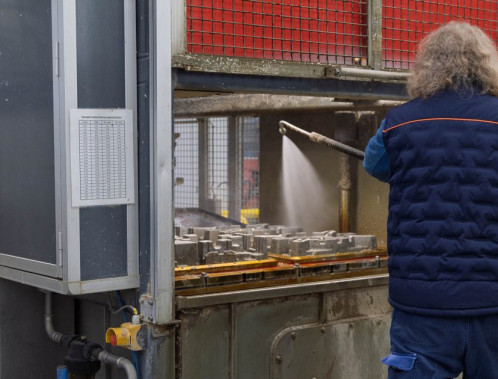
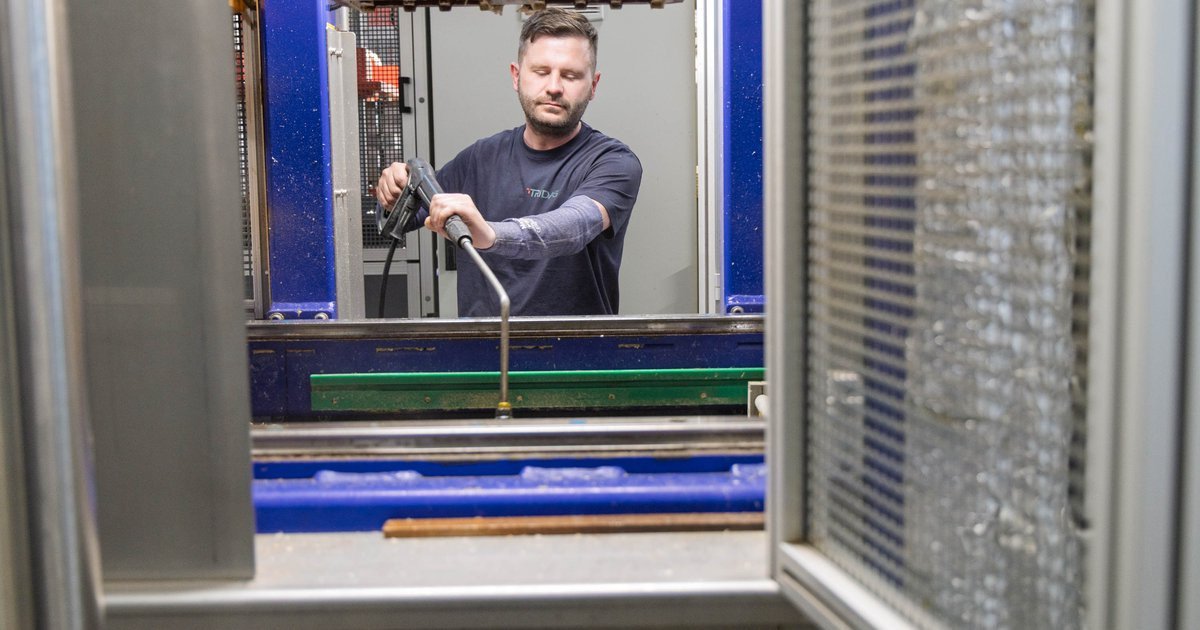
TRIDAS operates both wet press and dry press molded fibre production technologies under one roof at its Czech facility, enabling technology selection per application rather than forcing buyer requirements into a single process capability. TRIDAS designs and manufactures its own molded fibre production lines, which provides direct control over tooling design constraints and process parameters. When buyers submit part geometry for feasibility review, TRIDAS evaluates draft angles, radii, wall thickness distribution, and undercut features against both wet press and dry press capabilities before recommending technology and quoting tooling cost. TRIDAS conducts facility tours for qualified buyers where production lines and tooling manufacturing operations are open to procurement-team visits, allowing direct observation of how geometric constraints affect part quality during forming, drying, and final pressing stages.