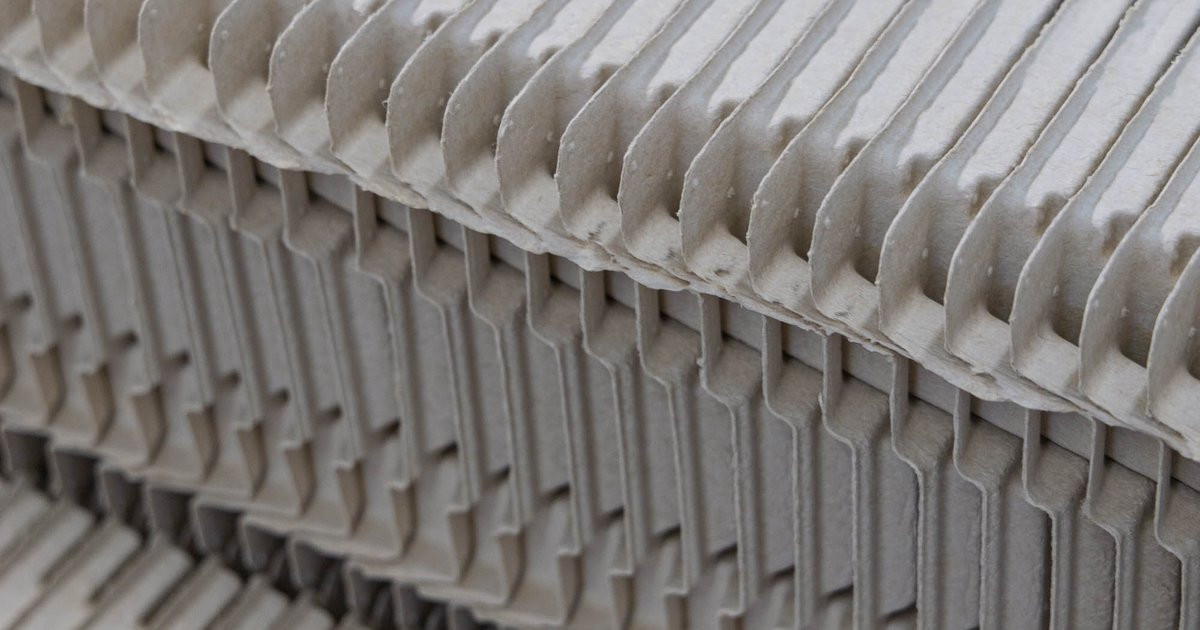
Black molded fibre packaging combines the sustainability profile of recycled paper-based materials with the visual refinement European procurement teams require for premium non-food brands. Launched commercially by TRIDAS in 2026 on dedicated production lines, black molded fibre resolves the aesthetic limitation that restricted traditional kraft molded fibre to industrial and protective packaging categories. This technology extends molded fibre application into cosmetics, fragrance, consumer electronics, audio equipment, fashion accessories and wine and spirits secondary packaging — segments where unboxing experience, brand perception and product presentation directly influence purchase decisions and customer lifetime value.
Black molded fibre packaging is manufactured from recycled paper pulp pigmented with carbon black or similar mineral-based colorants distributed uniformly through the fibre matrix before forming. Unlike surface coatings applied post-production, the pigmentation occurs during pulp preparation — the colorant integrates into the slurry that is then formed into packaging components via wet press or dry press molded fibre technology. This through-mass pigmentation ensures colour consistency across the entire wall thickness, eliminating the visual defects (edge colour mismatches, wear-through to substrate) common in coated kraft alternatives.
Production requires dedicated manufacturing lines to prevent cross-contamination into standard kraft production batches. TRIDAS launched dedicated black molded fibre production lines in 2026 at its Valašské Meziříčí facility in the Czech Republic, enabling simultaneous standard kraft and black production without batch changeovers or contamination risk. The pigment loading typically represents 2–8% of dry pulp weight depending on target darkness and opacity; higher loadings deliver deeper blacks but may reduce tensile strength slightly compared to unpigmented kraft at equivalent basis weight.
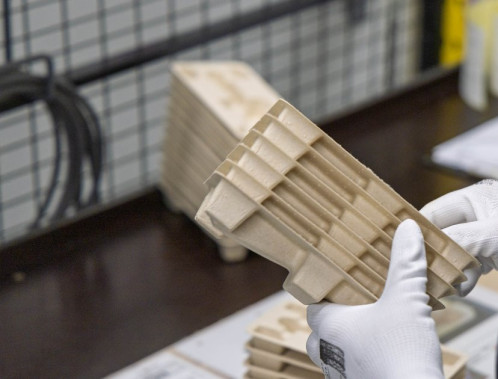
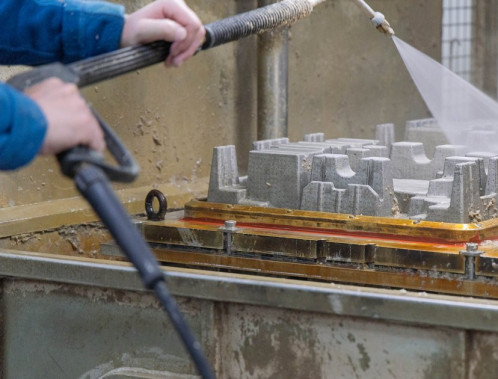
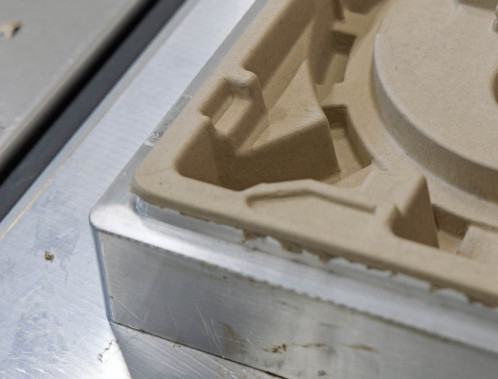
Both wet press and dry press technologies can produce black molded fibre, but surface finish, wall thickness and application requirements dictate technology selection. Wet press molded fibre — where forming and drying occur simultaneously in a heated press die — produces thinner walls (typically 0.8–2 mm), smoother surfaces, higher density and finer surface detail. This makes wet press the standard choice for premium packaging applications: cosmetics, fragrance, consumer electronics, audio equipment and fashion accessories where surface quality and printability matter. TRIDAS operates wet press production technologies under one roof alongside dry press capability, enabling technology selection per product specification.
Dry press molded fibre — produced on longer continuous lines with separate drying ovens followed by final press shaping — delivers thicker walls (typically 2–5 mm), lower density and higher impact absorption. Dry press black molded fibre suits protective packaging applications: e-commerce protective inserts, industrial component packaging and transport packaging where cushioning performance outweighs surface finish. The technology choice for black molded fibre follows the same engineering logic as kraft production, with pigmentation integrated into either process route without fundamental changes to forming mechanics.
Carbon black pigments used in black molded fibre are mineral-based and do not compromise fibre recyclability. Under Regulation (EU) 2025/40 (the Packaging and Packaging Waste Regulation, PPWR), fibre-based packaging must achieve recyclability rates of at least 70% from 2030 and 80% from 2038. Black molded fibre manufactured from recycled paper grades and pigmented with mineral colorants meets EN 13430 recyclability criteria — the carbon black particles do not interfere with pulping, de-inking or fibre recovery in European paper recycling streams. This distinguishes black molded fibre from plastic-coated or laminated kraft alternatives, where barrier layers or adhesives often render packaging non-recyclable under EN 643 paper grade classifications.
Achieving consistent black colour throughout molded fibre production requires precise pigment dispersion in the pulp slurry before forming. Carbon black particles must remain evenly suspended across the entire batch to prevent colour variation between early and late production runs or between different sections of the same component. Industrial mixers with high shear capability ensure uniform pigment distribution, but production monitoring must track colour consistency across each shift and batch. Lightfastness testing under ISO 12040 confirms that black molded fibre maintains colour stability under UV exposure — critical for retail display environments and product shelf life in premium categories.
Pigment loading affects not only colour depth but also material density and mechanical properties. Higher carbon black percentages deliver richer blacks approaching Pantone Process Black or RAL 9005 equivalents, but excessive loading can reduce fibre bonding and lower compression strength. TRIDAS optimises pigment formulations per application: cosmetics and fragrance packaging prioritises surface finish and colour depth, while electronics protective inserts prioritise ESD properties and impact absorption alongside aesthetic requirements. Production process control includes inline colour measurement and batch documentation to maintain ΔE colour consistency within specification across multi-week production runs.
Traditional kraft molded fibre presents a natural brown appearance resulting from unbleached recycled paper pulp — an aesthetic that communicates sustainability and environmental responsibility but limits application in premium categories where brand presentation drives purchase decisions. Black molded fibre extends the material's sustainability credentials into luxury and premium segments by delivering visual refinement comparable to injection-molded plastics or flocked thermoformed trays, without the environmental footprint of virgin petroleum-based materials.
Brand perception research in cosmetics and consumer electronics indicates that packaging colour directly influences perceived product quality and price positioning. Black packaging associates with premium positioning, technical sophistication and luxury branding across European markets — effects that kraft's brown tones do not replicate. For procurement teams managing SKU transitions from plastic to fibre-based alternatives, black molded fibre eliminates the "downgrade" perception risk that kraft packaging introduces in premium product lines. The unboxing experience — particularly first tactile and visual impressions — remains comparable to incumbent plastic solutions while meeting corporate sustainability commitments and upcoming PPWR recyclability mandates.
Cosmetics and fragrance packaging demands flawless surface finish, tight dimensional tolerances and visual consistency across production batches. Black molded fibre produced via wet press technology meets these requirements: surface smoothness supports offset printing, hot foiling and embossing without pre-coating; dimensional stability ensures consistent product fit across multi-cavity tooling; and through-mass pigmentation prevents colour variation at edges and corners where coated alternatives show substrate bleed-through.
Haircare, oral care and body care applications — including shampoo bottles, toothbrush packaging and skincare secondary packaging — transition readily to black molded fibre when brands prioritise recyclability under PPWR while maintaining premium shelf presence. Fragrance packaging, where unboxing ritual influences brand loyalty and repurchase behaviour, benefits particularly from black molded fibre's tactile surface and structural integrity. TRIDAS supplies a tier-one global smartphone manufacturer, demonstrating that black molded fibre surface quality and dimensional precision meet the standards of brands with stringent packaging specifications and zero-defect quality requirements.
Consumer electronics and audio equipment packaging must satisfy both aesthetic and functional requirements: premium visual presentation for retail and e-commerce unboxing, plus electrostatic discharge (ESD) protection for sensitive components during storage and transit. Black molded fibre addresses both needs simultaneously. Carbon black pigmentation provides inherent antistatic properties — the conductive carbon particles dissipate static charges that could damage semiconductors, PCBs or audio drivers. This eliminates the need for separate ESD coatings or secondary protective films common in kraft or plastic alternatives.
Electronics manufacturers increasingly specify black molded fibre for smartphone accessories, headphone packaging, smartwatch retail boxes and tablet protective inserts. The material's cushioning performance (particularly in dry press variants with 2–5 mm wall thickness) absorbs transit shocks while the black aesthetic aligns with device industrial design language — especially for premium audio brands and consumer electronics in matte black or space grey finishes. TRIDAS validates technology selection per product specification, ensuring that wall thickness, density and surface finish match drop test requirements (typically ISTA 2A, 3A or 6 for electronics transit packaging) alongside brand presentation standards.
While black represents the most commercially significant colour variant in premium molded fibre, custom colour pigmentation is technically feasible across a wide spectrum. Navy blue, charcoal grey, burgundy and forest green molded fibre have all been produced for luxury fashion accessories and wine and spirits secondary packaging. Colour matching to brand Pantone references requires pigment formulation testing and production trials — lighter colours demand higher pigment loadings to achieve opacity, and some organic pigments affect fibre recyclability or exhibit lower lightfastness than mineral-based alternatives.
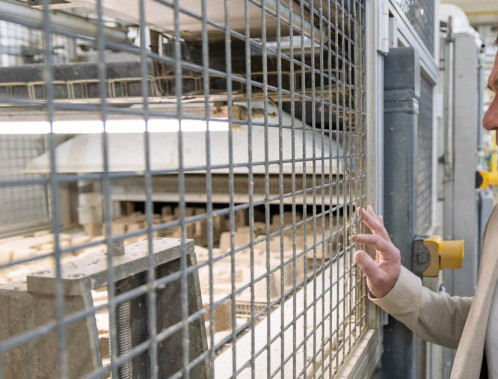
Procurement teams considering custom colours beyond black should evaluate three constraints: minimum order quantities (MOQ) for dedicated production runs vary with part complexity and tooling cavity count, with higher volumes required to justify line changeover and pigment procurement; lead times extend 2–4 weeks beyond standard black production for colour matching and approval; and unit costs increase due to pigment cost premiums and batch-specific production setup. For brands with sufficient SKU volume and distinctive colour equity (e.g. signature Tiffany blue or Hermès orange), custom coloured molded fibre delivers differentiation and sustainability simultaneously. TRIDAS conducts facility tours for qualified buyers where production lines and colour matching processes are open to procurement-team inspection.
| Property | Black molded fibre (wet press) | Kraft molded fibre | Injection-molded plastic | Flocked thermoform |
|---|---|---|---|---|
| Typical wall thickness | 0.8–2 mm | 0.8–5 mm | 1–3 mm | 0.5–1.5 mm + flock |
| Surface finish | Smooth, matte | Textured, natural | Smooth, glossy/matte | Soft-touch velvet |
| Recyclability (EU) | Paper stream, EN 13430 compliant | Paper stream, EN 13430 compliant | Plastic stream, limited infrastructure | Non-recyclable (composite) |
| Tooling lead time | ~4 weeks (TRIDAS) | ~4 weeks (TRIDAS) | 12+ weeks | 8–12 weeks |
| MOQ (typical) | From 10,000 units (varies with complexity) | From 10,000 units (varies with complexity) | Higher thresholds | 25,000–75,000 units |
| ESD properties | Inherent antistatic (carbon black) | Neutral (non-conductive) | Requires additives or coating | Requires additives or coating |
| Colour consistency | Through-mass, no edge bleed | Natural brown variation | Uniform, tight tolerances | Surface only, substrate visible at edges |
Procurement managers and sustainability leads evaluating packaging transitions under PPWR face a strategic choice: maintain incumbent plastic materials and accept increasing regulatory risk and consumer perception challenges, or transition to fibre-based alternatives and risk downgrading brand presentation in premium categories. Black molded fibre resolves this dilemma by meeting both sustainability mandates and premium aesthetic requirements without compromise.
For cosmetics and fragrance brands, black molded fibre enables SKU-level transitions from PET, PS or ABS plastic components to fully recyclable fibre-based alternatives while preserving unboxing experience and shelf presence. The material's through-mass pigmentation eliminates edge colour mismatches that disqualify coated kraft from luxury applications, and wet press surface quality supports offset printing, foiling and embossing techniques brands already specify for plastic packaging. Tooling lead times at TRIDAS — approximately 4 weeks from order versus industry typical 12+ weeks for injection mold tooling — accelerate SKU launch timelines and reduce capital commitment risk during material trials.
Electronics and audio brands gain additional functional benefits beyond aesthetics: inherent ESD protection from carbon black pigmentation, superior cushioning versus thermoformed plastic trays, and compliance with emerging Regulation (EU) 2023/1115 (EUDR) traceability requirements through FSC-certified pulp sourcing. TRIDAS provides EUDR-compliant Due Diligence Statements per shipment, documenting that pulp originates primarily from EU low-risk regions — a traceability standard that plastic resin supply chains rarely match. For brands with multi-year sustainability roadmaps targeting 2030 PPWR recyclability thresholds, black molded fibre de-risks compliance while maintaining premium product positioning.
Commercial considerations include MOQ requirements (from 10,000 units, varying with component complexity and tooling cavity count), tooling investment (EUR 5,000–20,000 per cavity set), and unit price positioning versus incumbent plastics. Black molded fibre unit costs typically exceed kraft molded fibre due to pigment cost and dedicated line requirements, but remain competitive with injection-molded plastics when total cost of ownership includes tooling amortisation, inventory carrying costs and end-of-life compliance risk. At higher annual volumes, tooling costs amortise over production runs, often achieving cost-neutral transitions.
TRIDAS launched dedicated black molded fibre production lines in 2026 specifically to address the premium packaging gap European brands identified during material transition evaluations. Our facility in Valašské Meziříčí operates both wet press and dry press molded fibre production technologies under one roof, enabling technology selection per application — wet press for cosmetics, fragrance and electronics where surface finish drives brand perception, dry press for protective packaging where impact absorption and wall thickness matter most. We design and manufacture our own molded fibre production lines, ensuring process control and quality consistency that third-party equipment integrators cannot replicate. In-house tooling design and manufacture delivers approximately 4 weeks lead time from order — significantly faster than market averages — and our FSC chain-of-custody certification plus EUDR-compliant Due Diligence Statements per shipment address the traceability requirements brands face under Regulation (EU) 2023/1115. We conduct facility tours for qualified buyers; production lines and equipment manufacturing operations are open to procurement-team visits.
Yes. Black molded fibre manufactured from recycled paper pulp and pigmented with mineral-based carbon black meets EN 13430 recyclability criteria and the 70% recyclability target under Regulation (EU) 2025/40 from 2030. The carbon black particles do not interfere with pulping or fibre recovery in European paper recycling streams classified under EN 643.
Yes. Wet press black molded fibre accepts offset printing, flexographic printing, hot foiling and embossing. The smooth surface finish eliminates the pre-coating step required for traditional kraft molded fibre, and through-mass black pigmentation provides consistent contrast for metallic foils and white ink overprints.
MOQ from 10,000 units, varying with component complexity and tooling cavity count. Brands with lower volumes may access black molded fibre through shared production batches if component geometry suits multi-client tooling configurations.
Yes. Carbon black pigmentation provides inherent antistatic properties, dissipating electrostatic charges that could damage sensitive electronic components. This eliminates the need for separate ESD coatings or secondary protective films common in kraft or plastic alternatives used for smartphone, audio and consumer electronics packaging.
TRIDAS in-house tooling design and manufacture delivers approximately 4 weeks lead time from order for molded fibre tooling, versus 12+ weeks typical for injection mold tooling. This accelerates SKU launch timelines and reduces capital commitment during material transition trials.
Yes, but with constraints. Custom colours (navy, charcoal grey, burgundy, forest green) require pigment formulation testing, dedicated production runs and higher MOQ than standard black production. Lead times extend 2–4 weeks beyond standard black production, and unit costs increase due to pigment premiums and batch-specific setup.
Wet press black molded fibre typically ranges 0.8–2 mm wall thickness, suitable for premium cosmetics, fragrance and electronics packaging. Dry press black molded fibre ranges 2–5 mm, suitable for protective packaging and e-commerce inserts requiring higher impact absorption.
Under Regulation (EU) 2023/1115 (EUDR), applicable from 30 December 2026, operators placing paper-based packaging on the EU market must provide Due Diligence Statements documenting that pulp originates from legal, deforestation-free sources. TRIDAS is FSC-certified and provides EUDR-compliant Due Diligence Statements per shipment, documenting that pulp sources primarily from EU low-risk regions.