07. 31. 2026
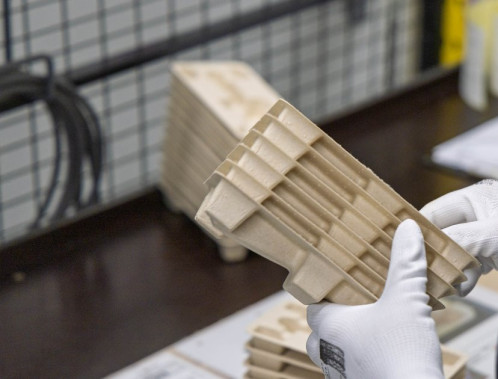
Black molded fibre packaging is produced by dispersing carbon black pigment throughout the pulp slurry during the refining stage, before the forming process begins. The carbon black integrates into the fibre matrix during beating, ensuring uniform colour distribution through the wall thickness. This differs fundamentally from surface coating methods used in plastics or paperboard, where colour exists only at the surface layer. The production challenge centres on maintaining pigment dispersion consistency across production runs while avoiding clumping that creates visible specks in the finished product.
Black molded fibre production begins in the pulper, where virgin or recycled cellulose fibres mix with water to create a dilute slurry. At this stage, carbon black pigment — the same industrial colourant used in rubber tyres, printing inks and polymer compounding — enters the process stream. The pigment concentration typically ranges from 2–5% by dry weight of the final fibre content [SOURCE NEEDED], adjusted according to the target opacity and depth of black required in the finished packaging.
The critical production step occurs during refining, also called beating. Here, the pulp slurry passes through a refiner equipped with rotating bars or discs that fibrillate the cellulose fibres. This mechanical action increases the external surface area of each fibre and creates microscopic fibrils that improve fibre-to-fibre bonding in the finished product. During this stage, the carbon black particles must distribute uniformly throughout the fibre suspension. Poor dispersion results in visible specks or uneven colour intensity across the moulded surface.
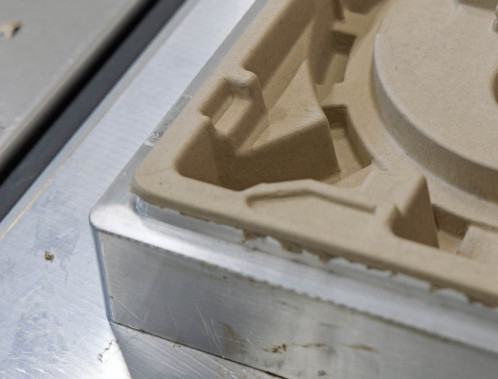
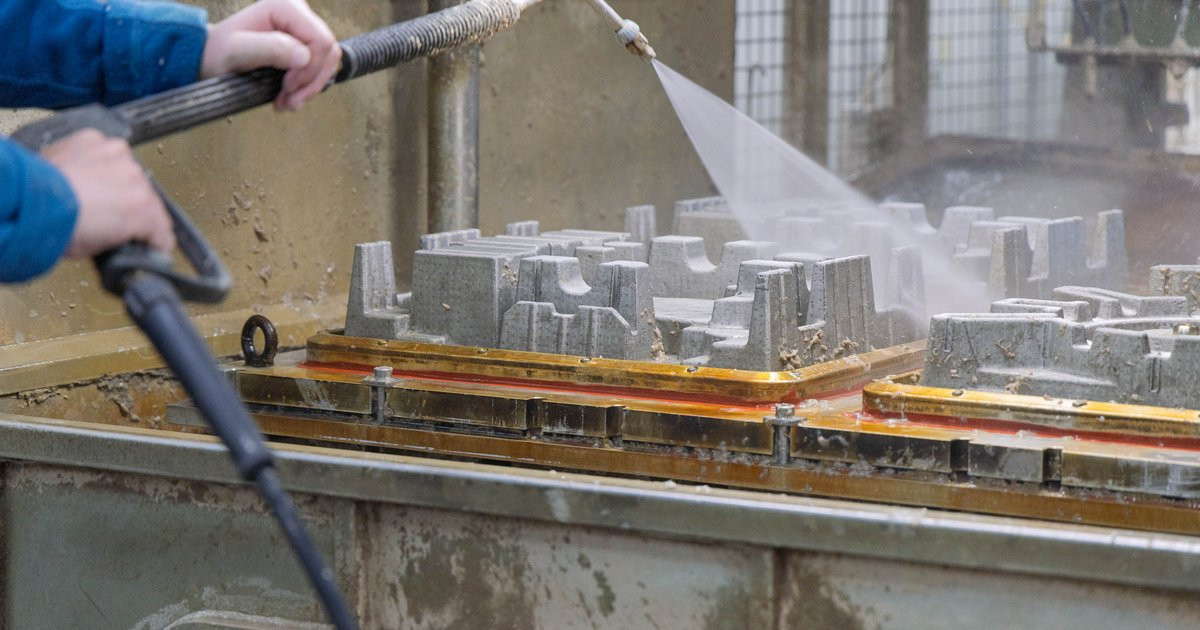
Once refining achieves the target fibre length distribution and pigment dispersion, the black pulp slurry moves to the forming stage. The production process from this point follows standard molded fibre manufacturing protocols, available in both wet press and dry press configurations. In wet press production — the preferred technology for premium cosmetics, fragrance and consumer electronics packaging — the black pulp pre-form is shaped and dried simultaneously inside a heated press die. Wet press yields thinner walls (typically 0.8–2 mm), smoother surface finish, higher density and finer detail resolution compared to dry press alternatives. In dry press production — used predominantly for protective packaging applications such as e-commerce inserts and industrial component packaging — the wet pre-form is first shaped on a vacuum former, then passed through a drying oven, and finally transferred to a heated press die for final shaping. This produces thicker walls (typically 2–5 mm), rougher texture, lower density and higher impact absorption capacity.
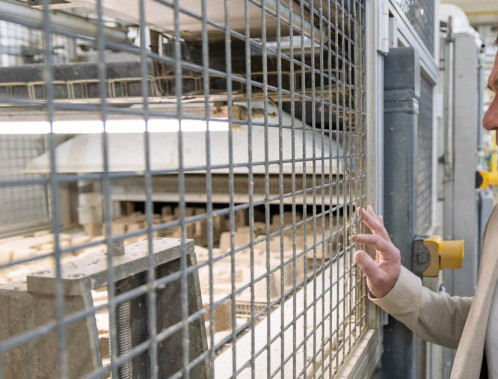
Manufacturers operating black molded fibre lines typically run dedicated production equipment to prevent cross-contamination. Carbon black pigment, once present in the pulp system, is difficult to remove completely. Even trace residues can discolour subsequent natural-fibre production runs, creating quality failures in applications where brand colour specifications demand pristine white or natural kraft appearance. TRIDAS operates dedicated black molded fibre production lines launched in 2026, separating black production from natural fibre runs to eliminate cross-contamination risk.
| Characteristic | Through-dyed black molded fibre | Surface-coated black paperboard | Black injection-moulded plastic |
|---|---|---|---|
| Colour location | Throughout wall thickness | Surface layer only | Throughout wall thickness |
| Edge appearance | Consistent black at cut edges | White core visible at cut edges | Consistent black at cut edges |
| Scratch resistance | Colour damage not visible on minor scratches | White substrate visible where coating scratches | Colour damage not visible on minor scratches |
| Production contamination risk | High — requires dedicated lines | Moderate — coating systems separate from substrate | Moderate — purge cycles manage colour changes |
| Typical pigment loading | 2–5% by dry weight [SOURCE NEEDED] | Variable by coating formulation | 1–3% by polymer weight [SOURCE NEEDED] |
| Recyclability in paper streams | Yes — carbon black separates during repulping | Depends on coating chemistry — some barrier coatings contaminate recycling | Not applicable — polymer recycling only |
Procurement teams specifying black molded fibre packaging for premium applications — particularly cosmetics, fragrance, consumer electronics and fashion accessories — should understand that through-dyed black offers functional advantages beyond aesthetic preference. The colour extends through the entire wall structure, so minor handling damage during assembly, transit or retail display does not expose a contrasting substrate colour. This matters in categories where product presentation influences purchase decisions at point of sale.
However, the production method introduces supply chain considerations. Manufacturers running black molded fibre on dedicated production lines typically operate those lines in campaign mode, producing black items in batches rather than continuously. This can affect minimum order quantities and lead times compared to natural kraft or white molded fibre items, where production lines run continuously. Buyers should confirm supplier production scheduling practices during the qualification process, particularly if forecast volumes fall below typical campaign batch sizes.
The pigmentation process also affects unit economics. Carbon black pigment represents an additional material cost beyond the base pulp, and dedicated production lines carry utilisation challenges when demand volumes remain modest. Buyers comparing quoted unit prices between black molded fibre and alternative materials should account for these production realities rather than expecting pricing parity with natural fibre equivalents. The premium typically reflects genuine cost differences in raw materials and production efficiency, not arbitrary market positioning.
For applications requiring EUDR compliance under Regulation (EU) 2023/1115, which applies from 30 December 2026, the carbon black pigment itself falls outside the regulation's scope — EUDR covers wood, cattle, cocoa, coffee, oil palm, rubber and soya. However, the cellulose fibre base remains subject to due diligence requirements. Suppliers should provide Due Diligence Statements covering the fibre component, with geolocation data for forest origin, regardless of the pigmentation method used.
TRIDAS launched dedicated black molded fibre production lines in 2026, separating black production from natural fibre runs to eliminate cross-contamination risk between campaigns. The production equipment operates both wet press and dry press technologies under one roof, enabling technology selection based on application requirements — wet press for premium cosmetics and electronics packaging requiring smooth surface finish and fine detail resolution, dry press for protective packaging applications requiring higher impact absorption. TRIDAS sources pulp primarily from EU low-risk regions and provides EUDR-compliant Due Diligence Statements per shipment under Regulation (EU) 2023/1115, covering the cellulose fibre component used in black production.