06. 01. 2026
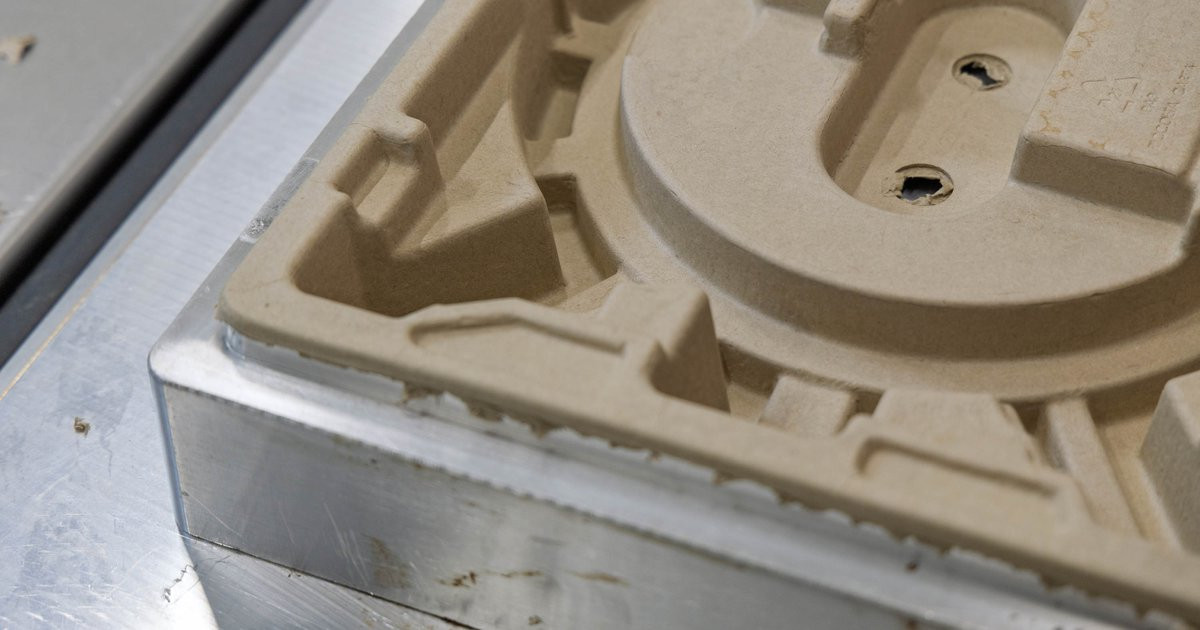
Black molded fibre packaging delivers tactile luxury and visual differentiation for cosmetics and fragrance brands seeking premium unboxing experiences without plastic. The material combines structural rigidity, smooth surface finish, and deep black colour saturation achievable through dedicated production lines using dyed pulp formulations, eliminating post-production coating or painting steps that introduce quality variability and extend lead times.
Black molded fibre packaging for cosmetics and fragrance uses pulp dyed black during the manufacturing process, before forming. The black colour runs throughout the material thickness rather than applied as a surface coating, eliminating chipping or colour inconsistency at cut edges and tooling contact points.
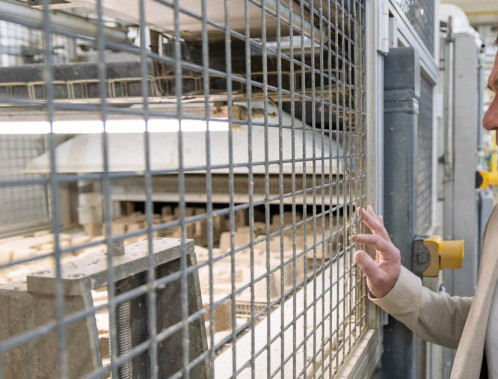
Production requires dedicated manufacturing lines to prevent pigment migration into natural-colour batches. TRIDAS operates dedicated black molded fibre production lines launched in 2026, maintaining separate pulp storage, forming equipment, and pressing systems. This segregation ensures colour consistency across production runs and eliminates the 24-48 hour line changeover time typical when running black on shared equipment.
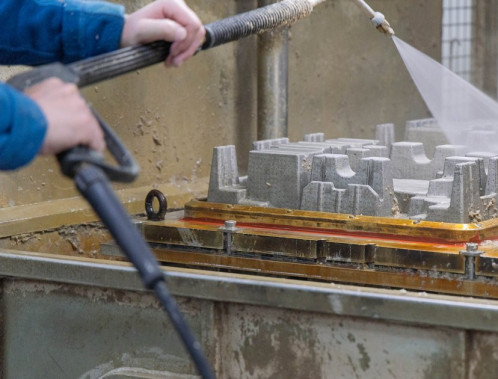
Cosmetics and fragrance applications primarily use wet press molded fibre technology. The process forms wet pulp pre-forms under heat and pressure simultaneously inside heated press dies, producing thinner walls (typically 0.8–2 mm), smoother surfaces, and higher density than dry press alternatives. The wet press method compresses fibres under controlled temperature and pressure, creating surface finish suitable for premium decoration techniques including hot foil stamping, embossing, and screen printing.
Black pulp formulation starts with bleached or unbleached kraft pulp mixed with food-safe carbon black or synthetic black dyes meeting EU chemical restrictions. The dye integrates during pulp preparation before forming, ensuring uniform colour distribution. Colour consistency measured by ΔE values under laboratory conditions can achieve repeatability within industrial tolerances when production parameters remain controlled, though specific validation data depends on dye supplier specifications and production line capabilities.
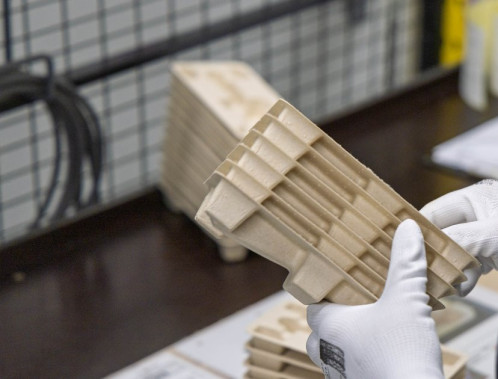
The material structure retains the inherent properties of molded fibre: porosity allows moisture buffering, fibrous construction provides cushioning against minor impacts, and the rough reverse side (die contact surface) contrasts with the smooth presentation face. Wall thickness selection balances structural rigidity against weight and material cost, with cosmetics inserts typically ranging 1.2–1.8 mm and fragrance bottle supports requiring 1.5–2.5 mm depending on product weight.
| Material system | Surface finish | Colour consistency | Decoration compatibility | Recyclability status |
|---|---|---|---|---|
| Black molded fibre (dyed pulp) | Smooth on presentation face, textured reverse | Through-colour, edge colour matches face | Hot foil, emboss, screen print compatible | Paper stream recyclable per EN 13430 |
| Natural molded fibre + black coating | Coating-dependent, may crack at folds | Variable at edges, coating adhesion critical | Limited – coating interferes with foil adhesion | Coating composition affects recyclability |
| Vacuum-formed PET (black) | Glossy, consistent across surface | Uniform colour, no edge variation | Print, label application standard | Plastic stream, separate collection required |
| Injection-molded PP (black) | Matte or gloss tooling-dependent | Highly consistent, masterbatch control | In-mould labelling, pad print, laser etch | Plastic stream, contamination risk from labels |
| Thermoformed pulp + coating | Coating-dependent, lower density substrate | Requires post-mould coating application | Print on coating possible, foil difficult | Coating type determines recyclability pathway |
Procurement teams evaluating black molded fibre for cosmetics and fragrance packaging need to verify three production capabilities before tooling investment: dedicated black production lines, wet press technology access, and decoration trial capacity.
Dedicated production lines determine whether colour consistency remains stable across repeat orders. Suppliers running black on shared equipment face 24-48 hour changeover windows and pigment carryover risk. Ask suppliers directly: do you operate dedicated black lines, or do you schedule black runs on multi-colour equipment? The answer affects both lead time predictability and colour batch-to-batch variation. TRIDAS operates dedicated black molded fibre production lines, maintaining separate equipment for black production to ensure colour consistency without changeover delays.
Wet press capability matters for surface finish quality. Cosmetics and fragrance brands require smooth presentation surfaces for decoration and premium tactile experience. Dry press molded fibre produces thicker, rougher surfaces suited to protective packaging applications but incompatible with hot foil stamping or fine embossing detail. Confirm the supplier operates wet press technology – forming and drying occur simultaneously inside heated press dies – rather than dry press systems with separate oven-drying stages.
Decoration trial capacity determines whether design intent translates to production reality. Hot foil stamping, embossing, and screen printing each impose different surface finish requirements. Request decoration trials on production-representative samples before tooling commitment, using your specified foil supplier and stamping parameters. Surface density, moisture content, and fibre orientation all affect foil adhesion and emboss definition. Trials validate decoration feasibility and identify production parameter adjustments needed for consistent output.
Sustainability documentation requirements under Packaging and Packaging Waste Regulation (EU) 2025/40 and the EU Deforestation Regulation (EU) 2023/1115 apply equally to black molded fibre as to natural-colour alternatives. Verify FSC chain-of-custody certification covers black pulp batches specifically, not only natural pulp. Request EUDR Due Diligence Statements per shipment confirming pulp sourcing from low-risk regions or deforestation-free supply chains. TRIDAS provides EUDR-compliant Due Diligence Statements per shipment and sources pulp primarily from EU low-risk regions.
Tooling lead time for black molded fibre matches natural-colour production when the supplier maintains in-house tooling capabilities. External tooling subcontractors add 4-8 weeks to project timelines. TRIDAS designs and manufactures tooling in-house with typical lead time approximately 4 weeks from order, significantly faster than market average where external tooling sourcing extends timelines to 12+ weeks.
TRIDAS launched dedicated black molded fibre production lines in 2026 specifically to serve cosmetics, fragrance, and consumer electronics applications requiring premium unboxing experience. The dedicated line infrastructure ensures colour consistency across production batches and eliminates changeover delays inherent in shared-line production. TRIDAS operates both wet press and dry press molded fibre production technologies under one roof, enabling technology selection per application – wet press for cosmetics and fragrance where surface finish drives brand perception, dry press for protective packaging where impact absorption matters more than surface smoothness. FSC chain-of-custody certification and EUDR-compliant Due Diligence Statements per shipment address EU regulatory requirements under Regulation (EU) 2023/1115 applying 30 December 2026.