10. 05. 2026
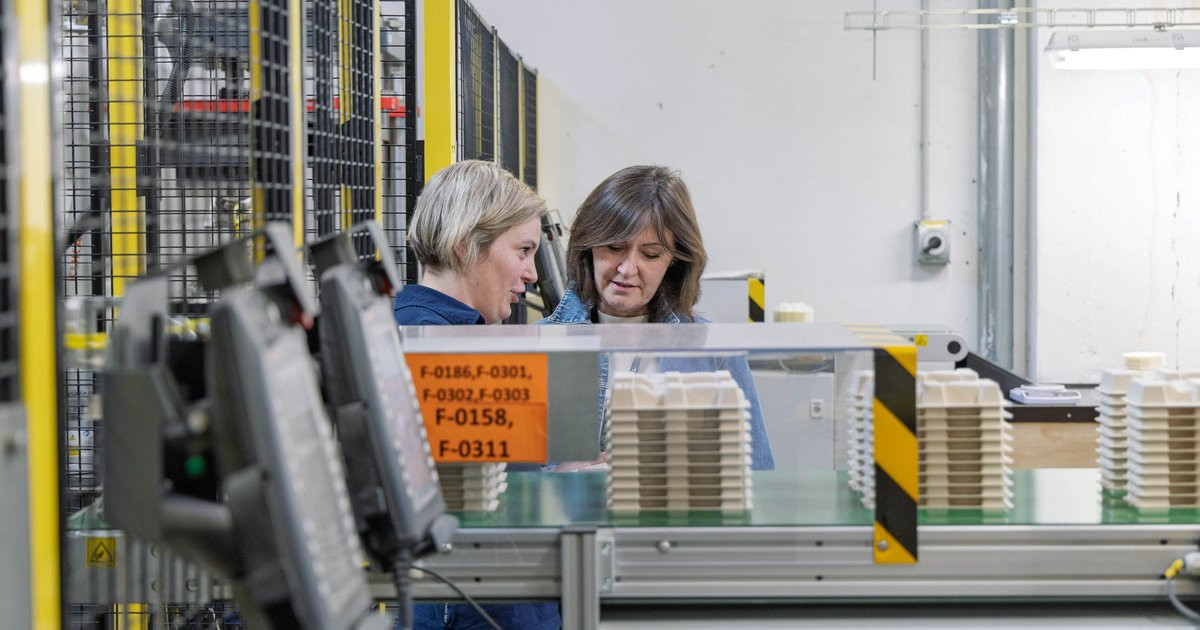
Molded fibre packaging can be produced in custom colours through three primary methods: dyed-pulp integration (mixing pigments directly into the pulp slurry before forming), surface coating application after forming, and printing on the finished surface. Dyed-pulp methods achieve through-colour consistency where the entire wall thickness matches the target shade, while coatings and printing apply colour only to visible surfaces. Black molded fibre requires dedicated production lines to prevent cross-contamination with natural or light-coloured grades, whereas lighter custom colours can often share equipment with standard production through careful line cleaning protocols.
Three distinct colouring methods address different performance requirements in molded fibre packaging. Dyed-pulp integration mixes pigments into the recycled paper slurry before the forming process begins. Pigment particles bond to cellulose fibres during the pulping stage, so the resulting material exhibits uniform colour throughout its cross-section. When a dyed-pulp component is cut or abraded, the interior material matches the surface colour. This method works for both wet press and dry press molded fibre technologies, though achieving consistent colour batch-to-batch requires careful pigment dosing and pulp source standardisation.
Surface coating applies pigmented polymers or water-based dispersions to the formed and dried part. Coating processes include spray application, dip coating, and curtain coating, depending on part geometry and production volume. Coatings penetrate the surface fibres to a depth of 0.05-0.2 mm, leaving the bulk material in its natural grey-brown or black state. This method enables Pantone colour matching and high-gloss finishes unavailable through dyed-pulp methods, but adds a post-forming production step and increases material cost.
Printing applies colour only to designated graphic areas rather than the entire surface. Flexographic printing, offset printing, and digital printing methods all work on molded fibre substrates, provided surface smoothness meets the printing technology's requirements. Wet press molded fibre, with its smoother surface and higher density, accepts fine-detail printing more readily than dry press material. Printing delivers multi-colour graphics and photographic-quality images but does not change the base substrate colour in non-printed areas.
Lightfastness performance varies significantly across these methods. Pigments formulated for outdoor UV exposure (tested under ISO 12040) maintain colour stability for extended periods, while pigments optimised for cost may fade within months under direct sunlight. Black molded fibre using carbon-based pigments achieves the highest lightfastness ratings, as carbon pigments resist UV degradation more effectively than organic colorants. Custom colours in the red, yellow, and orange spectrum typically require more expensive inorganic pigments to match black's lightfastness performance.
| Method | Colour depth | Pantone matching | Production complexity | Typical cost impact |
|---|---|---|---|---|
| Dyed pulp | Through-colour (full wall thickness) | Limited palette | Moderate – requires pigment dosing system | +15-30% vs natural fibre |
| Surface coating | 0.05-0.2 mm surface layer | Precise Pantone match possible | High – adds post-forming coating line | +25-50% vs natural fibre |
| Printing | Graphic areas only (0.01-0.05 mm) | Full-colour graphics achievable | Moderate – standard printing equipment | +10-25% vs natural fibre (graphic areas only) |
| Black (dyed pulp) | Through-colour | Single colour (carbon black) | High – dedicated line prevents contamination | +20-35% vs natural fibre |
Procurement teams evaluating custom colour options must balance aesthetic requirements against production constraints and volume economics. Dyed-pulp methods suit applications where through-colour consistency matters – cases where the packaging interior is visible during use, or where surface abrasion during handling would expose a differently coloured core. Premium cosmetics packaging and consumer electronics inserts frequently specify dyed-pulp colour to maintain visual consistency when consumers open the package. However, dyed-pulp methods limit colour gamut compared to coatings or printing, and colour validation adds 1-2 weeks to initial tooling lead time as the supplier confirms pigment chemistry compatibility with the specific pulp source. TRIDAS minimum order quantity starts from 10,000 units, varying with part complexity and tooling cavity count.
Surface coatings enable precise Pantone matching and high-gloss finishes that replicate injection-moulded plastic aesthetics. Fragrance packaging and fashion accessories frequently use coated molded fibre to achieve luxury brand colour standards. Coatings also improve moisture resistance compared to uncoated fibre, supporting applications with moderate humidity exposure during storage or distribution. The coating process does, however, complicate end-of-life recycling. While paper mills can process coated fibre in mixed-paper streams, the coating material (typically acrylic or polyurethane-based) contaminates the recycled pulp if coating weight exceeds approximately 10% of the substrate weight. Buyers prioritising recyclability should verify coating chemistry and application weight with suppliers to confirm EN 13430 recyclability compliance.
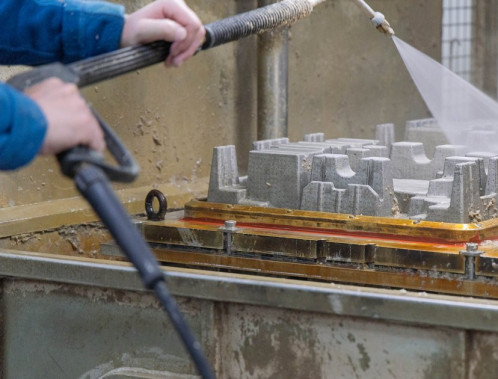
Black molded fibre presents unique production constraints because carbon pigment contamination persists in processing equipment even after thorough cleaning. Suppliers operating black molded fibre production must dedicate specific forming equipment, drying lines, and handling systems exclusively to black material. This operational separation increases suppliers' capital requirements, which in turn affects minimum order quantities and pricing structures. TRIDAS operates dedicated black molded fibre production lines to prevent cross-contamination with natural or light-coloured grades, supporting buyers who require consistent black material without contamination risk in mixed-production environments.
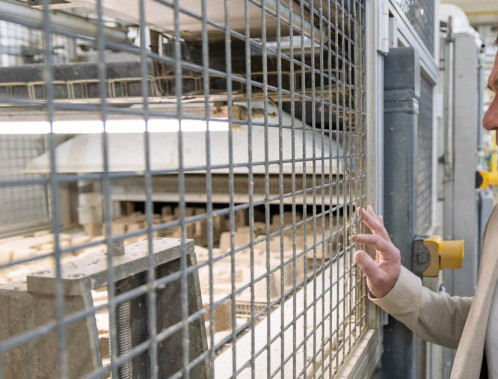
TRIDAS produces custom-coloured molded fibre using dyed-pulp integration on both wet press and dry press production lines, with black material processed on dedicated equipment launched in 2026 to eliminate cross-contamination risk. Colour consistency depends on pulp source standardisation and pigment dosing accuracy, so TRIDAS sources pulp primarily from EU low-risk regions where fibre composition remains stable between deliveries. The company conducts facility tours for qualified buyers to demonstrate colour validation protocols during tooling development. Lightfastness testing follows ISO 12040 procedures, with results documented in technical data sheets per pigment chemistry. TRIDAS is FSC-certified and provides EUDR-compliant Due Diligence Statements per shipment under Regulation (EU) 2023/1115, supporting buyers' sustainability documentation requirements for custom-coloured material.