09. 09. 2026
Molded fibre packaging faces three persistent misconceptions among European procurement teams: that it cannot handle moisture exposure, that it lacks structural strength for protective applications, and that its surface texture prevents premium brand presentation. In reality, modern wet press molded fibre achieves water resistance through barrier coatings meeting PPWR recyclability requirements under Regulation (EU) 2025/40, compression strength of 200–400 N per 100 mm² for protective inserts, and surface finishes suitable for cosmetics, consumer electronics, and fragrance packaging when combined with appropriate printing techniques.
Molded fibre misconceptions cluster around three technical assumptions carried over from legacy applications. First, that molded fibre cannot resist moisture—a belief rooted in early egg carton and horticultural tray designs where water resistance was not a specification requirement. Second, that fibre-based packaging lacks the structural strength of plastic alternatives—an assumption based on comparing thin paperboard with injection-moulded thermoplastics. Third, that molded fibre's texture inherently prevents premium brand presentation—a view that confuses dry press protective packaging (rough surface, 2–5 mm walls) with wet press premium packaging (smooth surface, 0.8–2 mm walls).
These misconceptions delay procurement decisions because buyers evaluate molded fibre against plastic benchmarks without understanding how production technology selection determines performance characteristics. A procurement manager specifying cosmetics packaging who has only encountered dry press molded fibre protective inserts in e-commerce shipments will reasonably conclude that fibre-based materials cannot support luxury brand positioning. The misconception persists because dry press and wet press molded fibre serve different application categories, yet both carry the same generic material name in supplier communications.
Moisture resistance misconceptions arise because uncoated molded fibre absorbs water—basis weight increases when exposed to high humidity, and prolonged water contact degrades structural integrity. However, barrier coatings (aqueous dispersions, biopolymer films, wax alternatives) create moisture-resistant surfaces without compromising recyclability under EN 13430. These coatings meet PPWR recyclability targets (≥70% from 2030, ≥80% from 2038) for fibre-based packaging because coating weight remains below thresholds that interfere with pulping processes.
Strength misconceptions stem from comparing molded fibre protective inserts with expanded polystyrene (EPS) foam or corrugated board, rather than recognising that molded fibre occupies a distinct performance category. Compression strength of 200–400 N per 100 mm² supports protective packaging for consumer electronics, audio equipment, and industrial components under ISTA 3A and ISTA 6 transit testing protocols. Drop-test validation with payloads up to 5 kg demonstrates that molded fibre absorbs impact energy through controlled deformation—a different protective mechanism from rigid plastic shells or foam cushioning.
Surface finish misconceptions reflect the visibility gap between dry press and wet press technologies. Dry press molded fibre—produced on long continuous lines with separate drying ovens—creates thicker walls (2–5 mm), rougher texture, and lower density suitable for protective packaging. Wet press molded fibre—produced on compact lines where forming and drying occur simultaneously inside heated press dies—creates thinner walls (0.8–2 mm), smoother surfaces, higher density, and finer detail resolution suitable for premium packaging. Buyers who encounter only dry press products conclude that molded fibre cannot achieve the surface quality required for cosmetics, fragrance, or consumer electronics primary packaging.
| Performance parameter | Wet press molded fibre | Injection-moulded PP/ABS | Dry press molded fibre |
|---|---|---|---|
| Wall thickness range | 0.8–2 mm | 1–3 mm | 2–5 mm |
| Surface texture | Smooth, printable | Smooth, glossy | Rough, textured |
| Density | 0.5–0.8 g/cm³ | 0.9–1.2 g/cm³ | 0.3–0.5 g/cm³ |
| Moisture resistance (coated) | Resistant under normal handling | Inherently water-resistant | Resistant under normal handling (coated) |
| Compression strength | 200–400 N per 100 mm² | Variable by resin and geometry | 200–400 N per 100 mm² |
| Typical application | Premium non-food packaging | Durable goods, reusable packaging | Protective inserts, transit packaging |
| PPWR recyclability target (2030) | ≥70% | Does not apply (plastic stream) | ≥70% |
Procurement managers evaluating molded fibre against plastic alternatives must specify production technology (wet press versus dry press) rather than requesting generic "molded fibre samples". A supplier producing only dry press protective packaging cannot provide samples representative of wet press premium packaging capabilities, yet both describe their output as molded fibre. This terminology gap delays qualification timelines because initial samples fail to demonstrate the surface finish, wall thickness control, or printability required for cosmetics, fragrance, or consumer electronics applications.
Sustainability leads reporting PPWR compliance progress face the misconception that all fibre-based packaging automatically meets recyclability targets without validation. Barrier coatings must be tested against EN 13430 recyclability criteria and documented with technical datasheets confirming coating type, application weight, and pulping compatibility. Suppliers stating that molded fibre is "recyclable" without providing EN 13430 test reports or coating specifications introduce compliance risk under Regulation (EU) 2025/40, which requires recyclability validation by 12 August 2026.
The moisture resistance misconception creates over-specification risk—procurement teams requesting plastic-equivalent water immersion resistance when packaging specifications require only resistance to condensation, handling moisture, or brief humidity exposure during warehousing. Barrier-coated molded fibre resists moisture under conditions defined in ISTA 2A, ISTA 3A, and IEC 60068-2-30 (damp heat testing), which represent real-world distribution environments. Specifying absolute water immersion resistance (plastic benchmark) excludes molded fibre solutions that meet actual application requirements at lower material cost and carbon impact.
Brand presentation misconceptions delay premium packaging transitions because marketing teams assess molded fibre samples produced on incorrect technology. A fragrance brand evaluating dry press protective insert samples will correctly conclude that surface texture does not support luxury positioning—but the same brand evaluating wet press samples with offset lithography or digital printing would reach a different conclusion. Technology selection determines whether molded fibre supports premium brand presentation, yet supplier communications often omit this distinction.
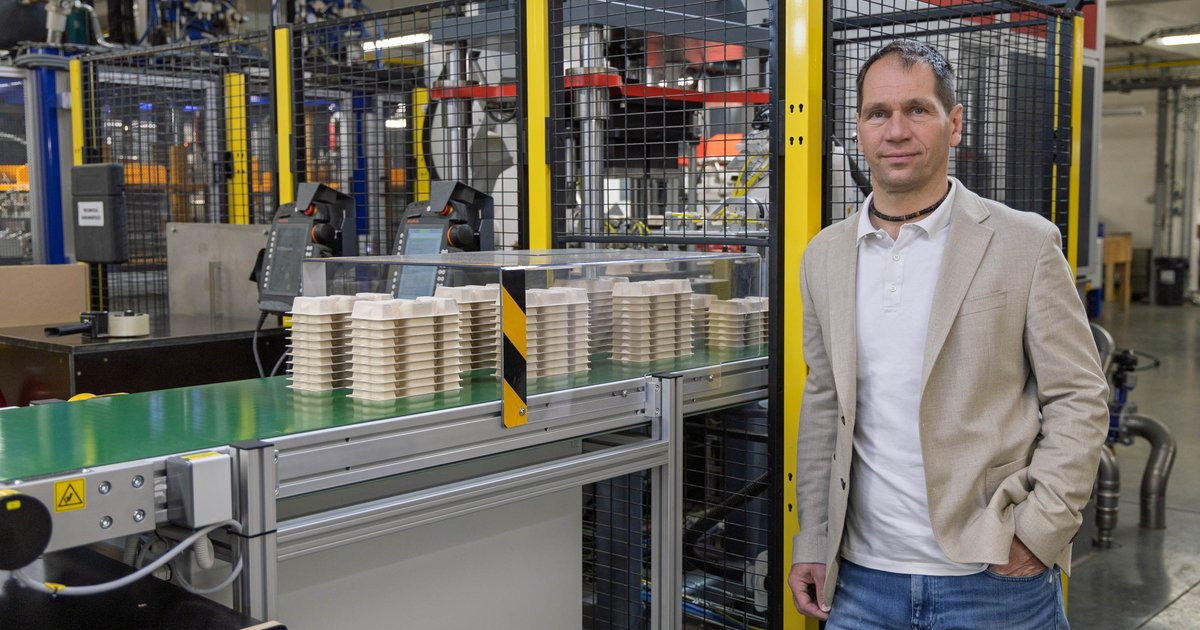
TRIDAS operates both wet press and dry press production technologies under one roof, enabling side-by-side demonstration of how production method determines performance characteristics. When procurement teams visit the Valašské Meziříčí facility, production line tours show the structural differences between compact wet press lines (forming and drying in heated dies) and long dry press lines (separate drying ovens). This comparison clarifies why surface finish, wall thickness, and density differ between technologies, addressing the misconception that all molded fibre delivers identical performance. TRIDAS sources pulp primarily from EU low-risk regions and provides EUDR-compliant Due Diligence Statements per shipment under Regulation (EU) 2023/1115, supporting procurement teams reporting deforestation-free supply chains.