08. 28. 2026

Molded fibre packaging manufactured from recycled paper pulp generates 0.4–0.6 kg CO₂e per kilogramme of material under European cradle-to-gate LCA conditions, compared to 1.9–2.3 kg CO₂e per kilogramme for virgin polypropylene and 2.7–3.1 kg CO₂e per kilogramme for virgin polystyrene. When distribution distances and end-of-life pathways are included in cradle-to-grave assessments, the carbon advantage of molded fibre packaging narrows or widens depending on pulp sourcing geography, transport mode, and local recycling infrastructure capacity.
Life cycle assessment quantifies greenhouse gas emissions across material production, conversion into packaging, distribution, use, and end-of-life disposal or recovery. For molded fibre versus plastic packaging comparisons in EU procurement contexts, LCA boundaries typically include cradle-to-gate (raw material extraction through packaging manufacture) or cradle-to-grave (adding distribution, use phase, and end-of-life treatment).
Cradle-to-gate assessments for molded fibre packaging begin with pulp sourcing. Recycled paper pulp requires mechanical de-inking, screening, and refining, consuming electrical energy for pulping and thermal energy for drying. Emissions per kilogramme of recycled pulp at the mill gate range 0.4–0.6 kg CO₂e under typical EU production conditions. Virgin polypropylene production involves crude oil refining, polymerisation, and pelletising, generating 1.9–2.3 kg CO₂e per kilogramme. Virgin polystyrene emits 2.7–3.1 kg CO₂e per kilogramme under comparable system boundaries.
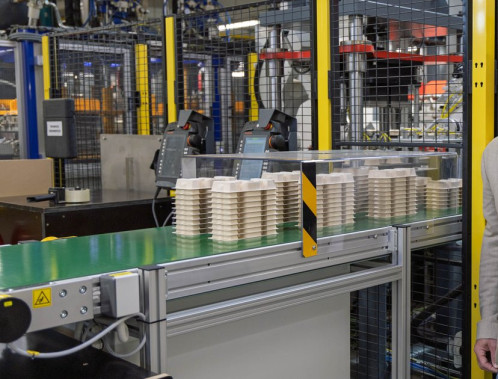
Conversion processes add further emissions. Molded fibre forming on a wet press production line consumes electricity for vacuum forming and thermal energy for heated die pressing. Dry press molded fibre production adds oven drying energy demand. Plastic injection moulding operates heated extruders and hydraulic clamps, with cycle energy proportional to part mass and cooling time. When normalised per functional unit—such as protective packaging for a 200-gramme consumer electronics item—emissions depend on material density, wall thickness, and part geometry.
Distribution emissions scale with package mass and transport distance. Molded fibre packaging density ranges 0.3–0.8 g/cm³, substantially lower than polypropylene at 0.9 g/cm³ or polystyrene at 1.05 g/cm³. For a given protective volume, molded fibre parts may weigh 30–50% less than solid-plastic equivalents, reducing freight emissions per unit shipped. However, molded fibre packaging occupies greater volume per unit mass when palletised, potentially reducing truck-load efficiency. Road freight in the EU emits approximately 60–100 g CO₂e per tonne-kilometre; ocean freight emits 10–40 g CO₂e per tonne-kilometre. Distribution distances from EU pulp mills to packaging converters and onward to brand fulfilment centres typically range 300–1,500 km by road.
End-of-life pathways significantly affect cradle-to-grave totals. Paper-based packaging collected through EU municipal recycling systems is mechanically reprocessed into secondary fibre. Emissions credits for avoided virgin pulp production are allocated under substitution or cut-off LCA methods. Plastic packaging incinerated with energy recovery offsets grid electricity or district heating emissions. Landfill scenarios assign methane emissions from anaerobic decomposition of paper-based materials and minimal emissions from stable plastic waste.
| Factor | Recycled-pulp molded fibre | Virgin polypropylene | Virgin polystyrene |
|---|---|---|---|
| Cradle-to-gate emissions (kg CO₂e per kg material) | 0.4–0.6 | 1.9–2.3 | 2.7–3.1 |
| Density (g/cm³) | 0.3–0.8 | 0.9 | 1.05 |
| Transport emissions sensitivity | Lower mass per functional unit | Higher mass per functional unit | Higher mass per functional unit |
| EU recycling infrastructure availability | Widely available | Limited collection coverage | Limited collection coverage |
| End-of-life emission credit (mechanical recycling) | Avoided virgin pulp production | Avoided virgin resin production | Avoided virgin resin production |
Procurement teams evaluating packaging carbon footprint under PPWR recyclability targets and corporate net-zero commitments require supplier-specific LCA data aligned with EN 15804 or ISO 14040 series standards. Cradle-to-gate comparisons favour molded fibre packaging by a factor of three to five when sourced from EU recycled-pulp suppliers. Buyers should request Environmental Product Declarations from packaging suppliers to verify emissions data, system boundaries, allocation methods, and data quality.
Distribution emissions become material when packaging is shipped across borders or to non-EU markets. For high-volume SKUs distributed across multiple European fulfilment centres, buyers should model transport scenarios including truck-load fill rates, return-logistics requirements, and multi-modal freight combinations. Molded fibre packaging's lower density reduces freight mass but may increase pallet count, affecting total transport emissions depending on route and carrier efficiency.
End-of-life pathways vary by EU member state and municipal waste infrastructure. Countries with high paper-recycling rates—such as Germany, Austria, and the Netherlands—deliver substantial cradle-to-grave emissions reductions for molded fibre packaging through mechanical reprocessing credits. Markets with lower recycling infrastructure maturity or higher incineration rates reduce the end-of-life carbon advantage. Buyers operating across multiple EU markets should assess local collection systems and adjust LCA assumptions per distribution geography.
PPWR Regulation (EU) 2025/40 sets recyclability targets for fibre-based packaging at 70% from 2030 and 80% from 2038, reinforcing the policy environment for paper-based materials. Buyers aligning supplier selection with regulatory compliance timelines gain carbon footprint reductions that compound with infrastructure improvements as member states expand separate collection and mechanical recycling capacity through 2038.
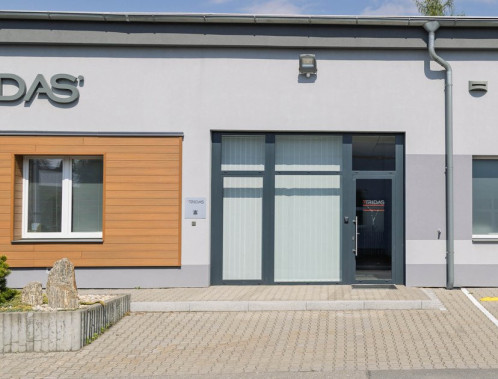
TRIDAS sources pulp primarily from EU low-risk regions under FSC chain-of-custody certification, minimising upstream transport emissions and supporting transparent due diligence under EUDR Regulation (EU) 2023/1115. TRIDAS operates both wet press and dry press molded fibre production technologies at its Czech facility, enabling technology selection optimised for part geometry and functional performance per application. For buyers requiring site-specific LCA data, TRIDAS provides facility energy consumption profiles and pulp sourcing documentation to support Environmental Product Declaration preparation or third-party verification under ISO 14025.