07. 31. 2026
Suppliers who design and manufacture their own molded fibre production equipment deliver shorter development cycles, tighter process control, and faster response to specification changes than suppliers using third-party machinery. This vertical integration eliminates the communication delays and technical compromises that occur when production capability depends on external equipment manufacturers. For procurement teams evaluating molded fibre packaging suppliers, equipment ownership directly affects tooling lead times, quality consistency, and the supplier's ability to solve production challenges without external dependencies.
In molded fibre production, the production line—forming stations, pressing equipment, drying systems, and material handling—directly determines what wall thicknesses, surface finishes, dimensional tolerances, and production rates are achievable. Most molded fibre packaging suppliers purchase turnkey production lines from specialist equipment manufacturers. These suppliers operate the equipment but depend on the equipment manufacturer for process optimisation, tooling modifications, and technical troubleshooting.
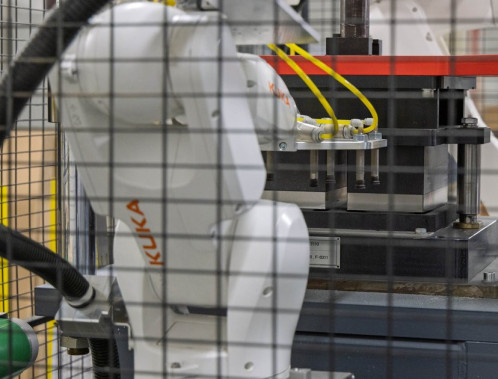
Suppliers who manufacture their own equipment maintain engineering teams that design forming dies, pressing systems, and drying equipment specifically for their production needs. This integration means process knowledge resides within the same organisation that produces customer packaging. When a cosmetics brand requires tighter colour consistency or a consumer electronics manufacturer needs thinner wall sections, the supplier can modify equipment parameters, redesign forming dies, or adjust pressing cycles without coordinating with external engineers.
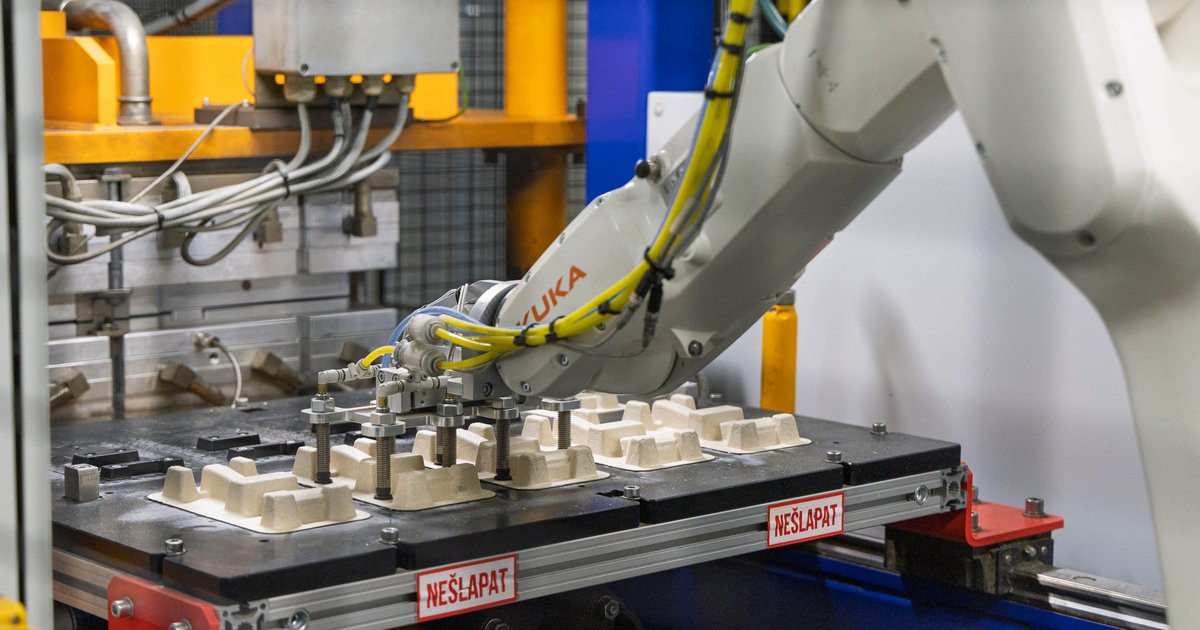
TRIDAS designs and manufactures its own wet press and dry press molded fibre production lines at its Czech facility. This vertical integration enables tooling lead times of approximately 4 weeks from order—substantially shorter than the industry typical 12+ weeks when suppliers rely on external tooling manufacturers. The engineering team that designs production equipment also conducts facility tours for qualified buyers, allowing procurement teams to observe how equipment design decisions translate into production capabilities.
Equipment ownership affects three critical packaging outcomes: development speed, process consistency, and technical adaptability. Development speed determines how quickly new packaging designs move from concept to production tooling. Process consistency affects dimensional tolerance, surface finish quality, and unit-to-unit variation across production runs. Technical adaptability determines whether the supplier can modify equipment to meet evolving specifications—thinner walls for weight reduction, tighter tolerances for automated assembly, or surface treatments for enhanced printability.
| Capability dimension | Supplier manufactures own equipment | Supplier uses third-party equipment |
|---|---|---|
| Tooling lead time | 4-6 weeks typical for new cavity sets | 12-16 weeks typical (depends on equipment manufacturer queue) |
| Process parameter modification | In-house engineering can adjust pressing pressure, temperature profiles, cycle times within days | Requires coordination with equipment manufacturer; modifications take weeks to months |
| Quality issue resolution | Engineering team diagnoses root cause and implements equipment or tooling changes directly | Supplier identifies symptom; equipment manufacturer diagnoses cause; implementation requires external scheduling |
| Custom equipment modifications | Feasible for specific material requirements (e.g. black fibre lines, high-density forming) | Limited to equipment manufacturer's standard configurations; custom modifications economically prohibitive |
| Production scaling | Supplier builds additional production lines to exact specifications of proven equipment | Supplier purchases additional lines from equipment manufacturer; configuration may differ from existing lines |
| Technical documentation depth | Complete equipment design files, process parameter databases, and failure mode histories maintained in-house | Operating manuals and standard parameters provided by equipment manufacturer; limited process knowledge depth |
For procurement teams evaluating molded fibre packaging suppliers, equipment ownership serves as a proxy indicator for technical capability and operational independence. Suppliers who manufacture their own equipment demonstrate engineering depth beyond packaging design—they understand the physics of fibre forming, the thermodynamics of pressing and drying, and the mechanical design of production tooling. This knowledge becomes critical when buyers require packaging that pushes material or geometric limits.
Equipment ownership directly affects project timelines. When a consumer electronics manufacturer needs packaging samples for validation testing, the supplier with in-house tooling capability produces prototype dies faster than suppliers dependent on external tooling manufacturers. This speed advantage compounds across development iterations—each design modification, each wall thickness adjustment, each surface finish trial proceeds without external coordination delays.
The commercial implications extend beyond speed. Suppliers who manufacture equipment can price tooling based on direct costs rather than third-party markup. More significantly, these suppliers can amortise equipment development costs across multiple production projects, enabling investment in specialised capabilities—such as dedicated black molded fibre production lines or high-precision forming equipment—that third-party equipment purchases would not economically justify for individual packaging projects.
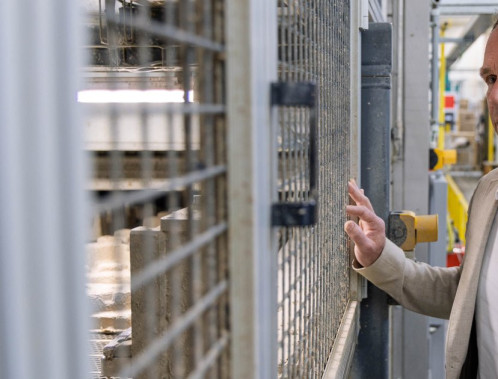
Due diligence should verify equipment ownership claims. Facility tours reveal whether the supplier operates a machine shop with CNC milling equipment, welding stations, and assembly areas for production line fabrication, or whether the facility contains only final packaging production equipment. Engineering staff composition provides additional evidence—suppliers who manufacture equipment employ mechanical engineers, process engineers, and tooling designers alongside packaging technicians.
TRIDAS has designed and manufactured its own molded fibre production equipment since 2004, operating both wet press and dry press technologies at its single Czech facility in Valašské Meziříčí. This vertical integration enabled the 2026 launch of dedicated black molded fibre production lines—equipment modifications that would require months of external coordination for suppliers using third-party machinery. The engineering team conducts facility tours for qualified buyers, demonstrating how equipment design decisions affect packaging outcomes. In-house equipment manufacturing allows TRIDAS to validate technology selection per product specification and implement tooling modifications within the same production and engineering facility that serves a tier-one global smartphone manufacturer.