10. 21. 2026

Molded fibre packaging strengthens brand reputation in premium non-food categories by signalling environmental commitment, differentiating products at retail, and aligning packaging choices with consumer expectations for sustainable luxury. Brands in cosmetics, consumer electronics, audio equipment, fragrance, fashion accessories, and wine and spirits secondary packaging use molded fibre to communicate quality while meeting regulatory requirements including the Packaging and Packaging Waste Regulation (EU) 2025/40 and the EU Deforestation Regulation (EU) 2023/1115. Procurement and sustainability teams specify molded fibre to reduce reputational risk from plastic-dependent supply chains whilst maintaining the premium unboxing experience.
Brand reputation in premium non-food packaging reflects how packaging choices communicate product values, quality positioning, and corporate responsibility. Procurement managers face reputational risk when packaging conflicts with brand messaging—particularly when sustainability claims do not match material choices. Molded fibre packaging addresses this risk by providing a visible, tactile signal of environmental commitment whilst maintaining the structural protection and presentation required for premium products.
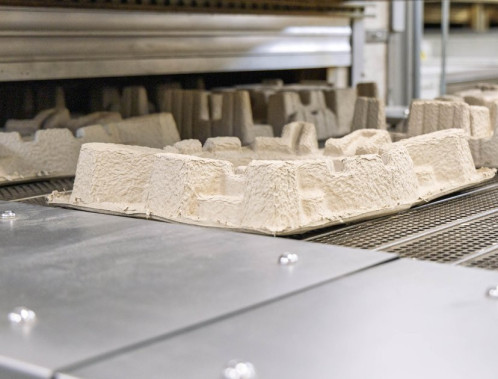
Molded fibre is produced from recycled paper pulp formed into three-dimensional shapes through wet pressing or dry pressing. The material's natural colour and texture communicate recycled content without additional labelling, creating immediate visual differentiation from plastic alternatives. For cosmetics brands, consumer electronics manufacturers, and fragrance companies operating in competitive retail environments, this visual distinction supports premium positioning whilst meeting growing consumer expectations for sustainable packaging.
The Packaging and Packaging Waste Regulation (EU) 2025/40 establishes recyclability targets for fibre-based packaging (≥70% from 2030, ≥80% from 2038), creating regulatory alignment with brand sustainability commitments. Molded fibre packaging inherently meets these targets through standard municipal waste-paper recycling infrastructure classified under EN 643 grades, providing compliance evidence that supports corporate sustainability reporting. Brands can reference PPWR alignment in sustainability communications without requiring additional material investment.
The EU Deforestation Regulation (EU) 2023/1115 applies from 30 December 2026, requiring documented proof that wood-based materials including paper pulp are not linked to deforestation. Brands sourcing molded fibre packaging must verify supplier Due Diligence Statements covering pulp origin. This regulatory requirement transforms sourcing transparency from a voluntary brand initiative into a legal obligation, making supplier capability in EUDR compliance a direct reputational protection mechanism.
| Material | Visual sustainability signal | PPWR recyclability alignment (2030 target) | Premium positioning compatibility | EUDR documentation requirement |
|---|---|---|---|---|
| Molded fibre | Immediate visual recycled-content communication | Inherent compliance (≥70% recyclability through EN 643 infrastructure) | Natural texture supports premium unboxing differentiation | Required for pulp sourcing (applies 30 December 2026) |
| Recycled plastic (rPET, rPP) | Requires labelling for consumer recognition | Lower recyclability rates in mixed municipal streams | Maintains conventional plastic aesthetic | Not applicable |
| Virgin plastic (PP, PS, ABS) | No sustainability signal; reputational risk in premium segments | Lowest recyclability in practice; reputational conflict with PPWR direction | Conventional; no differentiation | Not applicable |
| Corrugated cardboard | Established recycled-content association | High recyclability (≥80% in EU systems) | Limited three-dimensional shaping; perceived as economy-tier | Required for pulp sourcing (applies 30 December 2026) |
Brand reputation risk in premium packaging stems from misalignment between stated sustainability commitments and visible material choices. Consumer research across cosmetics, consumer electronics, and fragrance categories shows that packaging materials influence brand perception of environmental responsibility more than product-level sustainability attributes. Procurement teams managing packaging transitions from plastic to fibre-based alternatives report that molded fibre provides immediate visual credibility for sustainability messaging without requiring consumer education on material properties.
For luxury brands, the unboxing experience remains a critical brand-building moment. Molded fibre packaging delivers tactile differentiation through natural texture variation, embossed detail, and wall thickness that communicates quality through physical presence. Premium audio equipment manufacturers use molded fibre protective inserts to create a distinct unboxing ritual that separates their products from plastic-packaged alternatives whilst meeting structural protection requirements for high-value components. The material's capacity for fine surface detail enables brand logos, product names, and instructional graphics to be embossed directly into packaging structures, eliminating printed labels and reinforcing premium positioning.
PPWR recyclability targets create reputational alignment between regulatory compliance and voluntary sustainability commitments. Brands reporting packaging recyclability in corporate sustainability disclosures under frameworks including the Global Reporting Initiative and the Carbon Disclosure Project can reference molded fibre packaging as evidence of target achievement. This regulatory-voluntary alignment reduces reputational risk from greenwashing allegations whilst simplifying sustainability reporting processes for procurement and sustainability teams.
EUDR compliance from 30 December 2026 introduces documented traceability as a brand-protection requirement. Brands sourcing molded fibre packaging from suppliers providing FSC chain-of-custody certification and shipment-level Due Diligence Statements can demonstrate responsible forest sourcing in sustainability communications. This documented compliance protects brand reputation from deforestation-linked supply chain exposure in premium markets where environmental credentials directly influence purchase decisions and investor relations.
TRIDAS operates both wet press and dry press molded fibre production technologies in its Czech facility, enabling material selection aligned with premium brand positioning requirements. Wet press technology produces thinner walls (typically 0.8–2 mm), smoother surfaces, and finer embossed detail suitable for cosmetics and consumer electronics packaging where surface finish influences brand perception. TRIDAS provides EUDR-compliant Due Diligence Statements per shipment under Regulation (EU) 2023/1115, supporting brand sustainability reporting and reputational risk management. FSC chain-of-custody certification documents responsible sourcing throughout the supply chain, and pulp sourcing primarily from EU low-risk regions simplifies compliance verification for brands operating under investor and regulatory scrutiny.