07. 31. 2026
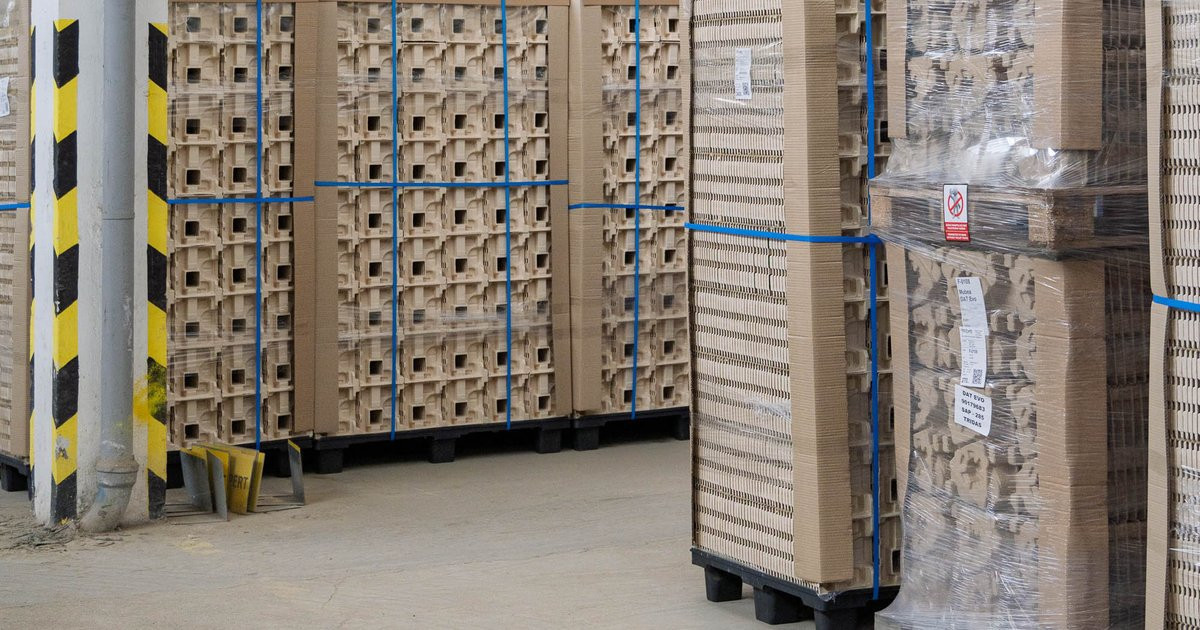
Molded fibre and corrugated cardboard both serve protective packaging roles in e-commerce, electronics and industrial applications, but they differ fundamentally in production method, material structure and performance characteristics. Molded fibre is formed from wet pulp slurry into three-dimensional shapes with integral cushioning geometry, while corrugated cardboard consists of layered paper sheets creating channels that provide directional strength. For buyers selecting between these materials, the decision depends on product geometry, drop height requirements, packaging automation constraints and sustainability targets under Regulation (EU) 2025/40.
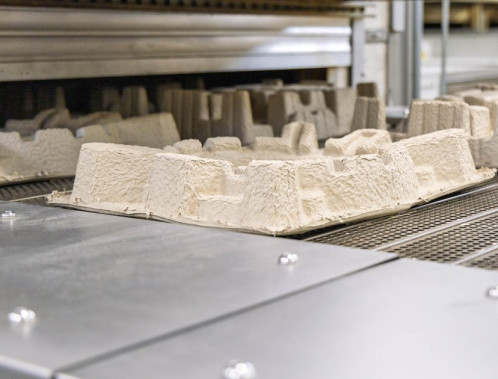
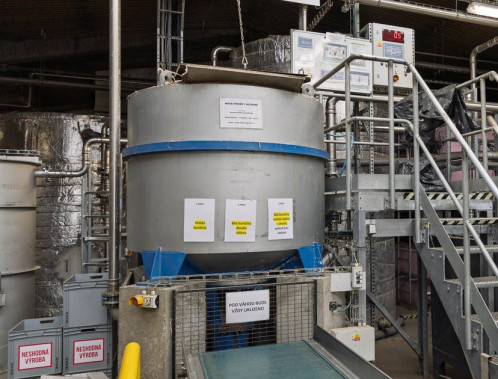
Molded fibre protective packaging is manufactured using either dry press or wet press production technology. In dry press production, wet pulp slurry is formed into a pre-form on a continuous line, dried in an oven, then transferred to a heated press die for final shaping. This process creates thicker walls, typically 2–5 mm, with higher impact absorption and rougher surface texture suited to protective applications. The three-dimensional geometry integrates ribs, corner reinforcements and product-specific cavities into a single moulded component.
Corrugated cardboard consists of one or more fluted paper layers sandwiched between flat linerboard sheets. Single-wall corrugated (one flute layer) typically measures 3–4 mm thick; double-wall (two flute layers) measures 6–8 mm. The flute structure runs in one direction, creating anisotropic strength properties — high crush resistance perpendicular to flutes, lower resistance parallel to flutes. Corrugated protective packaging typically uses die-cut blanks folded into boxes, trays or corner protectors, often combined with loose-fill materials or foam inserts.
Both materials source from wood pulp fibre. Molded fibre production accepts recycled paper grades compliant with EN 643 standard categories, including mixed paper, corrugated containers and deinking pulp. Corrugated production uses primarily virgin kraft linerboard for outer surfaces and recycled or semi-chemical fluting medium for internal layers. Manufacturing energy profiles differ substantially: corrugated production operates at higher line speeds with lower per-unit energy consumption for simple rectangular formats, while molded fibre production concentrates energy in forming and drying stages but eliminates downstream converting steps.
Structural performance derives from different mechanisms. Molded fibre's three-dimensional geometry distributes impact forces across ribs, walls and corner reinforcements. Wall thickness and density can be optimised per zone within a single moulded part. Corrugated cardboard's performance depends on edge crush test (ECT) or bursting strength test (BST) specifications, flute profile selection (A-flute 5 mm, B-flute 3 mm, C-flute 4 mm, E-flute 1.5 mm) and box design factors including aspect ratio and closure method.
Both materials comply with Regulation (EU) 2025/40 recyclability requirements when designed as mono-material packaging. Molded fibre components without plastic coatings or laminated films meet the 70% recyclability target from 2030 and 80% target from 2038. Corrugated packaging meets the same targets provided tape, labels and closure mechanisms use fibre-compatible adhesives that process through standard paper recycling streams.
| Characteristic | Molded fibre (dry press) | Corrugated cardboard |
|---|---|---|
| Typical wall thickness | 2–5 mm | 3–8 mm (single-wall to double-wall) |
| Shape complexity | High — integral 3D geometry with undercuts, ribs, corner protection | Low — flat blanks folded into boxes, trays, corner protectors |
| Impact absorption | Omnidirectional — distributes force across 3D structure | Directional — high crush resistance perpendicular to flutes |
| Tooling lead time | Approximately 4 weeks for custom moulds [SOURCE NEEDED] | 1–2 weeks for die-cutting tools [SOURCE NEEDED] |
| Minimum order quantity | Higher — typically 5,000–10,000 units due to mould economics [SOURCE NEEDED] | Lower — 1,000–2,000 units common for die-cut formats [SOURCE NEEDED] |
| Surface finish | Rough texture, visible fibre structure, matte appearance | Smooth kraft or white-top linerboard, printable surface |
| Material density | 250–400 kg/m³ typical range | Depends on flute grade and linerboard weight |
| Moisture sensitivity | Loses strength when saturated; humidity conditioning required for dimensional stability | Loses strength when saturated; BCT performance drops in high-humidity environments |
| Typical applications | E-commerce protective inserts, industrial component packaging, appliance packaging, furniture inserts | Shipping boxes, e-commerce mailers, retail-ready packaging, corner protectors, void fill |
Selecting between molded fibre and corrugated cardboard depends on product geometry, handling conditions and packaging automation requirements. Products with complex shapes, fragile projecting components or non-rectangular footprints typically favour molded fibre because the three-dimensional cavity can be designed to hold the product securely without supplementary materials. Standard rectangular products suited to box formats often favour corrugated solutions due to lower tooling costs and shorter lead times.
Drop height requirements influence material selection. For e-commerce applications requiring ISTA 2A or ISTA 3A validation with drop heights 760–910 mm, both materials can achieve passing outcomes when designed correctly. Molded fibre inserts absorb impact through compression of ribs and corner reinforcements, while corrugated boxes rely on crush resistance and often require internal void fill or corner protectors to prevent product movement during impact. The integrated cushioning geometry of molded fibre components eliminates the need for loose-fill materials, reducing packaging volume and simplifying unpacking for end consumers.
Packaging automation compatibility differs between materials. Molded fibre inserts typically nest inside corrugated outer boxes for distribution, requiring two-step assembly on packaging lines. Corrugated formats can often be erected, loaded and closed using automated case-erecting and case-sealing equipment common in fulfilment centres. For high-volume operations with existing corrugated automation infrastructure, switching to molded fibre inserts may require capital investment in new assembly equipment.
Regulation (EU) 2025/40 creates equivalent recyclability obligations for both materials, but reporting requirements differ. Fibre-based packaging must demonstrate recyclability through testing per EN 13430 standard, with results valid across both molded fibre and corrugated formats provided no mixed-material components prevent fibre recovery. Buyers consolidating packaging suppliers to simplify PPWR compliance reporting may prefer single-material solutions that eliminate ambiguity about recyclable mass calculations under Article 6 requirements.
TRIDAS operates dry press molded fibre production technology at its facility in Valašské Meziříčí, Czech Republic, manufacturing protective packaging for e-commerce, industrial components and appliance applications. The company designs and manufactures its own production equipment, enabling rapid tooling modifications when customer products change dimensions or weight specifications. TRIDAS sources pulp primarily from EU low-risk regions and provides EUDR-compliant Due Diligence Statements per shipment under Regulation (EU) 2023/1115. All molded fibre components are FSC-certified and designed for compatibility with standard paper recycling infrastructure across European collection systems.