Molded fibre packaging offers European procurement managers a regulatory-compliant, mechanically recyclable alternative to plastic packaging for premium non-food applications including cosmetics, consumer electronics, audio equipment, fashion accessories, fragrance, wine and spirits secondary packaging, and e-commerce protective inserts. This guide examines how molded fibre production technology works, where it outperforms competing materials, what brand reputation and circular economy benefits it delivers, and what realistic constraints buyers should evaluate before transitioning from plastic packaging systems.
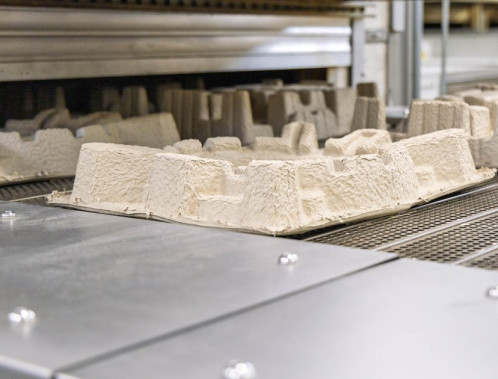
Molded fibre packaging is produced by forming wet pulp slurry over a shaped screen mould, extracting water under vacuum or pressure, then drying and pressing the formed shape into finished packaging components. The production process creates three-dimensional packaging geometries from recycled paper or virgin wood pulp without adhesives, coatings, or polymer binders in the base material structure. Finished products include protective inserts for electronics, cosmetic inner trays, wine bottle sleeves, fashion accessory boxes, audio equipment packaging, and industrial component transit packaging.
Two distinct production technologies serve different application requirements. Wet press molded fibre is produced on compact lines where forming and drying happen together inside heated press dies. The wet pulp pre-form is pressed under heat and pressure simultaneously, creating thinner walls (typically 0.8–2 mm), smoother surfaces, higher density, finer surface detail, and better printability. This technology suits premium packaging applications: cosmetics, fragrance, consumer electronics, audio equipment, fashion accessories, and wine and spirits secondary packaging where visual presentation and thin-wall construction matter.
Dry press molded fibre is produced on long continuous lines with separate drying ovens. The wet pulp pre-form is formed, passes through the dryer, then transfers to a heated press die for final shaping after drying. This produces thicker walls (typically 2–5 mm), rougher surface texture, lower density, and higher impact absorption. Dry press technology serves protective packaging applications: e-commerce protective inserts, industrial component packaging, appliance and furniture protective inserts, and transport packaging where mechanical protection matters more than surface appearance.
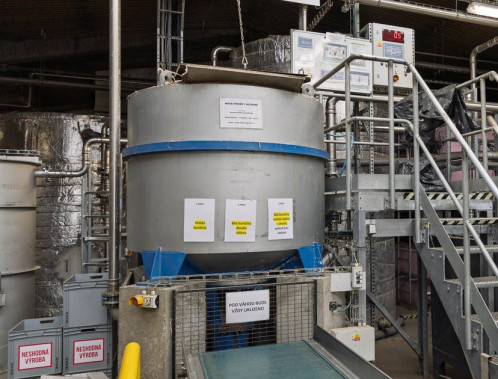
Understanding production methods helps buyers match technology to application requirements. Molded fibre production starts with pulp preparation where recycled paper or virgin wood pulp is mixed with water to create slurry consistency suitable for mould deposition. The wet pulp mixture flows onto perforated moulds shaped to the final product geometry. Vacuum or pressure draws water through the mould perforations, leaving a wet fibre mat conforming to the mould surface. In wet press systems, this wet pre-form transfers immediately to heated press dies for simultaneous drying and final shaping. In dry press systems, the pre-form passes through a continuous drying oven before reaching the press station. Both technologies can incorporate surface printing, embossing, and edge trimming in the same production cycle.
Procurement decisions require comparison between molded fibre and competing material systems. Corrugated cardboard represents the most common alternative for protective packaging applications. Corrugated provides lower tooling investment and smaller minimum order quantities, making it economically accessible for low-volume SKUs or frequent design iterations. However, molded fibre delivers superior mechanical protection per unit weight through three-dimensional geometry that distributes impact forces across curved surfaces rather than flat planes. Products requiring consistent cushioning performance under drop testing, vibration testing, or compression testing typically achieve better results with molded fibre protective inserts than with corrugated alternatives. The trade-off centres on volume economics: corrugated suits diverse SKU portfolios with variable volumes; molded fibre suits focused SKU portfolios with predictable volumes where consistent mechanical performance justifies tooling investment.
Alternative fibre-based materials including bagasse (sugarcane waste), bamboo fibre, and hemp fibre offer similar end-of-life recyclability to wood-pulp-based molded fibre. These alternatives deliver comparable mechanical properties and regulatory compliance under PPWR requirements. Material choice differences emerge in supply chain complexity and regional availability. Bagasse requires tropical agricultural supply chains with seasonal availability variations. Bamboo and hemp require specialised pulping infrastructure less common than wood pulp processing facilities. Wood-pulp-based molded fibre benefits from established European forestry certification systems (FSC, PEFC) and mature supply chain infrastructure supporting year-round availability at stable pricing. For buyers prioritising supply chain resilience and EUDR compliance documentation, wood-pulp-based molded fibre from EU low-risk regions offers simpler due diligence workflows than agricultural fibre alternatives requiring non-EU sourcing.
| Material system | Tooling investment | Minimum order quantity | Mechanical protection | PPWR recyclability compliance | EUDR documentation complexity |
|---|---|---|---|---|---|
| Wet press molded fibre | Moderate to high | From 10,000 units per SKU (varies with part complexity and cavity count) | Good for thin-wall premium applications | Full compliance – fibre-based | Low with EU pulp sourcing |
| Dry press molded fibre | High | From 10,000 units per SKU (varies with part complexity and cavity count) | Excellent for protective applications | Full compliance – fibre-based | Low with EU pulp sourcing |
| Corrugated cardboard | Low | 500–5,000 units per SKU | Moderate – flat-plane geometry | Full compliance – fibre-based | Low – established EU supply |
| Bagasse / bamboo / hemp | Moderate to high | From 10,000 units per SKU (varies with part complexity and cavity count) | Comparable to wood-pulp molded fibre | Full compliance – fibre-based | Moderate to high – often non-EU sourcing |
| Injection-moulded plastic | Very high | Higher volumes per SKU | Excellent – precise geometry control | Partial – recyclability depends on polymer type and collection infrastructure | Not applicable to wood-based products |
Brand reputation benefits constitute a primary driver for premium product manufacturers transitioning to molded fibre packaging. Consumer research consistently shows higher willingness to pay for products presented in packaging perceived as environmentally responsible. Molded fibre packaging communicates tangible sustainability commitment through visible material characteristics: natural fibre texture, absence of plastic film windows, and uncoated surface finish signal recyclability to end consumers without requiring explanatory text or certification marks. This visual communication delivers brand differentiation at point of sale for cosmetics, fragrance, consumer electronics, and fashion accessories where packaging appearance influences purchase decisions.
Realistic constraints require evaluation alongside benefits. Molded fibre packaging performs reliably under controlled humidity conditions typical of European distribution environments but shows dimensional variation under prolonged exposure to humidity extremes above 80% relative humidity. Products requiring hermetic sealing, moisture barrier properties, or transparent product visibility cannot use molded fibre as primary packaging material. Colour consistency across production batches requires process control protocols more complex than plastic injection moulding. Surface printing achieves good results on wet press molded fibre using offset lithography or flexographic printing, but print resolution and colour density remain lower than printed paperboard or printed plastic film. Buyers should validate colour expectations and moisture resistance requirements through prototyping before committing to tooling investment.
Circular economy integration represents molded fibre packaging's strongest value proposition under current and emerging EU regulations. Regulation (EU) 2025/40 (PPWR) sets recyclability targets for fibre-based packaging reaching 70% by 2030 and 80% by 2038. Molded fibre packaging made from uncoated paper pulp meets these targets without process modification or material reformulation. The material integrates into existing municipal waste paper collection and sorting infrastructure across EU member states. Mechanical recycling processes re-pulp molded fibre packaging alongside other paper grades without requiring separate collection streams or specialised processing equipment. This end-to-end recyclability story—from FSC-certified forestry through mechanical recycling back to paper production—provides procurement and sustainability teams with regulatory compliance documentation supporting corporate sustainability commitments and regulatory reporting obligations under PPWR and EUDR frameworks.
TRIDAS operates both wet press and dry press molded fibre production technologies under one roof at its Czech facility, enabling technology selection matched to application requirements rather than constraining buyers to a single production method. In-house tooling design and manufacture delivers typical tooling lead times of approximately four weeks from order, significantly faster than market-average timelines exceeding twelve weeks. This production speed supports faster time-to-market for seasonal product launches and design iteration cycles. TRIDAS sources pulp primarily from EU low-risk regions and provides EUDR-compliant Due Diligence Statements per shipment under Regulation (EU) 2023/1115, simplifying compliance documentation for buyers operating under the regulation's 30 December 2026 application date. FSC chain-of-custody certification extends through the production facility, supporting customer sustainability reporting requirements. Facility tours for qualified buyers demonstrate production line operations and equipment manufacturing capabilities, helping procurement teams evaluate technical fit before tooling investment.
Molded fibre packaging becomes cost-competitive with corrugated alternatives at higher annual volumes where tooling investment amortises across the production run. TRIDAS minimum order quantity is 10,000 units, varying with part complexity and tooling cavity count. Lower volumes favour corrugated solutions with minimal tooling costs.
Molded fibre protective inserts validated under ISTA 2A, ISTA 3A, and ISTA 6 testing protocols demonstrate comparable drop-test performance to injection-moulded plastic for products up to moderate weight and fragility levels. Very heavy products or extremely fragile components may require hybrid solutions combining molded fibre with targeted foam or plastic elements at critical contact points.
PPWR Regulation (EU) 2025/40 sets recyclability targets of 70% by 2030 and 80% by 2038 for fibre-based packaging. Molded fibre packaging made from uncoated paper pulp meets these targets through integration into existing municipal waste paper collection systems and mechanical recycling infrastructure without requiring material reformulation or separate collection streams.
Wet press molded fibre accepts offset lithography and flexographic printing with good colour registration and edge definition suitable for brand logos, product information, and decorative graphics. Print resolution and colour density remain lower than coated paperboard due to the porous uncoated surface structure. Lightfastness testing under ISO 12040 confirms acceptable fade resistance for indoor retail display environments.
No. Molded fibre packaging integrates into standard paper recycling collection and sorting infrastructure across EU member states. The material conforms to EN 643 paper grade classifications and processes through conventional mechanical recycling without specialised equipment or separate collection requirements, simplifying end-of-life management for brands and consumers.
Industry-typical tooling lead times range from twelve to sixteen weeks from design approval to first production samples. TRIDAS operates in-house tooling design and manufacturing, delivering typical lead times of approximately four weeks from order, supporting faster time-to-market for product launches and design iteration cycles.
Yes, with dedicated production line infrastructure. TRIDAS operates dedicated black molded fibre production lines launched in 2026, eliminating cross-contamination from natural-colour production runs and delivering batch-to-batch colour consistency suitable for premium electronics and audio equipment packaging where visual uniformity matters.
Under Regulation (EU) 2023/1115 applying 30 December 2026, suppliers placing wood-based products on the EU market must provide Due Diligence Statements documenting deforestation-free sourcing. FSC-certified suppliers sourcing pulp from EU low-risk regions provide simplified due diligence documentation compared to non-EU or non-certified supply chains, reducing compliance administrative burden for buyers.