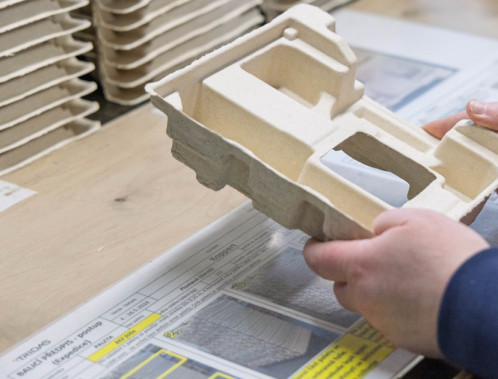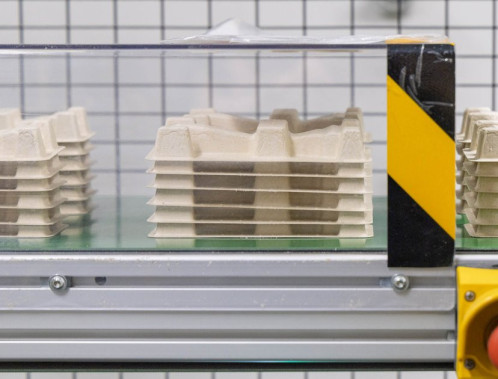
Molded fibre packaging serves fourteen distinct non-food application segments across the EU market, from cosmetics and consumer electronics to industrial components and protective e-commerce inserts. Each segment demands specific material properties — wall thickness, surface finish, anti-static treatment, printability, or impact absorption — that determine whether wet press or dry press molded fibre technology delivers optimal performance. Procurement managers evaluate molded fibre against plastic alternatives based on PPWR recyclability compliance, material cost per unit, tooling investment, and brand presentation requirements that vary significantly across cosmetics, wine secondary packaging, electronics, e-commerce, industrial shipments, appliances, personal care, medical devices, automotive components, furniture, construction products, and horticultural applications.
Non-food molded fibre packaging encompasses applications outside food contact regulation scope, spanning consumer-facing premium packaging through industrial protective transit packaging. The EU market divides into fourteen distinct segments, each with specific material property requirements that determine technology selection between wet press and dry press molded fibre production.
Cosmetics and beauty packaging represents the premium segment, demanding smooth surface finish, fine detail reproduction, and high-quality print capability. Wet press molded fibre technology produces walls typically 0.8–2 mm thick with surface smoothness supporting offset lithography and hot foil stamping. Brands in haircare, skincare, fragrance, and colour cosmetics adopt molded fibre for outer cartons, product cradles, and multi-unit gift sets where brand presentation drives material selection.
Wine and spirits secondary packaging uses molded fibre for bottle inserts, gift box internals, and multi-bottle carrier packs. Applications require structural support preventing bottle contact during transit whilst presenting premium aesthetic matching brand positioning. Wall thickness typically ranges 1.5–3 mm, with surface finish supporting both natural fibre texture and printed brand graphics.
Electronics packaging divides into consumer electronics requiring premium presentation and component packaging requiring anti-static protection. Consumer electronics applications — smartphones, audio equipment, wearables, smart home devices — demand wet press technology delivering smooth surfaces for retail presentation. Electronics component packaging requires anti-static or ESD-safe formulations preventing electrostatic discharge damage during handling and transit. Molded fibre with conductive additives achieves surface resistance values meeting electronics industry ESD protection requirements.
E-commerce protective packaging represents the fastest-growing segment under PPWR Regulation (EU) 2025/40, which sets a 40 percent protective packaging weight limit from 12 August 2026. Dry press molded fibre delivers impact absorption in lightweight formats meeting this regulatory threshold whilst replacing expanded polystyrene, polyethylene foam, and air-cushion plastics. Applications include product cradles, corner protectors, edge guards, and full-surround protective inserts for transit packaging.
Industrial component packaging serves B2B shipments where function prioritises over brand presentation. Dry press molded fibre provides cost-effective protective packaging for metal components, castings, machined parts, and assemblies requiring impact protection and moisture buffering during warehouse storage and freight transit. Wall thickness typically 2–5 mm delivers structural strength without surface finish requirements.
Appliance and furniture protective inserts use dry press molded fibre for corner protectors, edge guards, and surface protection during white goods transit. Applications include washing machines, refrigerators, ovens, and large furniture items where molded fibre replaces expanded polystyrene corner blocks and edge protectors. Material provides impact absorption whilst meeting PPWR recyclability targets.
Personal care packaging — including haircare, oral care, and body care applications — typically uses wet press molded fibre for premium product presentation. Shampoo and conditioner gift sets, electric toothbrush packaging, and body care multi-unit packs require smooth surface finish supporting brand graphics whilst providing product protection during retail handling.
Medical device and pharmacy packaging applications exclude sterile medical device packaging (which requires different material validation) but include non-sterile applications such as diagnostic equipment protective inserts, pharmacy retail packaging, and wellness product packaging. Molded fibre serves where brand presentation and protective function combine without sterile barrier requirements.
Automotive components packaging uses molded fibre for spare parts protective inserts, replacement component packaging, and aftermarket product packaging. Applications require impact protection for metal and plastic automotive components during warehouse storage and dealer shipment, with dry press technology providing cost-effective solution for high-volume component packaging.
Furniture and home goods packaging applications include molded fibre corner protectors, edge guards, and surface protection for assembled furniture, lighting fixtures, and decorative home goods. Material provides impact absorption during retail handling and home delivery whilst meeting PPWR recyclability requirements without expanded polystyrene waste.
Construction products packaging serves fittings, fixtures, and small construction components requiring protective packaging during trade distribution. Molded fibre protective inserts prevent damage to plumbing fittings, electrical fixtures, door hardware, and similar products during multi-touch distribution through trade channels.
Agricultural non-food packaging includes seedling pots, plant starter trays, and horticultural containers where molded fibre biodegradability provides functional advantage. Material breaks down in soil environments, eliminating pot removal before transplanting whilst providing structural support during nursery growing cycles.
Food contact molded fibre packaging represents a separate regulatory domain. Food contact applications are governed by different EU regulations from non-food packaging, requiring migration testing, food simulant validation, and supplier declarations that differ fundamentally from non-food applications. Suppliers serving food contact markets typically specialise exclusively in that segment due to distinct compliance requirements.
| Application segment | Technology selection | Wall thickness range | Primary performance requirement | PPWR compliance driver |
|---|---|---|---|---|
| Cosmetics and beauty | Wet press | 0.8–2 mm | Surface finish, printability | Recyclability ≥70% from 2030 |
| Wine and spirits secondary | Wet press | 1.5–3 mm | Structural support, aesthetics | Recyclability ≥70% from 2030 |
| Consumer electronics | Wet press | 0.8–2 mm | Surface finish, retail presentation | Recyclability ≥70% from 2030 |
| Electronics components (ESD) | Wet/dry press + additives | 1–3 mm | Anti-static protection | Recyclability ≥70% from 2030 |
| E-commerce protective | Dry press | 2–5 mm | Impact absorption, weight limit | 40% weight limit from 2026 |
| Industrial components | Dry press | 2–5 mm | Impact protection, cost | Recyclability ≥70% from 2030 |
| Appliance/furniture protective | Dry press | 3–5 mm | Impact absorption, structural strength | Recyclability ≥70% from 2030 |
| Personal care | Wet press | 0.8–2 mm | Brand presentation, surface finish | Recyclability ≥70% from 2030 |
| Medical device (non-sterile) | Wet press | 1–2.5 mm | Protection, brand presentation | Recyclability ≥70% from 2030 |
| Automotive components | Dry press | 2–4 mm | Impact protection, high volume | Recyclability ≥70% from 2030 |
| Furniture/home goods | Dry press | 2–5 mm | Surface protection, cost | Recyclability ≥70% from 2030 |
| Construction products | Dry press | 2–4 mm | Protection, trade distribution | Recyclability ≥70% from 2030 |
| Horticultural (non-food) | Dry press | 1.5–3 mm | Biodegradability, soil breakdown | Compostability certification |
Procurement managers evaluate molded fibre suitability by matching material properties to application requirements across three decision dimensions: technology selection (wet press versus dry press), regulatory compliance pathway (PPWR recyclability targets versus 40 percent e-commerce weight limit versus compostability certification), and total cost of ownership including material cost per unit, tooling investment, and production lead times.
Premium applications — cosmetics, consumer electronics, wine secondary packaging, personal care — require wet press technology delivering smooth surface finish supporting offset lithography, hot foil stamping, and embossing. Buyers in these segments prioritise brand presentation and retail shelf impact over material cost per unit. Tooling investment for wet press molded fibre typically represents higher upfront cost than injection molding or thermoforming plastic alternatives, but eliminates plastic waste disposal costs and delivers PPWR recyclability compliance from 2030 without future material substitution investment.
Protective applications — e-commerce inserts, industrial components, appliance corner protectors, automotive parts packaging — prioritise impact absorption and structural strength over surface finish. Dry press molded fibre delivers these functional requirements at lower material cost per unit than wet press alternatives whilst meeting PPWR 40 percent e-commerce protective packaging weight limit from 12 August 2026. Buyers evaluate molded fibre against expanded polystyrene, polyethylene foam, and corrugated alternatives based on protective performance validated through ISTA 2A, ISTA 3A, or customer-specific drop test protocols.
Technology selection determines production economics and lead times. Wet press production operates on compact lines where forming and drying occur simultaneously inside heated press dies, delivering cycle times typically 20–45 seconds per cavity depending on wall thickness and part geometry. Dry press production requires longer continuous lines with separate drying ovens, but accommodates thicker walls and higher impact absorption requirements. Buyers planning annual volumes above 500,000 units typically justify dedicated tooling investment; lower volumes may source from supplier stock tool libraries or shared-cavity production runs.
Anti-static and ESD-safe applications in electronics component packaging require material formulation adding conductive additives to standard pulp recipes. Buyers specify surface resistance values meeting electronics industry ESD protection requirements, typically 10⁴ to 10¹¹ ohms per square depending on component sensitivity. Suppliers validate ESD properties through IEC 61340-5-1 test protocols, with certification documentation supporting customer electronics manufacturing quality systems.
PPWR Regulation (EU) 2025/40 creates distinct compliance pathways across application segments. Fibre-based packaging must achieve recyclability rates ≥70 percent from 2030 and ≥80 percent from 2038. E-commerce protective packaging faces additional 40 percent weight limit from 12 August 2026, calculated as protective packaging weight divided by total shipment weight. These regulatory thresholds drive procurement specifications for wall thickness optimisation, material density control, and structural design minimising packaging weight whilst maintaining protective performance.
TRIDAS operates both wet press and dry press molded fibre production technologies under one roof at its Czech facility, enabling technology selection per application requirement rather than constraining buyers to single-process supplier limitations. The company designs and manufactures its own molded fibre production lines, providing in-house engineering capability validating technology selection through prototype tooling and production trials before full tooling investment. FSC chain-of-custody certification and EUDR-compliant Due Diligence Statements per shipment under Regulation (EU) 2023/1115 support buyers' sustainability documentation requirements across all fourteen non-food application segments. TRIDAS supplies a tier-one global smartphone manufacturer and sources pulp primarily from EU low-risk regions, with typical tooling lead time approximately 4 weeks from order — significantly faster than market average industry typical 12+ weeks — enabling accelerated product launch schedules for premium cosmetics and consumer electronics applications.
Cosmetics packaging requires wet press molded fibre delivering smooth surface finish, fine detail reproduction, and printability supporting offset lithography and hot foil stamping, with wall thickness typically 0.8–2 mm. E-commerce protective inserts require dry press technology providing impact absorption and structural strength in thicker walls 2–5 mm, prioritising protective performance and PPWR 40 percent weight limit compliance over surface finish. Technology selection depends on whether brand presentation or protective function drives application requirements.
Molded fibre formulations with conductive additives achieve surface resistance values meeting electronics industry ESD protection requirements, typically 10⁴ to 10¹¹ ohms per square depending on component sensitivity. Suppliers validate anti-static properties through IEC 61340-5-1 test protocols, providing certification documentation supporting electronics manufacturing quality systems. Both wet press and dry press technologies accommodate anti-static formulations, with technology selection determined by whether application prioritises surface finish or impact protection.
PPWR Regulation (EU) 2025/40 sets 40 percent protective packaging weight limit from 12 August 2026, calculated as protective packaging weight divided by total shipment weight. This threshold drives procurement specifications for lightweight molded fibre protective inserts replacing expanded polystyrene and polyethylene foam. Dry press molded fibre delivers impact absorption in formats meeting the 40 percent limit whilst providing PPWR recyclability compliance ≥70 percent from 2030, eliminating future material substitution investment required for plastic protective packaging alternatives.
Industrial component packaging typically uses dry press molded fibre with wall thickness 2–5 mm, delivering impact protection for metal components, castings, and assemblies during warehouse storage and freight transit. Thicker walls provide structural strength and moisture buffering without surface finish requirements driving wet press technology selection. Buyers validate protective performance through drop testing per ISTA 2A or customer-specific protocols, specifying wall thickness based on component weight, fragility, and transit handling severity.
Molded fibre serves non-sterile medical device and pharmacy packaging applications including diagnostic equipment protective inserts, pharmacy retail packaging, and wellness product packaging. Sterile medical device packaging requires different material validation including biocompatibility testing, sterile barrier validation, and accelerated aging protocols beyond standard molded fibre supplier qualification scope. Buyers evaluate molded fibre for medical applications where brand presentation and protective function combine without sterile barrier requirements.
Dry press molded fibre replaces expanded polystyrene corner protectors and edge guards in appliance packaging, delivering impact absorption for washing machines, refrigerators, ovens, and large furniture items during transit. Material provides protective performance whilst meeting PPWR recyclability targets ≥70 percent from 2030, eliminating polystyrene waste disposal costs. Wall thickness typically 3–5 mm delivers structural strength supporting appliance weight loads during warehouse stacking and freight handling.
Automotive components packaging using dry press molded fibre requires tooling investment typically lower than wet press alternatives due to simpler die geometry without fine surface detail requirements. Production volumes in automotive aftermarket applications — typically 100,000 to 1,000,000+ units annually per spare part SKU — justify dedicated tooling investment. Lead times for tooling design, manufacture, and production validation depend on supplier engineering capability, with in-house tooling manufacturers delivering substantially shorter lead times than suppliers outsourcing die fabrication.
Molded fibre seedling pots and plant starter trays biodegrade in soil environments, eliminating pot removal before transplanting whilst providing structural support during nursery growing cycles. Material breaks down through microbial action over weeks to months depending on pulp formulation, wall thickness, and soil moisture conditions. Buyers specify compostability certification per EN 13432 when biodegradability represents primary functional requirement, with certification validating degradation rates and absence of ecotoxicity in soil contact applications.