08. 14. 2026

Molded fibre packaging is increasingly adopted in European personal care categories—haircare, oralcare, and body care—replacing plastic secondary packaging, protective inserts, and e-commerce transit packaging. PPWR Regulation (EU) 2025/40 mandates recyclability targets for fibre-based packaging from 2030, accelerating brand transitions to molded fibre in premium personal care segments where visual appeal, structural protection, and sustainable materials align with consumer expectations.
Personal care packaging encompasses secondary packaging (outer cartons, sleeve boxes), protective inserts (bottle cradles, tube holders), and e-commerce transit packaging (shipping boxes, protective cushioning) for haircare products (shampoo, conditioner, styling products), oralcare products (toothbrushes, electric toothbrush heads, toothpaste tubes), and body care products (soap, body wash, deodorant, skincare tubes). Molded fibre replaces plastic thermoformed inserts, corrugated board inserts, and expanded polystyrene cushioning in these applications.
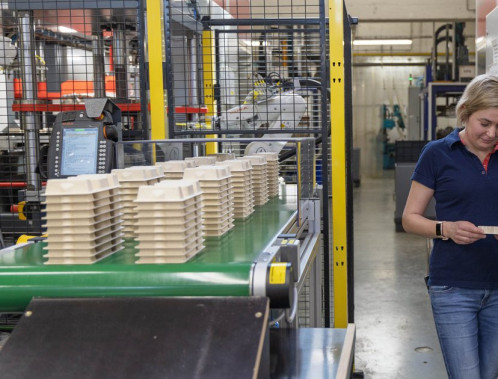
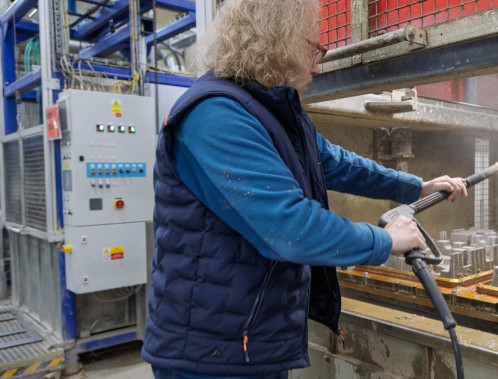
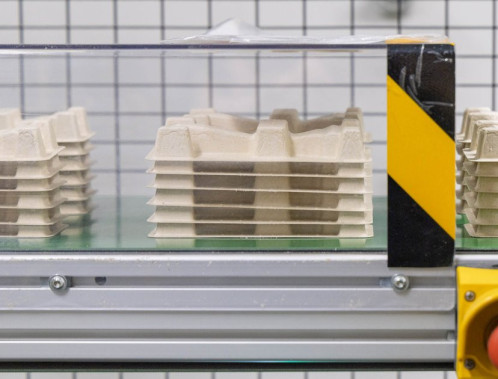
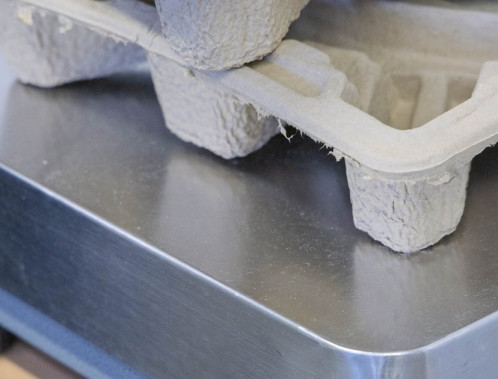
Wet press molded fibre production—the technology applicable to premium personal care packaging—forms packaging components on compact production lines where pulp forming and drying occur simultaneously inside heated press dies. Recycled paper pulp is deposited onto a forming screen, transferred to a heated die operating at 160–220°C under pressure of 20–60 bar, and pressed for 15–45 seconds. The result is a dry, shaped component with wall thickness 0.8–2 mm, density 0.3–0.8 g/cm³, and smooth surface finish suitable for direct contact with printed personal care packaging and brand-facing applications.
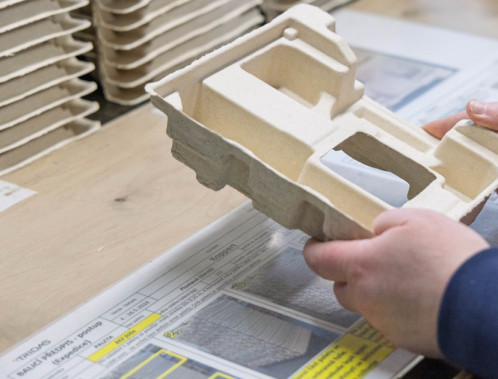
Design features relevant to personal care packaging include embossed brand logos (minimum character height 1 mm), product identification text, recessed cradles for cylindrical bottles or tubes, and internal compartments separating multiple products within gift sets. Draft angles of 3–7° enable component extraction from tooling without surface damage. Compression strength of 200–400 N per 100 mm² protects products during stacking in retail environments and e-commerce fulfilment centres.
Production cycle time for wet press molded fibre components is 60–80 seconds per part, enabling inline integration with personal care product assembly lines. Tooling is manufactured as multi-cavity dies for higher annual production volumes. Typical tooling lead time is approximately 4 weeks from order—substantially shorter than injection-moulding tooling lead times for equivalent plastic components.
| Parameter | Molded fibre (wet press) | Plastic thermoformed (PS/PET) | Injection-moulded (PP/ABS) |
|---|---|---|---|
| Wall thickness | 0.8–2 mm | 0.3–1 mm | 1–3 mm |
| Density | 0.3–0.8 g/cm³ | 0.9–1.2 g/cm³ | 0.9–1.1 g/cm³ |
| Tooling cost | €5,000–20,000 | €3,000–12,000 | €8,000–25,000 |
| Surface finish | Smooth, natural texture | Glossy, transparent optional | Glossy, colour-matched |
| Recyclability under PPWR | ≥70% target from 2030 | Varies by resin type | Varies by resin type |
| LCA (kg CO₂e per kg material) | 0.4–0.6 (recycled pulp) | 2.7–3.1 (virgin PS) | 1.9–2.3 (virgin PP) |
| Moisture resistance | Moderate (coating required) | Excellent | Excellent |
Personal care procurement managers face three interconnected requirements: compliance with PPWR recyclability targets applying from 12 August 2026, delivery of sustainability claims credible to retail buyers and consumers, and protection of products during e-commerce distribution where personal care items frequently ship alongside heavier items. Molded fibre addresses all three simultaneously when wet press technology is matched to application requirements.
For haircare packaging—typically bottles ranging 200–500 ml with cylindrical or contoured profiles—molded fibre inserts prevent in-transit contact between bottles, eliminating label scuffing and closure damage. Recessed cradle geometry accommodates bottle base diameters from 40–80 mm. For oralcare packaging—toothbrushes, electric toothbrush replacement heads, and toothpaste tubes—molded fibre combines product separation with brand-facing aesthetics, replacing plastic clamshell packaging that faces increasing regulatory scrutiny under PPWR provisions targeting non-recyclable plastic formats.
Body care gift sets present specific challenges: multiple product formats (tubes, bottles, jars) within a single package, requirement for premium unboxing experience, and protection during seasonal e-commerce peaks when handling intensity increases. Molded fibre enables multi-compartment insert designs with embossed branding, maintaining structural integrity under compression loads encountered in stacked distribution.
Volume economics determine technology selection. TRIDAS minimum order quantity is 10,000 units, varying with part complexity and tooling cavity count. Multi-cavity tooling—producing 4–8 parts per cycle—suits higher annual volumes. For European personal care brands operating across multiple markets, tooling investment amortises over 2–3 product cycles, enabling packaging consistency across markets while meeting country-specific recyclability infrastructure requirements under PPWR.
TRIDAS produces personal care packaging on wet press production lines operating both in-house at its Czech facility and supplied to European personal care manufacturers as turnkey production systems. Wet press technology selection for personal care applications reflects surface finish requirements and dimensional tolerances typical in premium cosmetics and personal care segments. TRIDAS provides FSC-certified chain-of-custody documentation and EUDR-compliant Due Diligence Statements per shipment under Regulation (EU) 2023/1115, meeting sustainability disclosure requirements common in personal care procurement specifications. Tooling design and manufacture occur in-house with typical lead time of approximately 4 weeks from order—significantly faster than alternative molded fibre suppliers.