08. 10. 2026
Molded fibre wine and spirits secondary packaging provides premium presentation for gift boxes, bottle inserts and multipacks while meeting EU recycling targets under PPWR Regulation (EU) 2025/40. Procurement managers sourcing secondary packaging for wine and spirits brands evaluate molded fibre against plastic alternatives for three decision factors: premium surface finish capability, recyclability compliance with fibre-based packaging targets (≥70% from 2030), and tooling cost per SKU typically €5,000–20,000 per cavity set compared to injection moulding €8,000–25,000.
Wine and spirits secondary packaging comprises bottle inserts, gift box interior structures, multipack dividers and protective sleeve components that sit between primary packaging (the bottle and closure) and outer shipping cartons. Secondary packaging in this category serves three simultaneous functions: structural protection during distribution, brand presentation at retail and consumer unboxing experience differentiation.
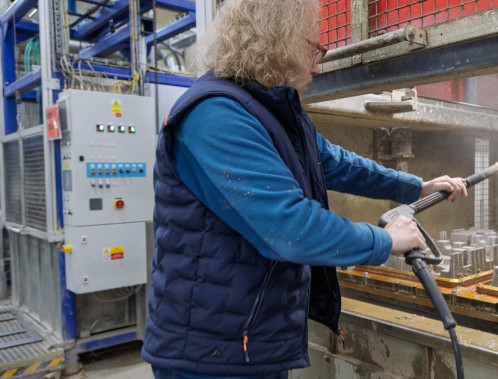
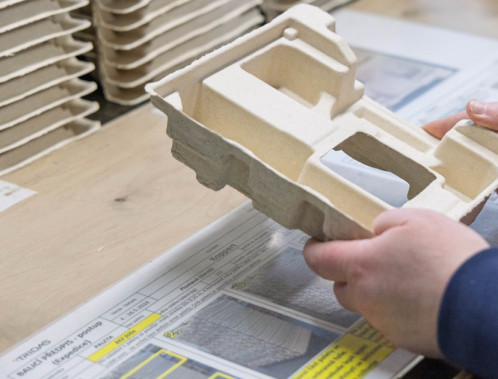
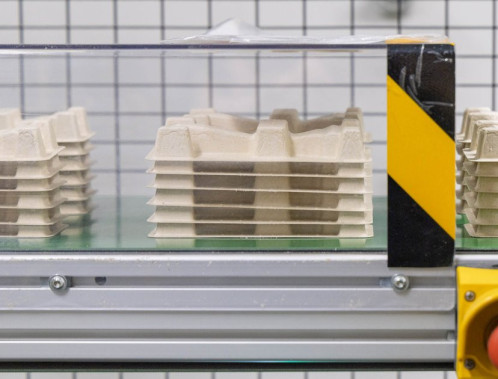
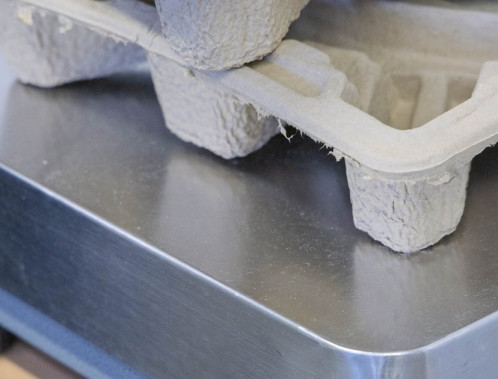
Molded fibre secondary packaging for wine and spirits applications is produced using wet press technology. The process begins with recycled paper pulp slurry formed into a pre-form matching the bottle or gift box cavity geometry. The wet pre-form transfers immediately to a heated press die where forming and drying occur simultaneously under heat (160–220°C) and pressure (20–60 bar) for 15–45 seconds. This single-step process yields parts with 0.8–2 mm wall thickness, smooth surface finish suitable for direct printing, and density 0.3–0.8 g/cm³.
The wet press method differentiates from dry press molded fibre used in protective packaging applications. Dry press involves forming the wet pre-form, passing it through a drying oven (3–8 minutes at 180–250°C), then transferring the dried pre-form to a heated press for final shaping. This produces thicker walls (2–5 mm), rougher texture and lower density—appropriate for impact absorption in e-commerce protective packaging but unsuitable for the surface finish requirements of wine and spirits gift packaging.
Tooling for wine and spirits secondary packaging consists of matched metal dies machined to the bottle profile or gift box cavity geometry. Typical draft angles range 3–7° to enable part ejection. Minimum feature detail reaches 1 mm for embossed brand logos or regulatory text. Surface decoration options include water-based inkjet printing, hot stamping foil application, embossing and debossing. Colour matching achieves ΔE consistency under 2 in controlled production conditions when using calibrated colorant dosing systems.
Wine bottle inserts typically incorporate cylindrical cavities sized to bottle diameter plus 2–4 mm clearance, with base support geometry preventing bottle movement during transit drop events up to 76 cm drop height under ISTA 2A protocol. Gift box interior structures may include multiple cavities for bottle plus accessories (glasses, corkscrews, tasting notes booklets) with partition walls 1.5–3 mm thickness. Multipack dividers for six-bottle or twelve-bottle cases use cell geometry sized to bottle diameter with radiused corners preventing glass contact between adjacent bottles.
| Factor | Molded fibre (wet press) | Expanded polystyrene (EPS) | Injection-moulded polypropylene |
|---|---|---|---|
| Wall thickness range | 0.8–2 mm | 15–40 mm (lower density) | 1.5–3 mm |
| Surface finish | Smooth, printable directly | Textured foam (not printable) | Smooth, requires secondary decoration |
| Tooling cost per cavity set | €5,000–20,000 | €3,000–8,000 (block cutting) | €8,000–25,000 |
| Tooling lead time | ~4 weeks (TRIDAS) | 2–3 weeks | 6–12 weeks |
| Cycle time per part | 60–80 seconds | 30–90 seconds (steam expansion + cooling) | 20–60 seconds |
| PPWR recyclability target compliance | Fibre-based: ≥70% from 2030 | Plastic: ≥65% from 2030 (material-level, collection gaps) | Plastic: ≥65% from 2030 |
| Material density | 0.3–0.8 g/cm³ | 0.02–0.05 g/cm³ | 0.9–1.2 g/cm³ |
| Brand perception alignment | Natural aesthetic, sustainability positioning | Functional only, negative consumer perception | Neutral to negative sustainability perception |
EPS foam remains common in economy wine multipack distribution packaging due to low material cost and excellent cushioning properties, but faces increasing brand rejection for premium wine and spirits applications due to consumer perception issues and PPWR plastic recycling infrastructure requirements. Injection-moulded polypropylene provides design flexibility for complex gift box interior geometries but requires secondary printing or labelling operations to achieve brand presentation standards, adding process steps and cost.
Procurement managers sourcing wine and spirits secondary packaging face three simultaneous evaluation criteria: regulatory compliance trajectory under PPWR, brand presentation requirements at premium retail channels, and total landed cost per bottle including tooling amortisation.
PPWR Regulation (EU) 2025/40 applies from 12 August 2026 and sets recyclability targets for fibre-based packaging at ≥70% from 1 January 2030, increasing to ≥80% from 1 January 2038. These targets apply to material-level recyclability infrastructure, not post-consumer recycled content quotas. Wine and spirits secondary packaging classified as fibre-based under PPWR must demonstrate collection system access and sortation compatibility to meet these thresholds. FSC chain-of-custody certification from pulp source through finished packaging supports compliance documentation and consumer-facing sustainability claims in EU markets.
Premium wine and spirits brands position secondary packaging as brand experience differentiation at retail. Gift box interior structures visible at point of opening communicate brand values through material selection, surface finish quality and structural design language. Molded fibre's natural cellulose aesthetic aligns with sustainability narratives increasingly central to wine and spirits brand positioning in European consumer markets, particularly for organic wine certifications and craft spirits brands emphasising heritage production methods.
Total cost per bottle calculations must account for tooling amortisation across production volumes. Tooling becomes cost-effective at higher annual volumes, with multi-cavity tooling (2–4 cavities per tool) improving economics through reduced cycle time per part. Seasonal gift packaging SKUs with 6–9 month production windows may justify tooling investment at lower volumes when factoring PPWR compliance risk mitigation and brand positioning value. TRIDAS minimum order quantity is from 10,000 units, varying with part complexity and tooling cavity count.
Black molded fibre production capability enables luxury spirit brands (premium whisky, cognac, rum categories) to maintain dark-coloured interior packaging aesthetics while transitioning from plastic alternatives. Dedicated black production lines prevent cross-contamination with natural-tone packaging, maintaining colour consistency across production runs.
TRIDAS operates wet press molded fibre production technology specifically for premium packaging applications including wine and spirits secondary packaging. The company designs and manufactures its own production lines, enabling tooling lead times approximately 4 weeks from order—significantly faster than alternative molded fibre suppliers typically requiring 4–8 weeks. TRIDAS is FSC-certified and provides EUDR-compliant Due Diligence Statements per shipment under Regulation (EU) 2023/1115, sourcing pulp primarily from EU low-risk regions. Dedicated black molded fibre production lines launched in 2026 support luxury spirit brand visual identity requirements. The company's single facility in Valašské Meziříčí, Czech Republic, conducts facility tours for qualified buyers evaluating production capabilities and quality control processes for wine and spirits packaging projects.