08. 17. 2026

Molded fibre packaging serves non-sterile medical device and pharmacy applications in the European Union by meeting regulatory requirements for secondary packaging, transit protection and retail presentation without requiring sterile barrier system validation. This article explains where molded fibre applies in medical and pharmacy packaging, which regulatory frameworks govern non-sterile applications, and how procurement teams in regulated industries evaluate fibre-based alternatives to plastic secondary packaging.
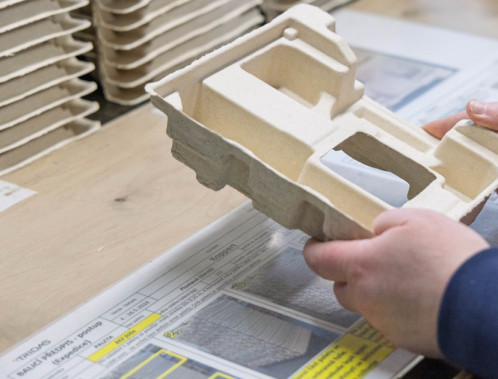
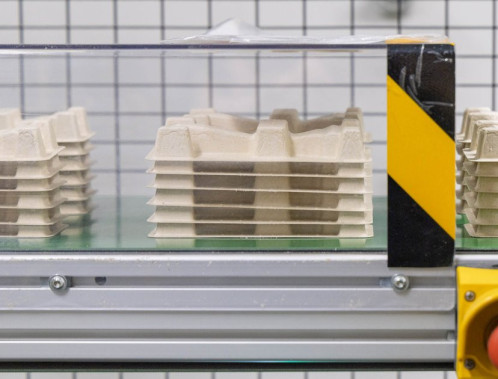
Molded fibre packaging in medical device and pharmacy applications refers specifically to NON-STERILE secondary packaging — the outer protective layer or retail presentation component that does NOT contact the sterile product and does NOT form part of the sterile barrier system. Typical applications include secondary packaging for home diagnostic kits (blood glucose monitors, pregnancy tests, thermometers), pharmacy retail packaging for over-the-counter medications in blister packs, secondary packaging for mobility aids and orthopaedic supports, protective inserts for non-implantable medical devices during distribution, and e-commerce protective packaging for pharmacy and healthcare products sold direct to consumer.
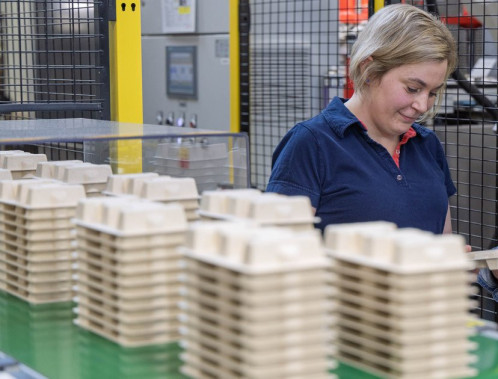
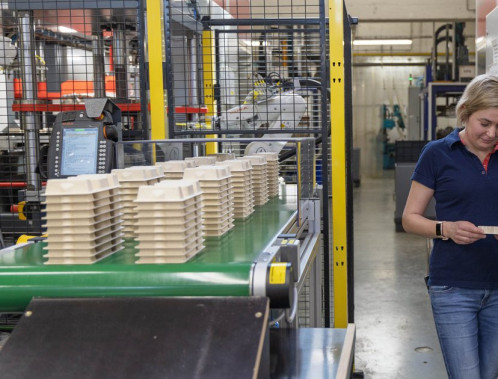
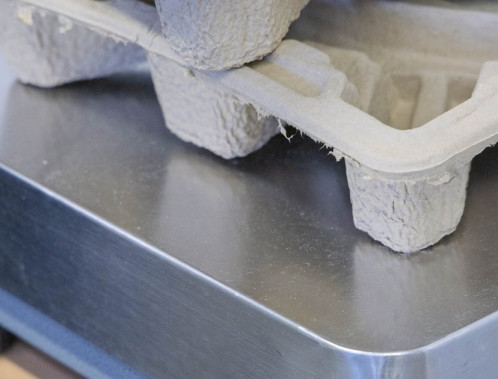
The production process for medical and pharmacy molded fibre packaging uses wet press technology where forming and drying occur simultaneously inside a heated press die. The wet pulp pre-form is pressed under heat (160–220°C) and pressure (20–60 bar) for 15–45 seconds, resulting in wall thickness 0.8–2 mm, density 0.3–0.8 g/cm³, and a smooth surface finish suitable for high-quality printing. This differs from dry press molded fibre where the wet pre-form passes through a drying oven before final shaping in a separate heated press die, producing thicker walls (2–5 mm) and rougher surface texture appropriate for protective packaging rather than retail presentation.
Regulatory context distinguishes medical and pharmacy molded fibre applications from general consumer packaging. EU Medical Device Regulation (EU) 2017/745 governs devices themselves and their sterile barrier systems, but secondary packaging falls outside the scope of device-specific regulation. Instead, secondary packaging in medical and pharmacy applications must comply with general packaging legislation: Regulation (EU) 2025/40 on packaging and packaging waste (PPWR) sets recyclability targets (≥70% from 2030, ≥80% from 2038) for all fibre-based packaging including pharmaceutical secondary packaging, and suppliers must provide technical documentation demonstrating compliance with EN 13430 recyclability criteria. FSC chain-of-custody certification verifies sustainable forestry sourcing, and EUDR Due Diligence Statements under Regulation (EU) 2023/1115 confirm deforestation-free supply chains — both increasingly required by procurement policies in healthcare organisations.
Surface treatment and printing use water-based barrier coatings where moisture resistance is required (typical basis weight 400–1,200 g/m², coating adds 5–15 g/m²) and flexographic or offset printing for regulatory text, branding and product information. Colour consistency under controlled printing conditions reaches ΔE under 2 measured per ISO 12040 lightfastness testing. Embossing minimum character height 1 mm enables tactile product identification and anti-counterfeiting features required in pharmacy retail channels.
| Criterion | Molded fibre (wet press) | Polystyrene thermoform | Folding carton |
|---|---|---|---|
| Wall thickness | 0.8–2 mm | 0.5–1.5 mm | 0.3–0.6 mm |
| Density | 0.3–0.8 g/cm³ | 0.9–1.2 g/cm³ | 0.6–0.9 g/cm³ |
| PPWR recyclability | Meets ≥70% target (paper stream) | Requires collection infrastructure | Meets ≥70% target (paper stream) |
| Printing surface | Smooth (wet press), 4-colour capable | Very smooth, full-colour capable | Very smooth, full-colour capable |
| Moisture resistance | Requires barrier coating | Inherent (hydrophobic polymer) | Requires coating or lamination |
| Impact absorption | High (fibre structure compresses) | Moderate (rigid material cracks) | Low (folds collapse) |
| Tooling cost | €5,000–20,000 per cavity set | €8,000–25,000 per cavity set | €2,000–8,000 per die set |
| Tooling lead time (TRIDAS) | ~4 weeks | 6–10 weeks (typical) | 2–4 weeks (typical) |
| Volume threshold for cost-effectiveness | MOQ from 10,000 units, varying with complexity | At higher volumes (typical) | 10,000 units/year (typical) |
Procurement managers and sustainability leads in medical device and pharmacy organisations evaluate molded fibre secondary packaging against three decision criteria: regulatory compliance for non-sterile applications, PPWR recyclability targets under Regulation (EU) 2025/40, and supply chain validation requirements.
Regulatory compliance for non-sterile secondary packaging does NOT require the validation protocols applied to sterile barrier systems. EU Medical Device Regulation (EU) 2017/745 applies to devices and their sterile packaging (where applicable), but secondary packaging falls under general packaging legislation. Buyers specify compliance with EN 13430 recyclability criteria to meet PPWR targets (≥70% recyclability from 2030), FSC chain-of-custody certification to demonstrate sustainable forestry sourcing, and EUDR Due Diligence Statements per Regulation (EU) 2023/1115 to confirm deforestation-free pulp supply chains. Suppliers in the medical and pharmacy channel must provide technical documentation for each requirement — batch-level traceability and material declarations differ from consumer goods packaging where aggregate compliance suffices.
Transit testing validates protective performance for medical device shipping applications where product integrity during distribution affects functionality (diagnostic instruments, mobility aids, durable medical equipment). ISTA 3A general simulation testing covers payloads up to 5 kg, replicating drop sequences, vibration exposure and compression loading typical in parcel carrier networks. Molded fibre compression strength 200–400 N per 100 mm² meets protective requirements for most non-fragile medical devices, though high-value electronic diagnostic equipment may require custom validation under ISTA 6 series testing protocols.
Printing and surface finish requirements in pharmacy retail channels demand colour consistency, regulatory text legibility and anti-counterfeiting features. Wet press molded fibre delivers smooth printable surfaces capable of 4-colour flexographic printing with ΔE colour consistency under 2 in controlled conditions (measured per ISO 12040). Embossing enables tactile product identification with minimum character height 1 mm — increasingly specified in accessibility-focused procurement policies. Water-based barrier coatings add moisture resistance where pharmacy retail environments require protection from condensation or humidity exposure without compromising recyclability in paper waste streams.
TRIDAS supplies wet press molded fibre packaging for non-sterile medical device and pharmacy applications from its FSC-certified facility in the Czech Republic. The company provides EUDR-compliant Due Diligence Statements per shipment under Regulation (EU) 2023/1115, sourcing pulp primarily from EU low-risk regions to meet healthcare procurement policies requiring verified deforestation-free supply chains. TRIDAS operates both wet press and dry press production technologies, enabling technology selection per application — wet press for pharmacy retail presentation requiring smooth printable surfaces, dry press for protective inserts in medical device distribution packaging. Typical tooling lead time approximately 4 weeks from order supports faster time-to-market compared to alternative molded fibre suppliers, and the company conducts facility tours for qualified buyers where production-line validation and quality systems inspection form part of supplier qualification processes in regulated industries.