09. 25. 2026
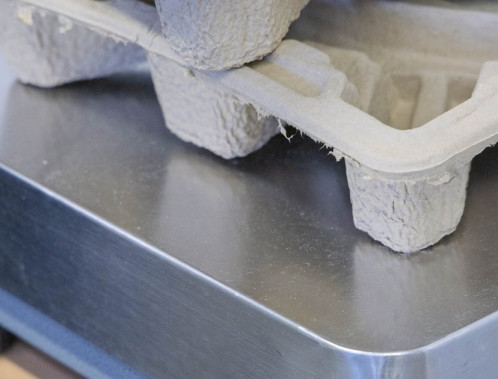
Molded fibre inserts protect automotive spare parts during warehouse storage and distribution without the material disposal complexities of EPS foam or the tooling costs of injection-moulded plastic trays. Dry press molded fibre produces cushioned inserts with wall thicknesses of 2–5 mm and compression strength of 200–400 N per 100 mm², absorbing impact during multi-drop logistics networks while meeting EU end-of-life packaging recyclability requirements under Regulation (EU) 2025/40 without design modification.
Automotive spare parts packaging protects components including sensors, control modules, plastic housings, gaskets, and small mechanical assemblies during warehouse handling and last-mile delivery to workshops and dealerships. These components require impact protection against drops during order picking and transit vibration, plus surface protection against scratches where painted or metallised surfaces contact packaging materials.
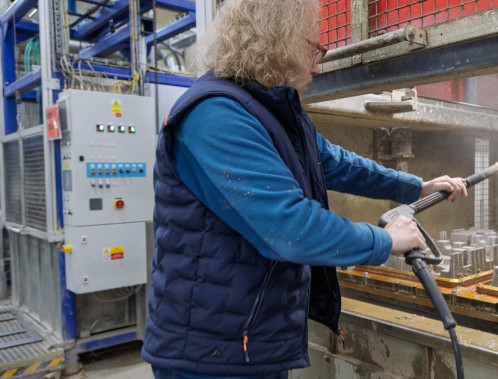
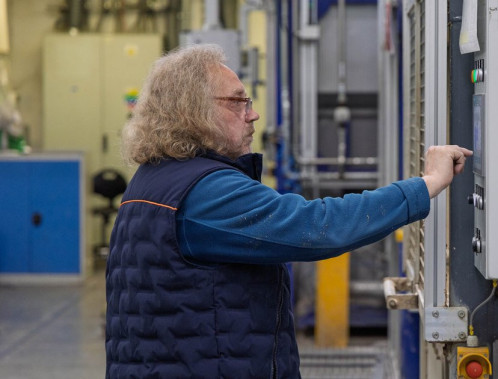
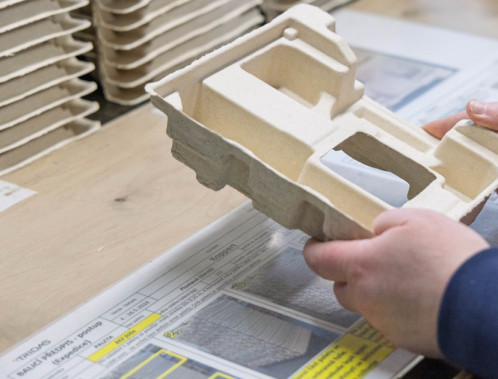
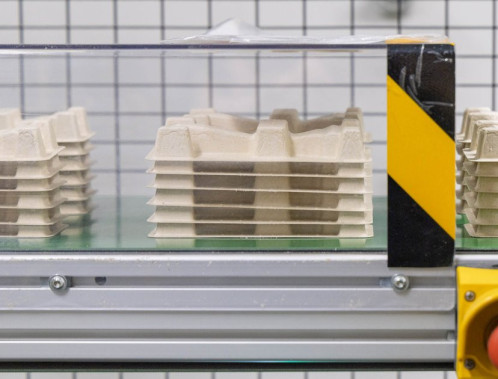
Dry press molded fibre produces protective inserts through a continuous production line where wet pulp pre-forms pass through a drying oven before final shaping in a heated press die. This sequential process creates thicker walls (typically 2–5 mm) with lower density and higher impact absorption than wet press technology, where forming and drying occur simultaneously in a single heated die. The resulting insert geometry includes raised ribs for part location, recessed cavities for component nesting, and draft angles of 3–7° enabling automated de-moulding without part damage.
The production process begins with recycled paper pulp suspended in water at 1–3% consistency. A vacuum forming tool creates the initial three-dimensional shape as water drains through the mould surface. The wet pre-form then passes through a drying oven at 180–250°C for 3–8 minutes, reducing moisture content to 5–8% before transfer to the heated press die operating at 160–220°C under 20–60 bar pressure. Press duration of 15–45 seconds finalises wall thickness, surface texture, and dimensional accuracy to ±0.5 mm tolerance across the insert footprint.
Draft angles enable automated production where inserts release from tooling without manual intervention, supporting cycle times of 20–80 seconds per part on industrial dry press lines. Basis weight selection of 400–1,200 g/m² determines wall rigidity and compression resistance, with higher basis weights specified for heavier components or longer distribution distances where cumulative handling stress increases failure risk.
| Property | Dry press molded fibre | EPS foam | Injection-moulded PP/ABS |
|---|---|---|---|
| Wall thickness range | 2–5 mm | 10–50 mm | 1.5–3 mm |
| Material density | 0.3–0.8 g/cm³ | 0.02–0.05 g/cm³ | 0.9–1.2 g/cm³ |
| Compression strength | 200–400 N per 100 mm² | 50–150 N per 100 mm² | 300–500 N per 100 mm² |
| Tooling cost per cavity | €5,000–20,000 | €3,000–12,000 | €8,000–25,000 |
| Tooling lead time | ~4 weeks | 3–5 weeks | 6–10 weeks |
| Cycle time per part | 20–80 seconds | 5–15 seconds | 20–60 seconds |
| PPWR recyclability compliance | Inherent (fibre-based) | Requires material change | Dependent on resin grade |
| Material cost per kg | Substantially lower than virgin polymers (recycled pulp) | Premium virgin polymer cost | Virgin polymer cost |
Procurement managers specifying protective inserts for automotive spare parts face material disposal complexity with EPS foam, where municipal waste systems in many EU regions lack collection infrastructure for expanded polystyrene recycling. Workshop and dealership staff discard foam inserts as residual waste, creating disposal cost and contradicting corporate sustainability commitments published in annual reports and supplier codes of conduct.
Regulation (EU) 2025/40 – the Packaging and Packaging Waste Regulation – sets recyclability targets of ≥70% from 2030 and ≥80% from 2038 for fibre-based packaging, with member state authorities defining enforcement mechanisms and potential penalties during 2026–2027. Molded fibre inserts meet these targets without design modification or material substitution, eliminating the regulatory risk that current EPS foam protective packaging will require replacement within the next compliance period.
Tooling cost and lead time affect SKU rationalisation projects where automotive suppliers consolidate part numbers and standardise packaging formats across regional distribution centres. Molded fibre tooling costs €5,000–20,000 per cavity set with approximately 4-week lead time from order, enabling faster packaging development for new component launches compared to injection-moulded plastic alternatives requiring 6–10 weeks tooling manufacture. Minimum order quantity from 10,000 units varies with part complexity and tooling cavity count; at higher annual volumes per SKU, multi-cavity tooling reduces per-unit production cost while maintaining the same 4-week tooling lead time.
Material density of 0.3–0.8 g/cm³ positions dry press molded fibre between low-density EPS foam and high-density injection-moulded plastic, providing impact absorption for components under 5 kg without the dimensional bulk that foam geometry requires for equivalent compression resistance. This density range suits packaging specifications for sensors, control modules, and small mechanical assemblies where drop-test validation under ISTA 3A protocol requires compression strength of 200–400 N per 100 mm² across the insert contact surface.
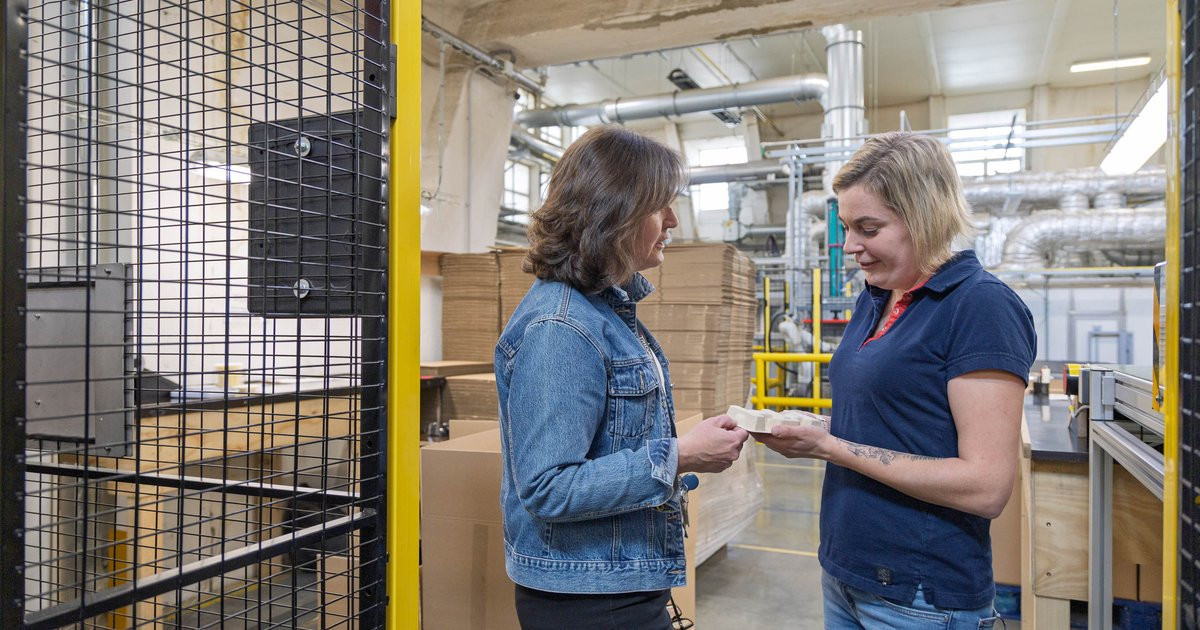
TRIDAS operates both wet press and dry press molded fibre production technologies at its facility in Valašské Meziříčí, Czech Republic, enabling technology selection per application. Automotive spare parts packaging typically specifies dry press production for thicker walls and higher impact absorption, while premium consumer electronics applications use wet press for finer surface detail and thinner wall sections. TRIDAS designs and manufactures its own molded fibre production lines, reducing tooling lead time to approximately 4 weeks from order – significantly faster than alternative molded fibre suppliers. TRIDAS is FSC chain-of-custody certified and provides EUDR-compliant Due Diligence Statements per shipment under Regulation (EU) 2023/1115, sourcing pulp primarily from EU low-risk regions.