09. 16. 2026
Molded fibre corner protectors for furniture and home goods packaging use dry press production technology to create impact-absorbing edge guards and structural packaging for items including flat-pack furniture, mattresses, mirrors, picture frames, lamps, and home appliances during e-commerce fulfilment and retail distribution. The material offers drop-test validated protection with lower transport weight and full recyclability compared to expanded polystyrene foam or injection-moulded plastic corner guards, addressing European Packaging and Packaging Waste Regulation (PPWR) recyclability requirements that apply from 12 August 2026.
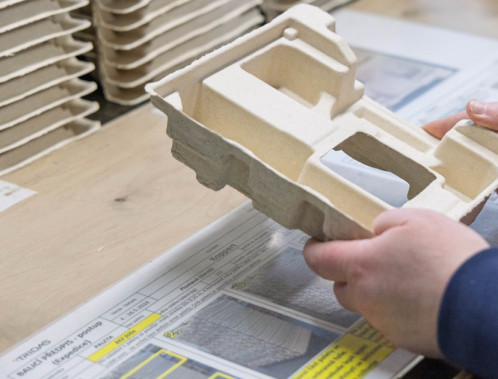
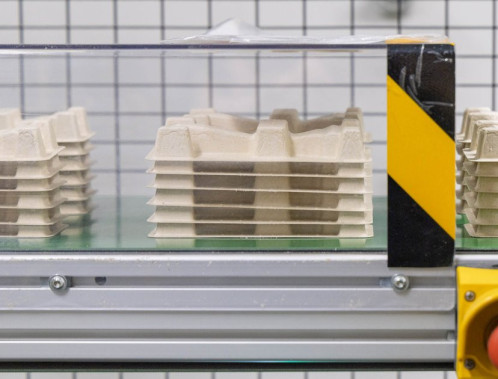
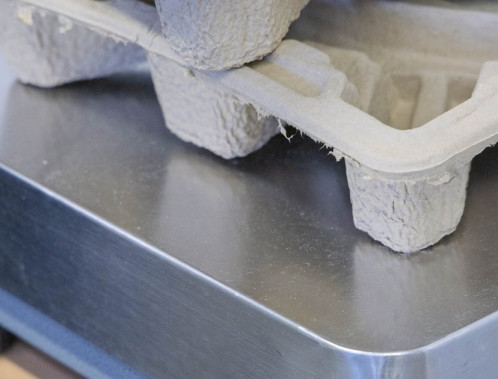
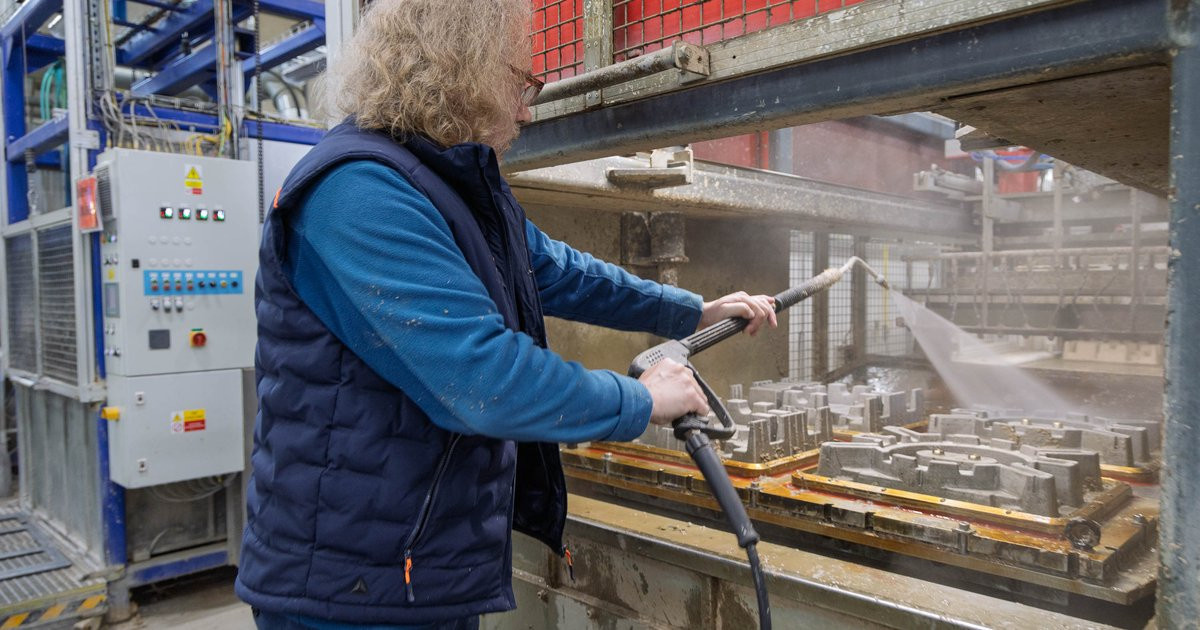
Molded fibre corner protectors are structural packaging components produced using dry press technology on a continuous production line. Recycled paper pulp slurry is formed into a wet pre-form shape on a mesh mould, then passes through a drying oven at 180–250°C to remove moisture. The dried pre-form transfers to a heated press die operating at 160–220°C under 20–60 bar pressure for final shaping and densification. This process creates parts with wall thickness 2–5 mm, compression strength 200–400 N per 100 mm², and a surface texture suitable for edge protection rather than consumer-facing presentation.
The production sequence differs fundamentally from wet press molded fibre used in premium cosmetics or electronics packaging, where forming and drying occur simultaneously inside a heated press. Dry press technology prioritises impact absorption and structural rigidity over surface smoothness, making it the appropriate choice for protective packaging applications where the component remains hidden inside corrugated outer boxes during transport and storage.
Corner protectors typically feature L-shaped or U-shaped cross-sections with draft angles 3–7° to enable ejection from the press die. Basis weight ranges 400–1,200 g/m² depending on the required impact resistance and the furniture item's weight. For flat-pack furniture weighing 15–25 kg per box, corner protectors use basis weight 800–1,200 g/m² with 4–5 mm wall thickness to withstand stacking loads during warehouse storage and multiple handling events in last-mile delivery. TRIDAS minimum order quantity starts from 10,000 units, varying with part complexity and tooling cavity count.
Design features include radiused internal corners to prevent stress concentration points, ribbing patterns to increase bending stiffness without adding weight, and localised thickness variations where impact loads concentrate. TRIDAS designs and manufactures its own molded fibre production lines, enabling modifications to press die geometry and drying parameters when customer specifications require wall thickness outside standard ranges or when specific furniture geometries demand non-standard draft angles.
| Property | Dry press molded fibre | Expanded polystyrene (EPS) | Injection-moulded PP corner guards |
|---|---|---|---|
| Density (g/cm³) | 0.3–0.8 | 0.02–0.05 | 0.9–1.2 |
| Wall thickness range (mm) | 2–5 | 20–50 | 2–4 |
| Compression strength (N per 100 mm²) | 200–400 | 40–80 | 800–1,200 |
| Impact absorption mechanism | Fibre compression and densification | Cell collapse and gas displacement | Elastic deformation |
| Recyclability (paper/cardboard stream) | Yes – EN 13430 compliant | No – separate PS collection required | No – separate PP collection required |
| Tooling cost per cavity set | €5,000–20,000 | €12,000–30,000 | €8,000–25,000 |
| Tooling lead time | ~4 weeks | 6–10 weeks | 6–8 weeks |
| Material cost (€ per kg, EU market) | Substantially lower material input cost than virgin polymers | Virgin polymer input cost | Virgin polymer input cost |
PPWR sets fibre-based packaging recyclability targets at ≥70% from 1 January 2030 and ≥80% from 1 January 2038, measured as the percentage of packaging mass entering recycling processes after collection. Corner protectors made from recycled paper pulp with no plastic coating or lamination meet these requirements immediately, eliminating future reformulation costs when the regulation enters into force on 12 August 2026. EPS foam corner protectors require separate collection streams and mechanical recycling infrastructure that remains underdeveloped across many European regions, creating compliance risk for brands distributing furniture through multi-country e-commerce channels.
E-commerce return rates for furniture items average 8–12% across European markets, with packaging damage during reverse logistics contributing to product write-offs when items cannot be resold as new. Corner protectors designed for multiple handling cycles reduce return-related losses by maintaining structural integrity through forward delivery, customer unboxing, and return shipment if required. Dry press molded fibre retains compression strength after repeated impacts better than EPS foam, which permanently deforms after the first significant drop event.
Transport weight considerations affect last-mile delivery costs in urban zones where vehicle capacity limits based on weight rather than volume determine delivery density. A typical L-shaped corner protector for a 120 cm × 80 cm flat-pack table panel weighs 45–65 grams in molded fibre versus 15–25 grams in EPS foam, adding approximately 160–240 grams total weight for four corners. However, the higher density allows thinner wall thickness (4 mm molded fibre versus 30 mm EPS) which recovers cubic volume in delivery vehicles, often resulting in neutral or positive impact on vehicle utilisation rates when measured by units per van load rather than weight alone.
Tooling economics favour molded fibre for furniture lines, where the lower tooling cost per cavity set (EUR 5,000–20,000 versus EUR 8,000–25,000 for injection-moulded plastic) and faster lead time (approximately 4 weeks) enable packaging development concurrent with product design rather than as a sequential post-design activity. For furniture brands launching new product ranges across multiple European markets within compressed timelines, this tooling speed reduces time-to-market by 2–4 weeks compared to plastic alternatives.
TRIDAS operates both wet press and dry press molded fibre production technologies at its Czech Republic facility, enabling technology selection based on application requirements rather than equipment availability. For furniture corner protectors and structural packaging, dry press technology provides the wall thickness and impact absorption needed for products that undergo multiple handling events between factory gate and final assembly. The company sources pulp primarily from EU low-risk regions and provides EUDR-compliant Due Diligence Statements per shipment under Regulation (EU) 2023/1115, addressing traceability requirements for buyers operating under corporate deforestation-free procurement policies. TRIDAS designs and manufactures its own production lines, allowing press cycle modifications when furniture geometries require non-standard part dimensions or when customer drop-test protocols specify impact resistance outside typical ISTA 3A parameters.