07. 31. 2026
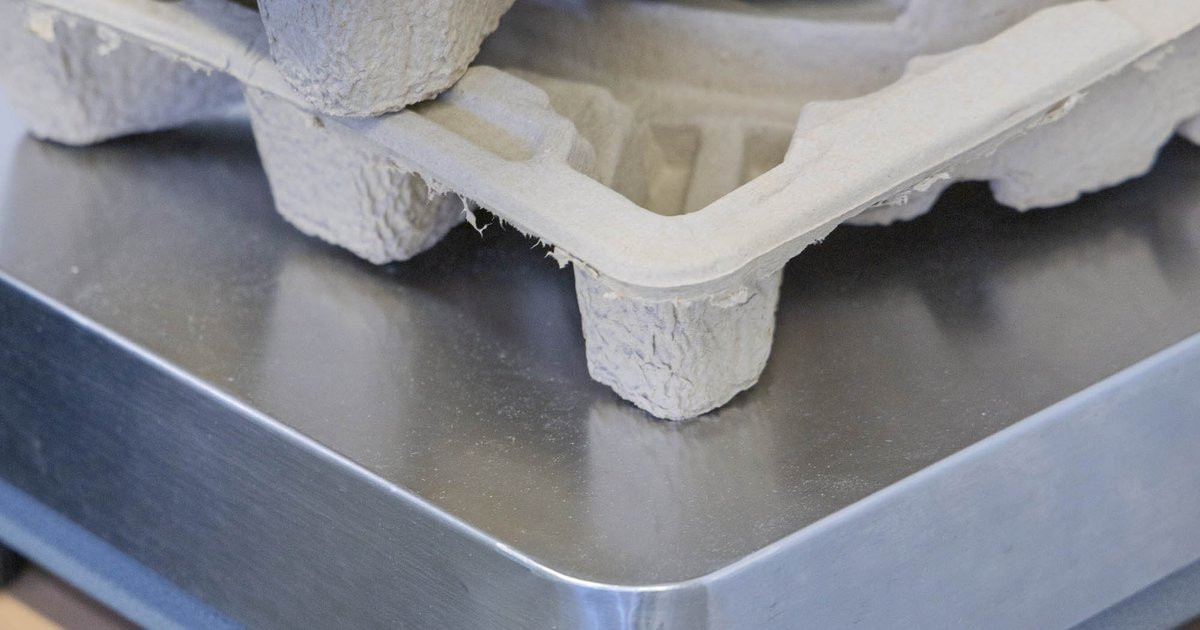
Molded fibre packaging for cosmetics and beauty products combines the luxury presentation premium brands require with the sustainability credentials European consumers increasingly demand. Wet press molded fibre technology produces thin-walled packaging with smooth surfaces suitable for high-quality printing, enabling cosmetics brands to eliminate plastic clamshells, blister packs and foam inserts whilst maintaining protective performance and shelf appeal. European cosmetics procurement teams face PPWR recyclability requirements from August 2026, making molded fibre a strategically important alternative to conventional plastic packaging formats that currently dominate the category.
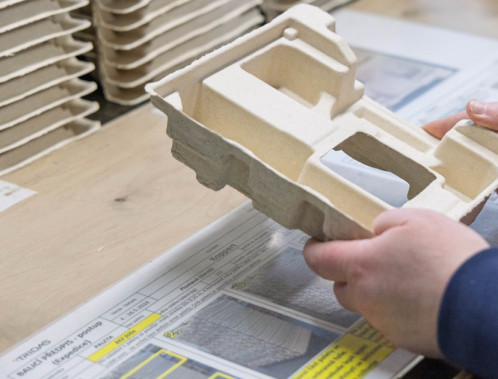
Molded fibre packaging for cosmetics applications uses wet press production technology, where forming and drying occur simultaneously inside heated press dies. Unlike dry press molded fibre—which produces thicker protective packaging on long continuous lines—wet press operates on compact production equipment where the wet pulp pre-form is pressed under heat and pressure in a single operation. This simultaneous shaping and dewatering process produces walls typically 0.8–2 mm thick with higher density and smoother surfaces than dry press alternatives.
The production process starts with pulp slurry prepared from virgin or recycled paper fibres. Forming tools create the wet pre-form by vacuum transfer onto a screen mould. The wet pre-form then transfers immediately to heated metal dies where compression under controlled temperature removes water and sets the final shape. Cycle times range from 20 to 60 seconds depending on wall thickness and geometry complexity. The simultaneous heat and pressure cycle is what distinguishes wet press from dry press technology, where drying occurs separately in an oven before final pressing.
Surface finish quality in wet press molded fibre depends on die surface treatment, pulp preparation and pressing parameters. Screen-side surfaces (the side formed against the vacuum mould) have visible fibre texture. Die-side surfaces (the side compressed against the heated metal die) achieve substantially smoother finish suitable for direct printing or decorative surface treatments. This die-side smoothness is critical for cosmetics applications where presentation quality directly affects brand perception and purchase decisions at retail.
Common cosmetics applications include lipstick holders, compact foundation inserts, mascara presentation trays, skincare jar cradles, perfume bottle inserts, gift set component holders, and multi-product presentation boxes. Wall thickness selection balances protective requirements against material efficiency and visual appearance. Thinner walls (0.8–1.5 mm) suit lightweight products where presentation is primary. Thicker walls (1.5–2 mm) provide additional cushioning for glass containers or products requiring higher compression resistance during distribution.
| Property | Wet press molded fibre | Injection-molded PET | Thermoformed PVC blister | Die-cut folding carton |
|---|---|---|---|---|
| Wall thickness range | 0.8–2 mm | 0.3–1.5 mm | 0.25–0.8 mm | 250–600 gsm board |
| Tooling lead time (typical) | 4 weeks | 8–16 weeks | 6–10 weeks | 2–3 weeks |
| Recyclability (fibre-to-fibre) | Yes, EN 643 grade compliance | Limited—PET recycling infrastructure exists but clamshells often contaminated | Very limited—PVC not accepted in most EU paper streams | Yes, established paper recycling |
| PPWR compliance status | Meets ≥70% recyclability target | Compliance depends on design-for-recycling features | Non-compliant—PVC phase-out likely | Compliant if mono-material |
| Moisture resistance (untreated) | Moderate—suitable for non-liquid products | High—full moisture barrier | High—full moisture barrier | Low—coating required for moisture protection |
| Printability (without coating) | Good on die-side surface | Requires surface treatment for ink adhesion | Good—accepts flexo and offset inks | Excellent—litho-quality printing |
European cosmetics procurement teams evaluating molded fibre packaging should structure supplier discussions around three technical requirements: protective performance validation, surface finish specification, and regulatory compliance documentation. Protective performance depends on product weight, fragility and distribution environment. Glass containers require validated drop-test data under ISTA 2A or equivalent transit testing protocols. Compression testing per ISO 12048 verifies stacking strength for retail display and warehouse storage. Procurement specifications should state required test standards rather than accepting supplier claims without independent validation.
Surface finish directly affects brand presentation and printing outcomes. Die-side surface smoothness varies between suppliers based on die manufacturing quality and process control. Request physical samples showing print quality on die-side surfaces before tooling investment. Colour consistency across production runs matters for multi-component packaging where visual matching is critical—specify acceptable ΔE tolerance limits and request process capability data. Black molded fibre produced on dedicated lines eliminates colour variation concerns for monochrome presentations but is not universally available across suppliers.
Regulatory compliance for cosmetics packaging now includes three documentation requirements: FSC chain-of-custody certification for forest-sourced fibres, EUDR Due Diligence Statements per Regulation (EU) 2023/1115 applying from 30 December 2026, and PPWR recyclability validation under Regulation (EU) 2025/40 applying from 12 August 2026. Request FSC certificates, EUDR geolocation data for pulp sources, and EN 13430 recyclability test reports during supplier qualification. Suppliers without FSC certification or EUDR compliance processes create procurement risk after regulatory application dates.
Tooling costs and lead times directly impact time-to-market for product launches and packaging redesigns. Typical molding tool costs range €15,000–45,000 per cavity set depending on geometry complexity and cavity count [SOURCE NEEDED]. Lead times vary substantially between suppliers—some deliver tooling in 4 weeks, others require 12+ weeks. For seasonal launches or rapid product iterations, shorter tooling lead times reduce schedule risk. Request firm lead time commitments and penalty clauses for delays affecting launch dates. Multi-cavity tooling enables higher production volumes but increases initial investment—economic analysis should compare single-cavity versus multi-cavity based on annual volume forecasts and inventory carrying costs.
TRIDAS operates wet press molded fibre production technology specifically suited to cosmetics applications where surface finish and dimensional precision are critical requirements. In-house tooling design and manufacture delivers approximately 4 weeks tooling lead time from order, substantially faster than industry typical lead times exceeding 12 weeks. This shorter cycle enables cosmetics brands to compress product development timelines and respond to seasonal launch windows. Black molded fibre production on dedicated lines launched in 2026 provides monochrome presentation options without surface coating, eliminating colour variation concerns for premium cosmetics packaging. FSC chain-of-custody certification and EUDR-compliant Due Diligence Statements per shipment under Regulation (EU) 2023/1115 address procurement compliance requirements that apply across European cosmetics brands from late 2026. Facility tours for qualified procurement teams provide direct visibility into production processes and equipment capabilities.