08. 31. 2026
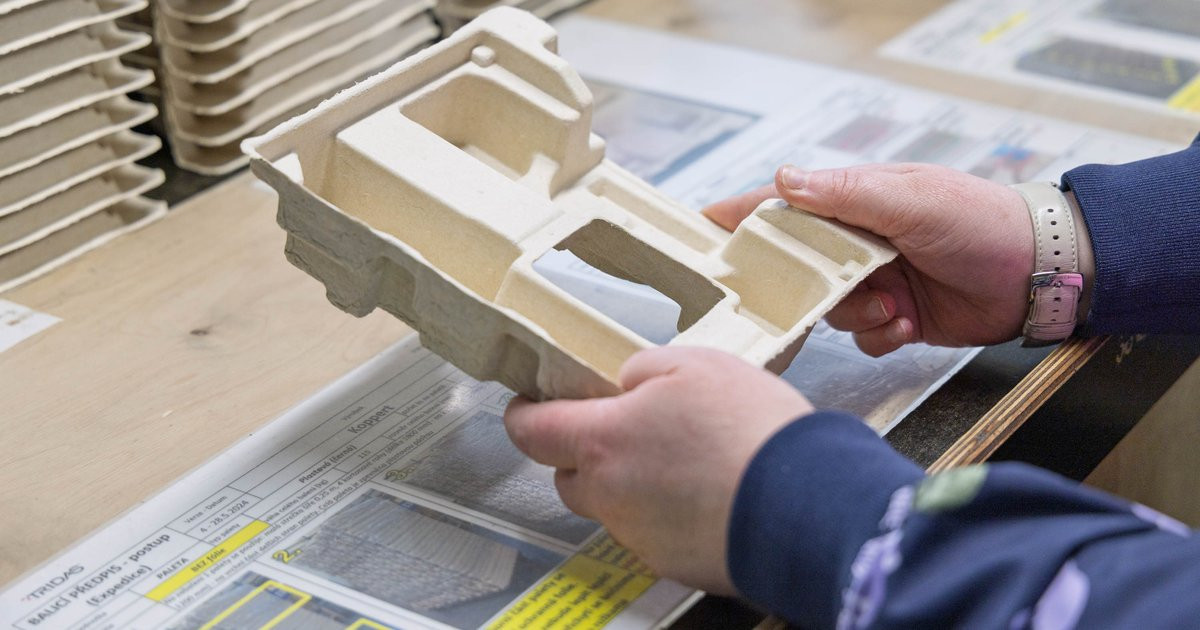
Molded fibre packaging for industrial components protects manufactured parts during inter-facility shipments and contract-manufacturer deliveries across European supply chains. The technology replaces polystyrene foam, corrugated partitions, and injection-moulded plastic trays in applications where parts require impact absorption, dimensional stability, and surface protection during transit. Industrial component packaging accounts for approximately 18% of European non-food molded fibre demand, serving automotive suppliers, machinery manufacturers, electronics assembly operations, and technical component distributors.
Industrial component packaging consists of formed protective inserts designed to secure manufactured parts during business-to-business shipments. The packaging prevents surface contact between parts, absorbs vibration and impact forces during transport, and maintains dimensional separation in multi-part configurations. Industrial applications differ from consumer protective packaging in payload weight, handling environment, and reusability requirements.
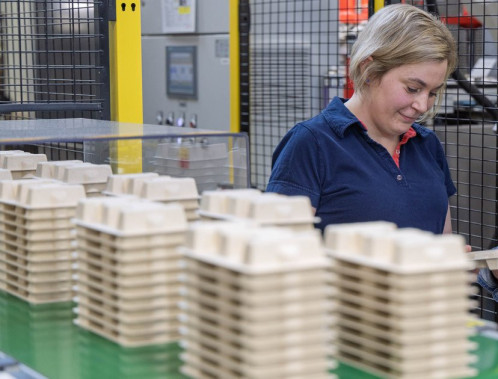
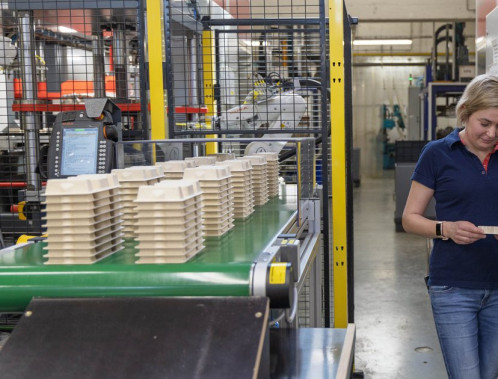
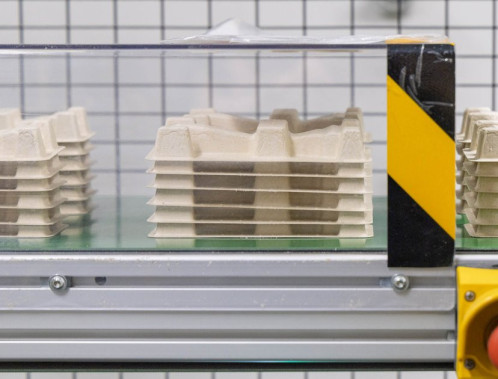
Molded fibre industrial packaging is produced predominantly using dry press technology. The process begins with recycled paper pulp deposited onto a forming screen, creating a thick wet pre-form. This pre-form passes through a drying oven at 180–250°C, then transfers to a heated press die at 160–220°C where final shaping occurs. The separated forming and drying steps allow wall thickness of 2–5 mm, significantly thicker than wet press alternatives. Higher wall thickness translates to greater compression strength (200–400 N per 100 mm²) and impact absorption capacity suitable for parts weighing 0.5–15 kg.
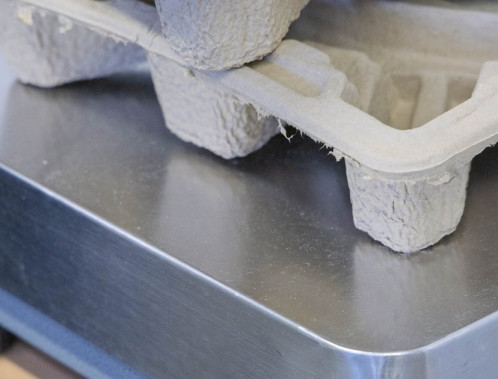
Design features specific to industrial component packaging include load-bearing ribs that distribute weight across the insert base, locating geometry that prevents part movement during handling, and stacking lugs that enable vertical consolidation in warehouse operations. Draft angles of 3–7° facilitate automated de-nesting on assembly lines. Surface texture in dry press molded fibre provides grip during manual handling whilst preventing part slippage inside corrugated shipping containers.
Common industrial components packaged in molded fibre include electric motor housings, cast metal parts, machined valve bodies, automotive suspension components, hydraulic manifolds, industrial sensors, and technical subassemblies. The packaging protects against both transport shock (drop testing to ISTA 2A standards) and warehouse handling damage during multi-stage distribution.
| Material | Wall thickness typical | Density | Impact absorption | Recyclability | Tooling cost |
|---|---|---|---|---|---|
| Dry press molded fibre | 2–5 mm | 0.3–0.8 g/cm³ | High | EN 643 paper streams | €5,000–20,000 per cavity |
| EPS foam | 20–50 mm | 0.02–0.05 g/cm³ | Very high | Separate EPS collection required | €15,000–35,000 per mould |
| Injection-moulded PP | 1.5–3 mm | 0.9–1.2 g/cm³ | Medium | PP recycling streams | €8,000–25,000 per cavity |
| Corrugated die-cuts | 4–8 mm (flute height) | Variable | Low to medium | Paper/cardboard streams | €1,500–5,000 per die |
Dry press molded fibre occupies the performance space between corrugated partitions (insufficient impact protection for heavy parts) and EPS foam (superior cushioning but regulatory pressure under PPWR recyclability targets). The material achieves impact absorption through controlled fibre density and wall thickness rather than air-void compression. This structural approach delivers protection whilst maintaining paper-stream recyclability.
Procurement managers specifying industrial component packaging face three regulatory and operational drivers converging in 2026–2030: PPWR recyclability requirements (≥70% from 2030 under Regulation (EU) 2025/40), elimination of single-use EPS foam in B2B logistics, and supply-chain pressure to reduce transport volume through improved nesting efficiency.
Molded fibre addresses these requirements through material composition and geometric design. The packaging meets PPWR recyclability thresholds without material blending (100% paper fibre base), eliminates foam-specific collection infrastructure at receiving facilities, and achieves 40–60% volume reduction compared to EPS alternatives through tighter nesting tolerances [SOURCE NEEDED]. These factors translate to lower waste-handling costs at distribution centres and contract-manufacturer receiving docks.
Tooling investment for molded fibre industrial packaging sits below injection-moulding alternatives whilst delivering comparable protection for parts under 15 kg payload. The €5,000–20,000 per cavity set cost reaches break-even against corrugated die-cuts and injection-moulded trays at higher annual volumes when total cost of ownership includes material cost per part and end-of-life waste disposal [SOURCE NEEDED]. TRIDAS minimum order quantity from 10,000 units, varying with part complexity and tooling cavity count. For components with 2–5 year production lifecycles, this positions molded fibre as cost-effective for medium-volume production runs typical in industrial supply chains.
Specification considerations include part geometry (undercuts require split tooling), surface sensitivity (dry press texture prevents direct contact but does not provide Class A surface protection), and warehouse handling (stacking height limits based on compression strength). Lead time from specification to production-ready tooling is approximately 4 weeks for single-cavity tooling at TRIDAS, enabling rapid prototyping and supply-chain qualification.
TRIDAS operates dry press molded fibre production lines specifically for industrial component applications, combining thick-wall structural capability with paper-stream recyclability. The company designs and manufactures its own production equipment, allowing tooling modifications for complex part geometries and multi-cavity configurations without third-party engineering dependencies. TRIDAS is FSC-certified and provides EUDR-compliant Due Diligence Statements per shipment under Regulation (EU) 2023/1115, sourcing pulp primarily from EU low-risk regions. Facility tours at the Valašské Meziříčí production site are available for procurement teams evaluating industrial packaging transitions from EPS foam or injection-moulded plastic alternatives.