09. 14. 2026
Molded fibre protective inserts for appliances and furniture provide corner protection, edge guards, and surface cushioning during warehousing and transit, replacing expanded polystyrene (EPS) and polyethylene foam in white goods, kitchen equipment, and flat-pack furniture packaging. Dry press molded fibre delivers the impact absorption and dimensional stability required for large-format protective packaging while meeting Packaging and Packaging Waste Regulation (EU) 2025/40 recyclability requirements and eliminating single-use plastic waste streams.
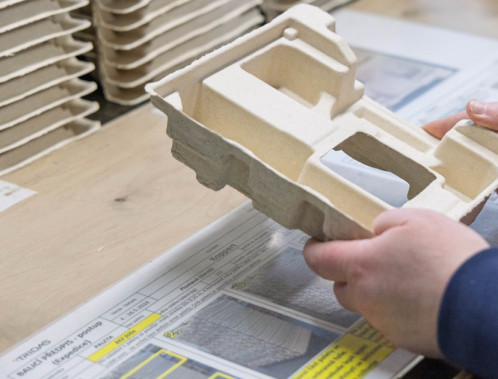
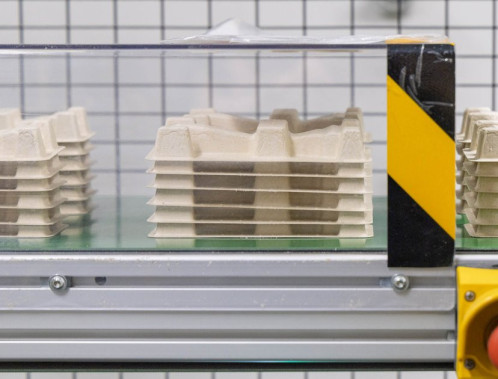
Appliance and furniture protective inserts are molded fibre components designed to cushion corners, edges, and surfaces during warehousing, handling, and long-distance transit. White goods manufacturers—refrigerators, washing machines, dishwashers, cookers—and furniture producers use these inserts to prevent dent damage, surface scratching, and structural deformation that occur when products contact pallet edges, forklift tines, or other products during stacking.
The production process uses dry press technology on a continuous line. Recycled paper pulp is formed into a wet pre-form on a vacuum mould, then passes through a drying oven at 180–250°C to remove water content. The dried pre-form is transferred to a heated press die operating at 160–220°C where final shaping occurs under moderate pressure. This sequence produces thicker walls (typically 2–5 mm) with lower density (0.3–0.8 g/cm³) than wet press molded fibre, maximising impact absorption per unit weight.
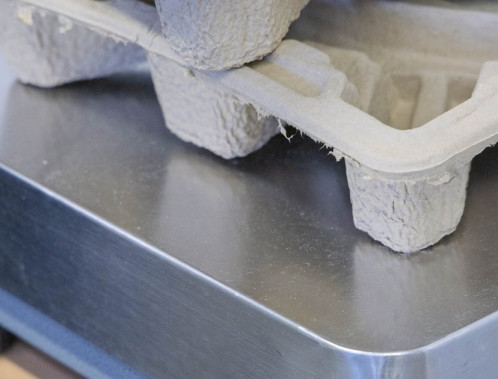
The thicker wall structure creates a cellular matrix that deforms under impact, distributing force across the insert surface rather than transmitting shock directly to the appliance cabinet or furniture panel. Corner protectors typically feature L-shaped or U-shaped profiles that wrap appliance edges, while flat surface guards use raised ribs or corrugated patterns to create air gaps between the insert and the product surface, preventing contact damage during transit vibration.
Draft angles of 3–7° allow parts to release cleanly from the mould tool without mechanical undercuts, keeping tooling costs within the €5,000–20,000 per cavity set range. Large-format inserts—such as full-width refrigerator top guards or washing machine base protectors—may require multi-cavity tooling or nested layouts to maintain material efficiency, but the relatively simple geometry of most protective inserts keeps tooling complexity lower than complex-contour consumer packaging.
Material specification focuses on compression strength and drop-test performance rather than surface finish. Basis weight typically ranges 400–800 g/m² for appliance applications, balancing impact protection against material cost and shipping weight. Higher basis weight (800–1,200 g/m²) is specified for heavy white goods or furniture components subject to multi-drop distribution where inserts must maintain protective function through repeated handling cycles.
| Parameter | Dry press molded fibre | EPS foam | Polyethylene foam |
|---|---|---|---|
| Wall thickness | 2–5 mm | 10–50 mm | 3–20 mm |
| Density | 0.3–0.8 g/cm³ | 0.02–0.05 g/cm³ | 0.02–0.10 g/cm³ |
| Compression strength | 200–400 N per 100 mm² | 15–30 N per 100 mm² | 50–150 N per 100 mm² |
| Tooling cost | €5,000–20,000 | €8,000–25,000 | €8,000–25,000 |
| Recyclability (PPWR) | ≥70% from 2030 | Excluded from target | Excluded from target |
| Material price per tonne | Substantially lower than virgin polymers | Virgin polymer baseline | Virgin polymer baseline |
| Typical cycle time | 3–8 s per part | 20–60 s per part | 20–60 s per part |
Procurement managers evaluating protective packaging for appliances and furniture face three regulatory and commercial pressures converging simultaneously. The Packaging and Packaging Waste Regulation (EU) 2025/40 sets fibre-based packaging recyclability targets of 70% from 2030 and 80% from 2038, creating compliance risk for continued use of EPS and polyethylene foam in protective applications. Simultaneously, appliance and furniture brands are setting corporate plastic-reduction commitments that require quantified phase-out timelines for expanded polystyrene, creating internal pressure to validate alternatives before 2028–2030 deadline periods.
The third pressure is reverse-logistics cost. EPS protective inserts occupy significant warehouse volume even when appliances are unpacked, forcing retailers and delivery services to manage bulky waste streams that municipal collection systems increasingly reject. Molded fibre protective inserts compress to approximately 40% of original volume when crushed, reducing reverse-logistics transport cost and enabling integration into existing paper and cardboard recycling streams without material separation.
Tooling economics favour molded fibre for appliance and furniture applications because protective inserts typically use simple geometry without complex contours or tight tolerances. A washing machine corner protector or refrigerator edge guard requires straightforward L-shaped or flat profiles that translate into lower-cost single-cavity tooling with lead times of approximately 4 weeks—substantially shorter than alternative molded fibre suppliers. TRIDAS minimum order quantity is 10,000 units, varying with part complexity and tooling cavity count, making molded fibre viable even for mid-volume appliance models or furniture product lines with multiple SKU variants.
Drop-test validation under ISTA 3A demonstrates that 3–4 mm wall thickness molded fibre inserts protect appliance corners and edges under payloads up to 5 kg through standard distribution cycles including lorry transport, cross-dock handling, and final-mile delivery. Thicker walls (4–5 mm) are specified for heavier white goods such as double-door refrigerators or commercial kitchen equipment where corner impacts involve higher kinetic energy. The material's ability to absorb and distribute impact force across the insert structure prevents localised denting that occurs when hard plastic or thin corrugate contacts sheet metal appliance cabinets during handling.
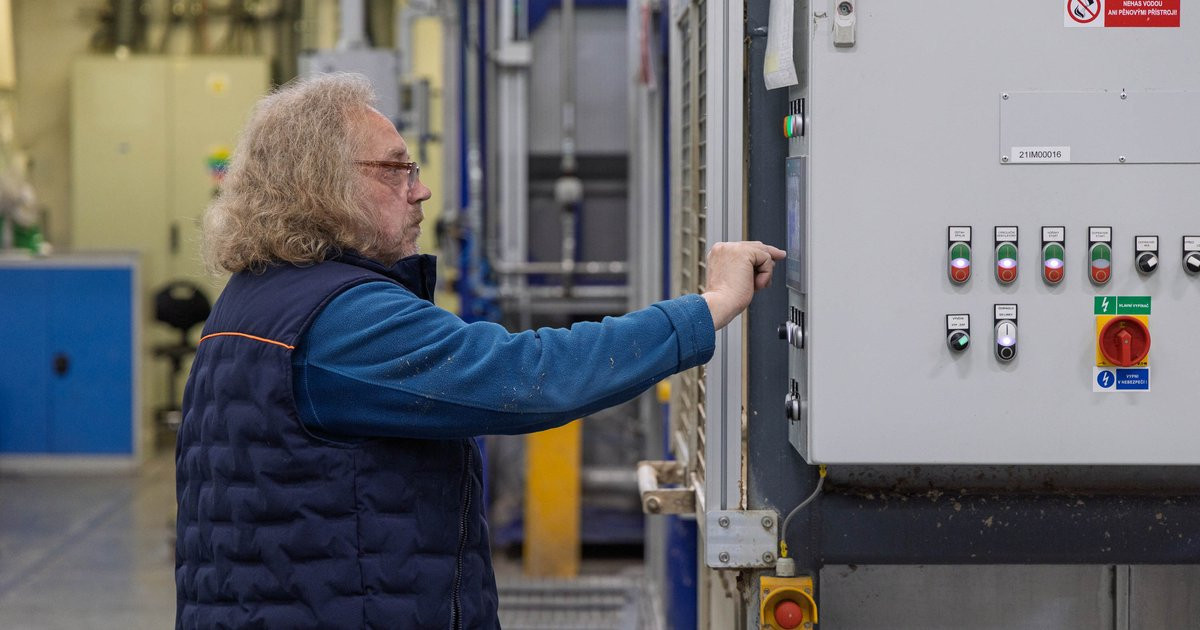
TRIDAS operates dry press molded fibre production lines specifically configured for large-format protective packaging, including appliance and furniture inserts. The company designs and manufactures its own production equipment, enabling rapid tooling modifications when appliance manufacturers update product dimensions or introduce new model ranges. TRIDAS sources pulp primarily from EU low-risk regions and provides EUDR-compliant Due Diligence Statements per shipment under Regulation (EU) 2023/1115, addressing both PPWR recyclability requirements and deforestation-risk compliance in a single supply chain. Facility tours at the Czech production site allow procurement teams to observe dry press production lines and validate compression-strength testing protocols before committing to tooling investment.