09. 28. 2026
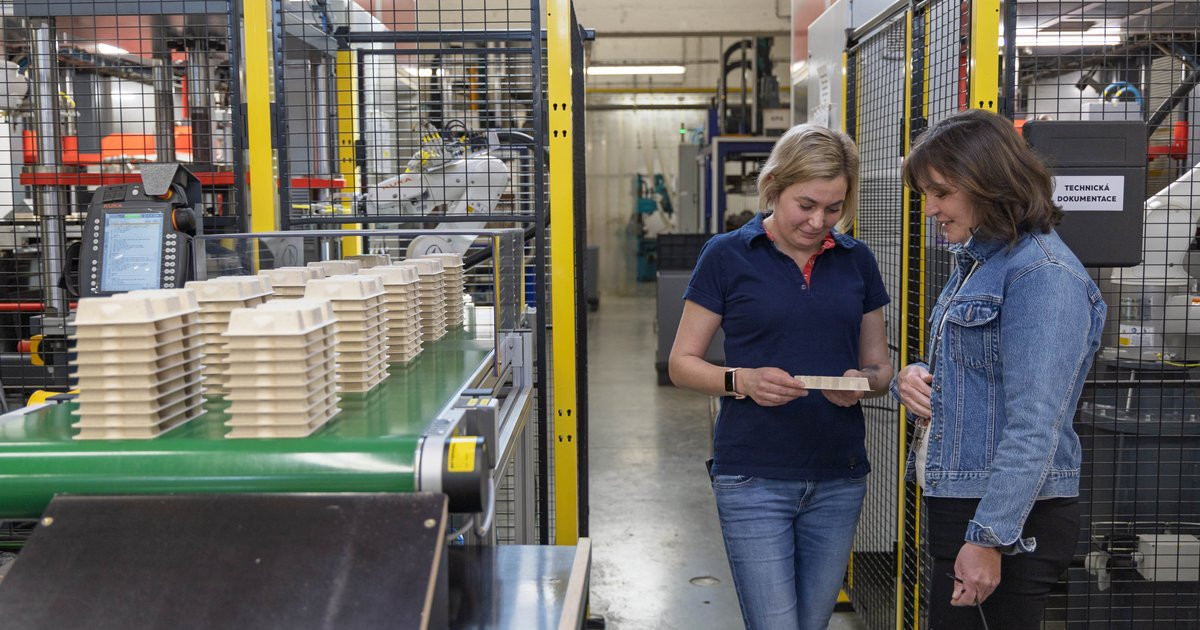
Molded fibre packaging protects construction fittings, fixtures and hardware components during warehousing and transit without generating plastic waste. Dry press molded fibre provides impact absorption for metal components—taps, handles, hinges, electrical fittings—while meeting EU packaging waste reduction targets under Regulation (EU) 2025/40. This article examines specification requirements, protective performance benchmarks and procurement considerations for construction-product brands transitioning from expanded polystyrene and injection-moulded plastic inserts to fibre-based alternatives.
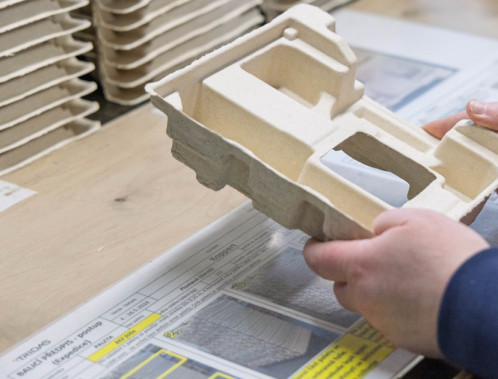
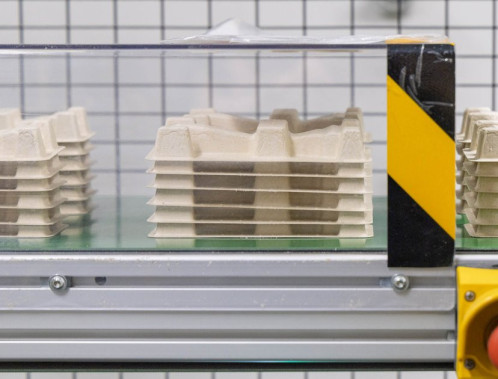
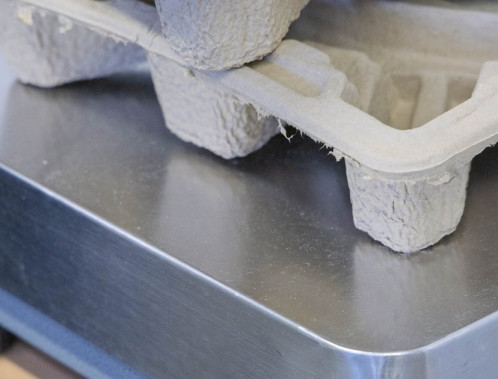
Molded fibre packaging for construction products uses dry press manufacturing technology to create protective inserts, trays and corner cushions for metal fittings, plumbing components, electrical fixtures and hardware. The process forms recycled paper pulp into three-dimensional shapes with wall thicknesses between 2 and 5 mm, providing impact absorption through material density between 0.3 and 0.8 g/cm³.
Dry press production uses a long continuous line where wet pulp pre-forms pass through a drying oven before final shaping in a heated press die. This two-stage process—forming followed by separate drying—creates thicker walls and lower density compared to wet press technology. The result is packaging with higher impact absorption suitable for protecting metal components during drop events and vibration exposure in distribution.
Construction product packaging typically protects components weighing 200 grams to 5 kg. Applications include kitchen and bathroom taps, door handles and lock sets, cabinet hinges, electrical sockets and switches, pipe fittings and valve assemblies. The packaging must prevent surface scratching on chrome-plated and powder-coated finishes while maintaining structural integrity through multiple handling cycles in wholesale and retail environments.
Design features include component-specific cavities, stacking ribs for vertical compression resistance and ventilation channels that prevent moisture accumulation during storage. Draft angles between 3 and 7 degrees enable mould release during production and facilitate automated packing line integration at construction product manufacturers.
The material is fully recyclable under EN 643 paper grade classification and biodegrades in industrial composting facilities. Surface treatments remain minimal—natural brown fibre or water-based dyes—to maintain recyclability under PPWR requirements. Printing uses flexographic or offset techniques when brand identification is required on consumer-facing packaging.
| Material property | Dry press molded fibre | Expanded polystyrene foam | Injection-moulded polypropylene |
|---|---|---|---|
| Wall thickness | 2–5 mm | 10–30 mm | 1.5–4 mm |
| Density | 0.3–0.8 g/cm³ | 0.02–0.05 g/cm³ | 0.9–1.2 g/cm³ |
| Compression strength | 200–400 N per 100 mm² | 50–150 N per 100 mm² | 400–800 N per 100 mm² |
| Impact absorption mechanism | Material compression and fibre structure deformation | Air cell collapse | Elastic deformation |
| Moisture sensitivity | Moderate – requires dry storage | None | None |
| Recyclability (EN 13430) | Yes – paper stream | Technically recyclable – limited infrastructure | Yes – plastic stream |
| Tooling cost per cavity set | €5,000–20,000 | €15,000–40,000 [SOURCE NEEDED] | €8,000–25,000 |
| Production cycle time | 3–8 s per part (dry press) | 20–90 s per part [SOURCE NEEDED] | 20–60 s per part |
| Minimum order quantity threshold | MOQ from 10,000 units, varying with part complexity and tooling cavity count | 25,000 units/year [SOURCE NEEDED] | MOQ from 10,000 units, varying with part complexity and tooling cavity count |
Molded fibre provides sufficient impact protection for metal construction components without requiring the bulk of expanded polystyrene. Polystyrene foam delivers superior cushioning performance but faces collection infrastructure limitations—fewer than 30% of EU municipalities operate expanded polystyrene recycling programmes [SOURCE NEEDED]. Injection-moulded polypropylene offers higher compression strength but generates substantially higher production emissions. Recycled paper pulp is a substantially cheaper and lower-carbon feedstock than virgin polymers.
Procurement decisions for construction product packaging balance protective performance, regulatory compliance and total landed cost. Three specification areas require validation before supplier selection: transit performance under distribution stress, dimensional tolerances for automated packing integration, and material compliance with EU packaging regulations.
Transit performance validation uses ISTA 2A test protocols for partial-simulation testing or ISTA 3A for general-simulation testing that replicates less-than-truckload distribution. Test sequences include drop tests from heights between 450 mm and 910 mm depending on package weight, vibration exposure at frequencies between 3 Hz and 100 Hz, and compression loading simulating pallet stacking. Construction products packaging must prevent component movement within the cavity during these events while maintaining structural integrity through multiple drop cycles.
Dimensional tolerances affect automated packing line integration at construction product manufacturing facilities. Cavity dimensions require ±0.5 mm tolerance for components with tight fit requirements. Outer dimensions must maintain ±1 mm tolerance for conveyor transport and robotic handling. Draft angles enable automated denesting—the mechanical separation of stacked packaging units—without jamming. Lines running above 30 units per minute require validation of denesting performance before production tooling investment.
Regulatory compliance under Regulation (EU) 2025/40 requires packaging to meet 70% recyclability by weight from 1 January 2030, rising to 80% from 1 January 2038. Molded fibre from recycled paper pulp satisfies these thresholds when surface treatments remain water-based. Suppliers must provide material declarations confirming paper grade composition and absence of plastic lamination or metallic coatings that would downgrade recyclability classification.
Total landed cost includes tooling amortisation, piece price, freight and end-of-life disposal. Tooling costs between €5,000 and €20,000 per cavity set amortise over higher annual production volumes. Piece prices depend on cavity complexity and production volume [SOURCE NEEDED]. Freight costs for molded fibre remain lower than expanded polystyrene due to higher density enabling more units per pallet. Disposal costs decrease as municipalities expand paper recycling collection while restricting residual waste acceptance of plastic foam.
TRIDAS produces molded fibre packaging for construction fittings and hardware using dry press production technology at its Czech facility. The company operates both wet press and dry press manufacturing lines under one roof, enabling technology selection based on application requirements—dry press for construction products requiring impact absorption, wet press for consumer-facing premium packaging requiring smooth surface finish. TRIDAS designs and manufactures its own production equipment, reducing tooling lead times to approximately 4 weeks compared to alternative molded fibre suppliers requiring 4–8 weeks. Material sourcing uses pulp from EU low-risk regions with FSC chain-of-custody certification, and the company provides EUDR-compliant Due Diligence Statements per shipment under Regulation (EU) 2023/1115. Transit validation capabilities include in-house ISTA protocol testing, and the facility conducts production-line tours for qualified procurement teams evaluating supplier manufacturing capabilities before tooling investment.
Dry press molded fibre with 2–5 mm wall thickness protects components weighing up to 5 kg through drop tests from 760 mm under ISTA 3A protocols. Actual performance depends on cavity geometry, component weight distribution and number of drop cycles required. Validation testing determines specific protection capability for each component design before production tooling investment.
Construction products stored in climate-controlled warehouse environments do not typically require moisture barrier treatment. Molded fibre maintains structural integrity at relative humidity below 70%. Products destined for outdoor storage or high-humidity environments may require water-resistant coatings or overwrap with plastic film, though this adds cost and may affect recyclability classification under PPWR requirements.
Molded fibre provides three-dimensional component confinement through shaped cavities, while corrugated dividers offer two-dimensional separation. Molded fibre absorbs impact through material compression; corrugated board relies on flute structure that collapses under repeated compression cycles. For metal components requiring scratch prevention and multi-drop protection, molded fibre delivers superior performance. Corrugated remains cost-effective for lightweight components requiring only separation during single-drop distribution.
Tooling cost amortisation becomes economically viable at annual volumes above 50,000 units for single-cavity tooling. Multi-cavity tooling—producing multiple units per press cycle—requires volumes above 100,000 units per year. Suppliers may accept lower volumes with tooling-cost contribution from the buyer, though piece prices increase when spreading tooling investment over fewer production units.
Yes. Flexographic printing applies water-based inks directly to the fibre surface for component identification, handling instructions and brand logos. Print resolution reaches 85–100 lines per inch—sufficient for text and simple graphics but lower than offset-printed paperboard. Embossing creates raised text and symbols during the forming process without additional printing operations, though minimum character height must remain above 1 mm for legibility.
Production tooling manufactured from aluminium alloys typically delivers 500,000 to 1,000,000 cycles before requiring refurbishment [SOURCE NEEDED]. Steel tooling extends lifespan beyond 2,000,000 cycles at higher initial cost [SOURCE NEEDED]. Cavity wear depends on production volume, pulp consistency control and mould-release procedures. Suppliers should provide tooling-lifespan estimates during quotation and clarify refurbishment terms before purchase order placement.
Yes. Molded fibre from recycled paper pulp without plastic lamination or metallic coatings meets the 70% recyclability threshold required from 2030 under Regulation (EU) 2025/40. Material complies with EN 643 paper grade classification for collection in municipal paper recycling streams. Water-based dyes and flexographic inks do not affect recyclability. Construction product brands must verify supplier material declarations confirm paper-only composition before committing to packaging design.
Construction sites typically segregate packaging waste into recycling streams separate from building materials. Molded fibre enters paper recycling collection where municipal infrastructure exists. In regions without separated collection, the material biodegrades in industrial composting facilities when contamination from metal filings and component residues remains below EN 13432 compostability thresholds [SOURCE NEEDED]. Construction waste contractors should confirm accepted materials before specifying molded fibre for job-site delivery packaging.